Universal Account Number (UAN)

What is a Universal Account Number (UAN)?

The Universal Account Number (UAN) is a unique 12-digit identification number assigned to every employee contributing to the Employees’ Provident Fund (EPF) in India.

It acts as a centralized ID that links multiple PF (Provident Fund) accounts allotted by different employers throughout an employee’s career.

In simple terms, UAN ensures that an employee has one permanent PF identity, regardless of how many jobs they change.

Purpose of UAN

The primary purpose of UAN is to simplify and centralize PF management for employees and employers.

It helps:

  • Link multiple PF accounts under one ID
  • Enable seamless PF transfers when changing jobs
  • Provide easy access to PF details online
  • Reduce dependency on employers for PF-related processes
  • Improve transparency and accountability

UAN is a key step toward digitizing employee benefits and payroll systems.

Who Issues the UAN?

The Employees’ Provident Fund Organisation (EPFO), under the Government of India, is responsible for issuing the UAN.

Typically:

  • The employer generates the UAN for new employees
  • Existing employees retain the same UAN across jobs
  • Employees can also retrieve their UAN through the EPFO portal

UAN vs PF Number

Aspect

UAN

PF Number

Definition

Permanent universal ID

Employer-specific account number

Validity

Lifelong

Changes with every job

Purpose

Links all PF accounts

Tracks PF contribution with a specific employer

Issued By

EPFO

Employer via EPFO

In short, UAN is the umbrella, while PF numbers are individual accounts under it.

How to Activate UAN?

Employees must activate their UAN to access online services. Steps include:

  1. Visit the EPFO member portal
  2. Click on “Activate UAN”
  3. Enter UAN, Aadhaar, PAN, and mobile number
  4. Verify via OTP
  5. Create login credentials

Once activated, employees can:

  • Check PF balance
  • Download passbooks
  • Initiate claims and transfers

Benefits of UAN

UAN offers several advantages:

  • Portability: One ID across multiple jobs
  • Easy PF Transfer: No need for manual intervention
  • Online Access: View PF details anytime
  • Transparency: Track employer contributions
  • Faster Withdrawals: Simplified claim processing
  • Reduced Fraud: Centralized verification system

It significantly improves employee experience in payroll and benefits management.

FAQs 


  • What is UAN in simple terms?

It is a unique ID that connects all your PF accounts across different jobs.


  • Is UAN mandatory for salaried employees?

Yes, for employees contributing to EPF, UAN is mandatory.


  • How can I check my UAN number?

You can check it via:

    • Salary slip

    • Employer

    • EPFO portal using your registered mobile number


  • Can I have two UAN numbers?

No, an employee should have only one UAN. Multiple UANs must be merged.


  • Can I withdraw PF without UAN activation?

No, UAN activation is required to process online PF withdrawals.


  • What happens to UAN when I change jobs?

Your UAN remains the same. Only a new PF account is linked to it.


  • Is UAN and EPF the same?

No. UAN is an identification number, while EPF is a retirement savings scheme.


  • Can I check my PF balance without UAN?


It is difficult without UAN, but you can use your registered mobile number or PF number in some cases.
 

Latest Blogs

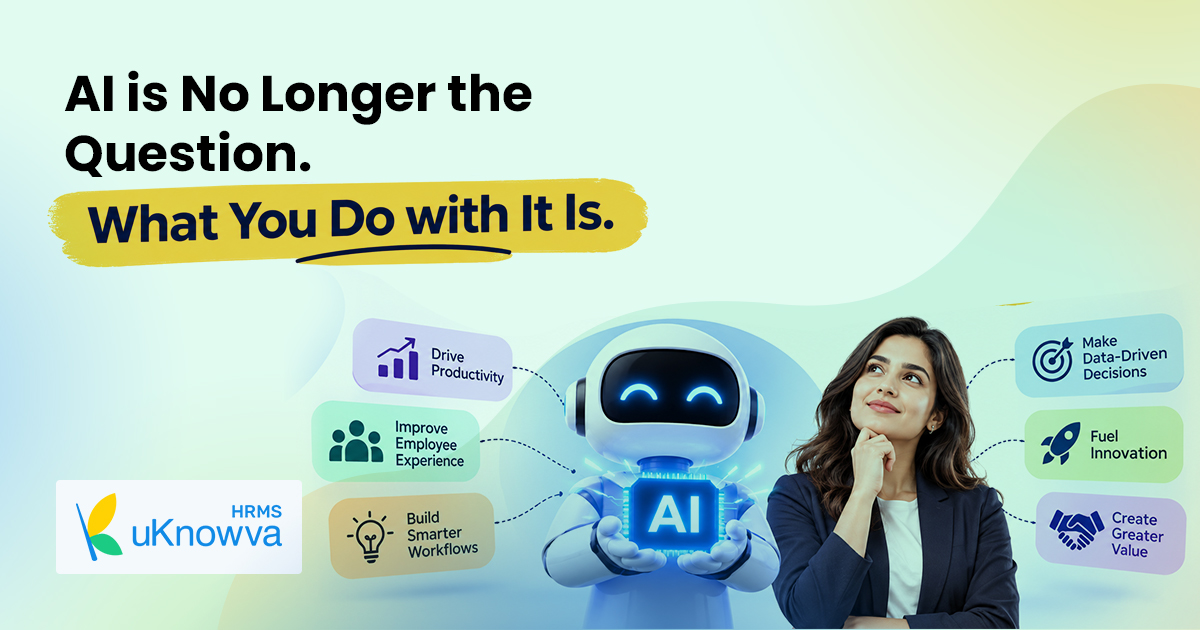
  • AI is No Longer the Question. What You Do with It Is.

    10 November 2026
    Niraj Satnalika
    Table of Content Introduction  Adoption Is Not Transformation. Start With The Work, Not The Tool Move From Experiments To Operating Capability. The leadership Question Has Changed. Conclusion Introduction  For years, the conversation around artificial intelligence in business was largely about possibility. What can AI do? Which tools should we explore? Is the technology mature enough for our organisation? These questions don't seem to be relevant anymore. The more important question is: What will we do differently now that intelligence is becoming more accessible? Research by Epoch AI, published in September 2026, estimates that the cost of achieving a given level of AI performance across five benchmarks fell by approximately 47% per quarter from 2023 onwards. The estimate is benchmark-specific, not a promise that every AI task or business application is becoming cheaper at the same rate. Yet the direction is unmistakable: capabilities that once seemed expensive or...
     
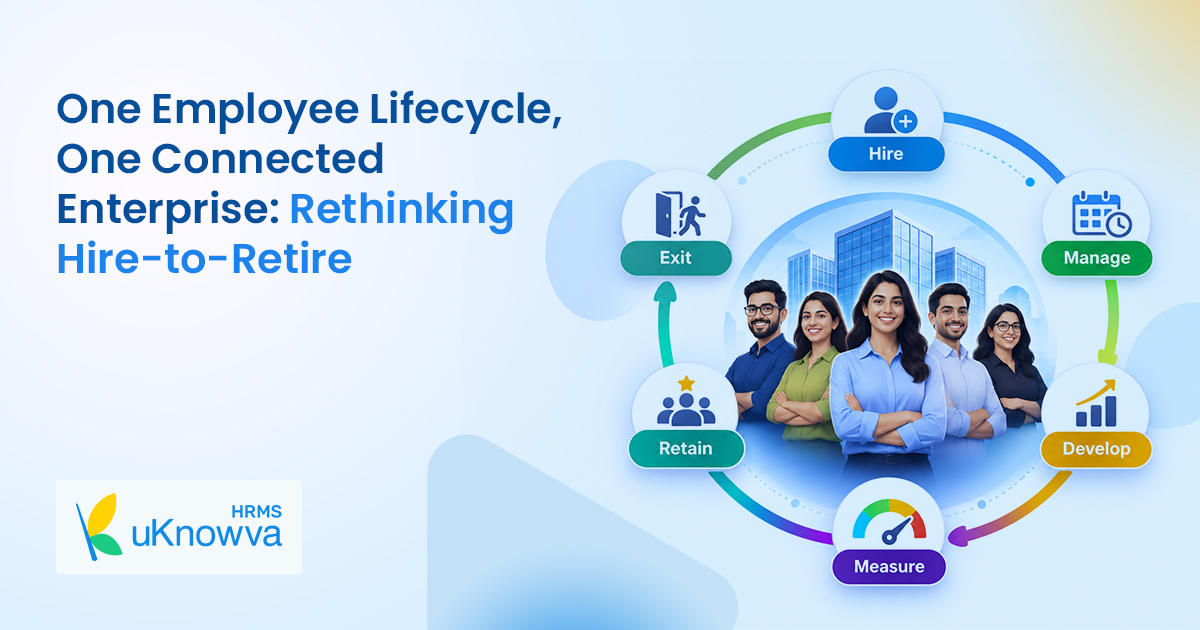
  • One Employee Lifecycle, One Connected Enterprise: Rethinking Hire-to-Retire

    10 November 2026
    Niraj Satnalika
    Table of Content Introduction  The Employee Lifecycle Is An Enterprise Process. From HR Software To An Enterprise Ecosystem A Practical Path Forward One Lifecycle, Shared Accountability. Conclusion Introduction  An employee's journey through an organisation is continuous. The systems supporting that journey are often not. Recruitment may sit in one application, onboarding in another, payroll in a third, learning on a separate platform and performance management in yet another. IT provisions devices and access. Finance manages budgets and expenses. Business managers define workforce needs. HR coordinates many of these activities, but rarely controls every dependency. The result is a familiar organisational problem: a connected employee experience built on disconnected processes. This is why the future of Hire-to-Retire should be considered beyond HR's boundaries. The opportunity is to create a connected enterprise operating model in which people, processes, data and...
     
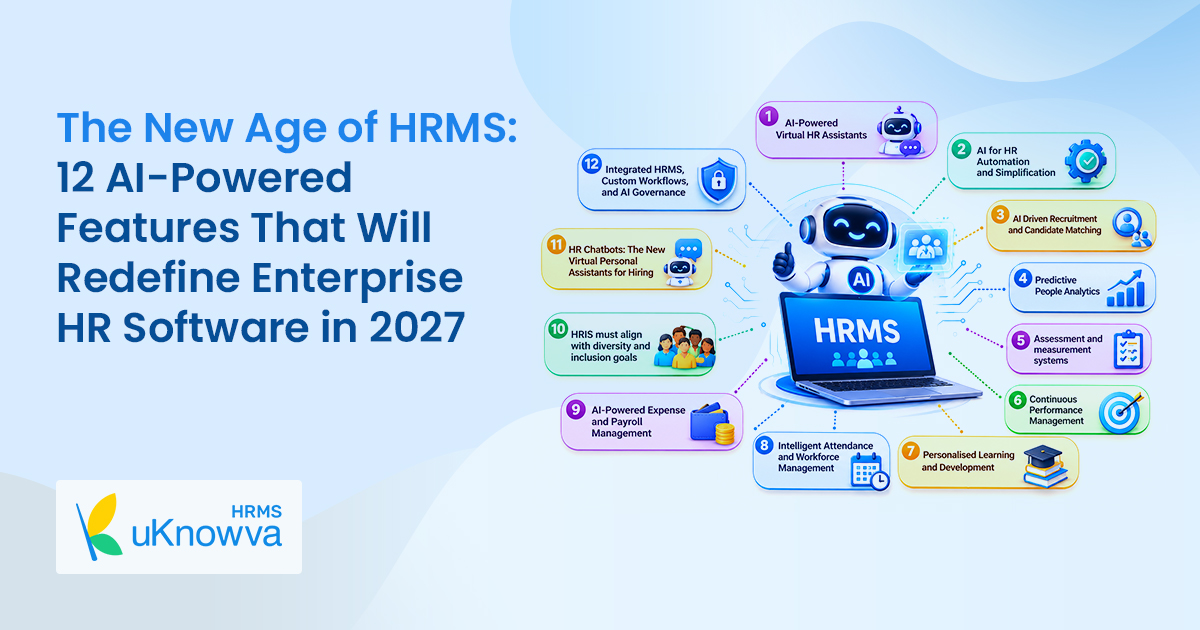
  • The New Age of HRMS: 12 AI-Powered Features That Will Redefine Enterprise HR Software in 2027

    02 November 2026
    Aditi Sharma
    Introduction  Imagine an HR manager beginning the day with 200 pending employee queries to read, approvals to be completed, attendance to be checked, recruits to be processed, and performance reviews to be reminded. When the administration is done, there is not much time remaining for decisions. Now envision an HRMS system that can manage every day's requests, detect workforce patterns, and alert any concerns, as well as suggest the next step. This is the direction enterprise HR technology is going. Conventional HRMS solutions were mainly used for record keeping, payroll management, and routine HR automation. But the next generation of HR software promises to take the next step, integrating artificial intelligence (AI), predictive analytics, intelligent automation and connected employee experiences. For CHROs, the issue is no longer just whether or not to adopt an HRMS. It's whether their current technology is able to accommodate the future of work. 12 HRMS features for enterp...
     

Contact Us

  •  
    Neelkanth Corporate Park, 316, Vidyavihar West, Vidyavihar, Mumbai, Maharashtra 400086 / 022 4897 0796