Remuneration

Definition:

Remuneration refers to the total compensation or payment that an employee receives from an organization in return for their work, skills, and services. It includes not only the basic salary but also other financial benefits, incentives, allowances, and non-monetary perks. Remuneration is a critical part of HR management and employee satisfaction, as it reflects the value an organization places on its workforce.

In HR terms, remuneration is both a motivational tool and a strategic management lever, designed to attract, retain, and reward talent while aligning employee performance with organizational goals.

History & Origin:

  • Ancient Times: Remuneration in early societies was often in the form of food, goods, or services in exchange for labor.
  • Industrial Era: With the rise of factories, remuneration shifted to wages and fixed salaries, with a focus on hourly or monthly pay.
  • Mid-20th Century: Organizations introduced structured salary packages, including bonuses, allowances, and benefits.
  • Modern Era: Today, remuneration encompasses direct and indirect benefits, performance-linked incentives, stock options, and non-monetary perks. HR technology platforms like HRMS help organizations manage and calculate remuneration efficiently.

Key Features:

  1. Total Compensation: Includes basic salary, allowances, bonuses, incentives, and non-monetary benefits.
  2. Direct and Indirect Components: Covers immediate financial rewards (salary, bonus) and indirect benefits (health insurance, retirement contributions).
  3. Performance-Based: Modern remuneration often links pay to individual or organizational performance.
  4. Legally Compliant: Must adhere to labor laws, minimum wage regulations, and tax requirements.
  5. Motivational Tool: Encourages productivity, loyalty, and skill development.
  6. Structured HR Policy: Clearly defined remuneration policies ensure fairness, transparency, and employee satisfaction.

Purpose:

  • Attract Talent: Competitive remuneration helps recruit skilled employees.
  • Retain Employees: Adequate compensation reduces turnover and increases engagement.
  • Reward Performance: Incentivizes high performers and aligns goals with organizational objectives.
  • Promote Motivation & Productivity: Fair and transparent remuneration motivates employees to contribute effectively.
  • Compliance & Transparency: Ensures adherence to labor laws, company policies, and ethical standards.

Modern Use in HR:

  • CTC (Cost to Company): Organizations define remuneration in terms of total cost to company, including all benefits and allowances.
  • Performance-Linked Pay: Incentives, bonuses, and variable pay are tied to individual or company performance.
  • Flexible Benefits: Many companies offer cafeteria-style benefits allowing employees to choose perks.
  • Digital HR Platforms: HRMS and payroll systems help track salaries, incentives, taxes, and statutory deductions accurately.
  • Global Compensation Practices: Multinational companies design remuneration packages that are competitive globally while complying with local laws.

Types of Remuneration:

  1. Direct Remuneration: Salary, wages, incentives, commissions, and performance bonuses paid directly to employees.
  2. Indirect Remuneration: Benefits such as insurance, retirement contributions, leave encashment, and wellness programs.
  3. Monetary Rewards: Fixed and variable pay, overtime, and profit-sharing schemes.
  4. Non-Monetary Rewards: Recognition programs, career development opportunities, flexible work options, and perks.

FAQs on Remuneration:

  1. What does remuneration mean?
    Remuneration is the total compensation an employee receives for their work, including salary, benefits, bonuses, and other financial or non-financial perks.
  2. What are the types of remuneration?
  • Direct remuneration: Salary, wages, commissions, bonuses.
  • Indirect remuneration: Benefits like insurance, retirement plans, allowances.
  • Non-monetary rewards: Perks, recognition, flexible work arrangements.
  1. Does remuneration mean CTC?
    Yes, in HR terms, remuneration often refers to CTC (Cost to Company), which includes all direct and indirect benefits along with salary.
  2. What is direct remuneration?
    Direct remuneration is the immediate financial payment made to an employee, such as basic salary, overtime, incentives, and performance bonuses.
  3. What does total remuneration include?
    Total remuneration includes:
  • Basic salary
  • Allowances (housing, transport, medical)
  • Performance incentives and bonuses
  • Retirement contributions
  • Non-monetary benefits (perks, flexible work options)
  1. Is remuneration a bonus?
    No, a bonus is just one component of remuneration. Remuneration is the complete package including salary, benefits, incentives, and perks.
  2. How to use remuneration?
    Remuneration can be used to:
  • Attract and retain talent
  • Motivate employees
  • Align employee performance with organizational goals
  • Ensure compliance with labor laws and internal policies
  1. What is remuneration in HR?
    In HR, remuneration is a structured system of compensating employees for their services, including all monetary and non-monetary benefits, aimed at motivating and retaining employees.
  2. How is remuneration calculated?
    Remuneration is calculated by summing:
  • Basic salary
  • Allowances
  • Performance-based incentives
  • Bonuses and profit-sharing
  • Benefits (insurance, retirement contributions, other perks)
    Digital payroll and HRMS platforms automate these calculations for accuracy and compliance.

Latest Blogs

  • What are Best Practices for HR Digital Transformation 2026

    28 June 2022
    Nilakshi Garg
    Table of Content What is Digital HR Transformation? Stages of Digital HR Transformation Why Digital HR Transformation Matters in 2026 Foundations of Digital HR Transformation Key Trends and Emerging Technologies Shaping HR in 2026 Role of AI, LLMs, and Automation in Digital HR Best Practices for Successful Implementation Common Mistakes in Digital HR Transformation Cost, Budgeting, and ROI Measurement Transforming Key HR Functions Employee Experience in a Digitally Transformed HR Risks Challenges Mitigation Process Case Studies How to Measure the Success of Your Digital HR Transformation Future Outlook Digital HR Transformation Checklist for 2026 Conclusion FAQs on Best Practices for HR Digital Transformation Digital HR transformation has ceased to serve as an experimental project or a modernization initiative that is a nice-to-have. As an organisational resiliency, workforce productivity, compliance preparedness, and long-term business growth strategic r...
     
  • uKnowvantage Hyderabad Roundtable Highlights: HR Leaders Decode the DPDP Act

    30 January 2026
    Aditi Sharma
    Table of Content Why is Digital Data Protection Now an HR Imperative? Employees Have the Right to Ask—and HR Must Be Ready to Answer Understanding Personal Data: From Theory to Practice Consent, Control, and Continuous Audits Leadership Accountability Under DPDPA Internal Data Leakages: The Silent Risk Common Sense Still Matters in Data Protection HR as the Custodian, Not Just the Processor Awareness Beyond the Workplace Practical, Pragmatic, and Future-Ready HR Key Takeaways from the Hyderabad HR Roundtable Closing Thoughts Heartfelt Thanks to Everyone Involved Want to Be a Part of the Next uKnowvantage? As India moves steadily into a data-first economy, the role of HR has expanded far beyond talent management and employee engagement. HR today stands at the intersection of people, technology, and trust—making it one of the most critical custodians of digital personal data within organisations. Recognising this shift, uKnowvantage hosted an exclusive HR Roun...
     
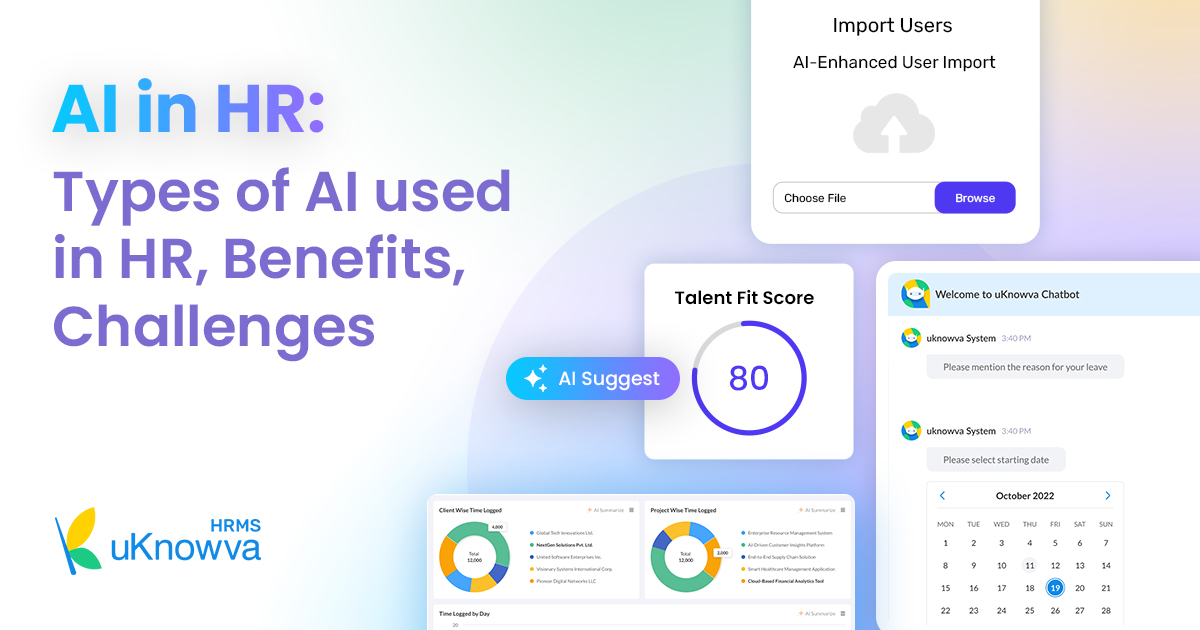
  • AI in HR: Types of AI used in HR, Benefits, Challenges

    31 January 2026
    Aditi Sharma
    Table of Content Introduction  What is AI in HR? Types of AI used in HR  Practical Use Cases of AI in HR Why HR Leaders Need AI Now The Role of uKnowva HRMS in AI-Powered HR Future of AI in HR Conclusion  FAQs on AI in HR Introduction  Artificial Intelligence (AI) is no longer just a buzzword; it has become a focal point in how modern businesses operate.  From customer engagement to supply chain optimisation, AI has revolutionised nearly every sector, and Human Resources (HR) is no exception. In today’s hyper-competitive landscape, organisations cannot afford to lag in adopting AI-powered HR solutions. The HR function has evolved from being primarily administrative to becoming a strategic driver of growth and culture. HR leaders recognise that ignoring AI Adoption can leave them lagging in talent acquisition, engagement, and workforce planning. In this blog, we’ll explore the AI tools used in HR, practical use cases, and why AI matters for HR leaders righ...

     

Contact Us

  •  Neelkanth Corporate Park, 316, Vidyavihar West, Vidyavihar, Mumbai, Maharashtra 400086 / 022 4897 0796
  •  FZCO, Digital Park, Dubai Silicon Oasis (DSO) , Dubai License Number - 11383
  •  1509 The Stiles West Tower. Hippodromo Street cor Theater Drive, Circuit Makati, Makati, 1207 / +63 917 193 1996