






 Aditi Sharma
Table of Content
Artificial Intelligence (AI) is no longer just a buzzword; it has become a focal point in how modern businesses operate.
From customer engagement to supply chain optimisation, AI has revolutionised nearly every sector, and Human Resources (HR) is no exception. In today’s hyper-competitive landscape, organisations cannot afford to lag in adopting AI-powered HR solutions. The HR function has evolved from being primarily administrative to becoming a strategic driver of growth and culture. HR leaders recognise that ignoring AI Adoption can leave them lagging in talent acquisition, engagement, and workforce planning.
In this blog, we’ll explore the AI tools used in HR, practical use cases, and why AI matters for HR leaders right now.
Before diving into tools and use cases, it’s crucial to understand the context of why AI adoption in HR has accelerated:
Let’s explore the most influential AI-powered HR tools being used today.
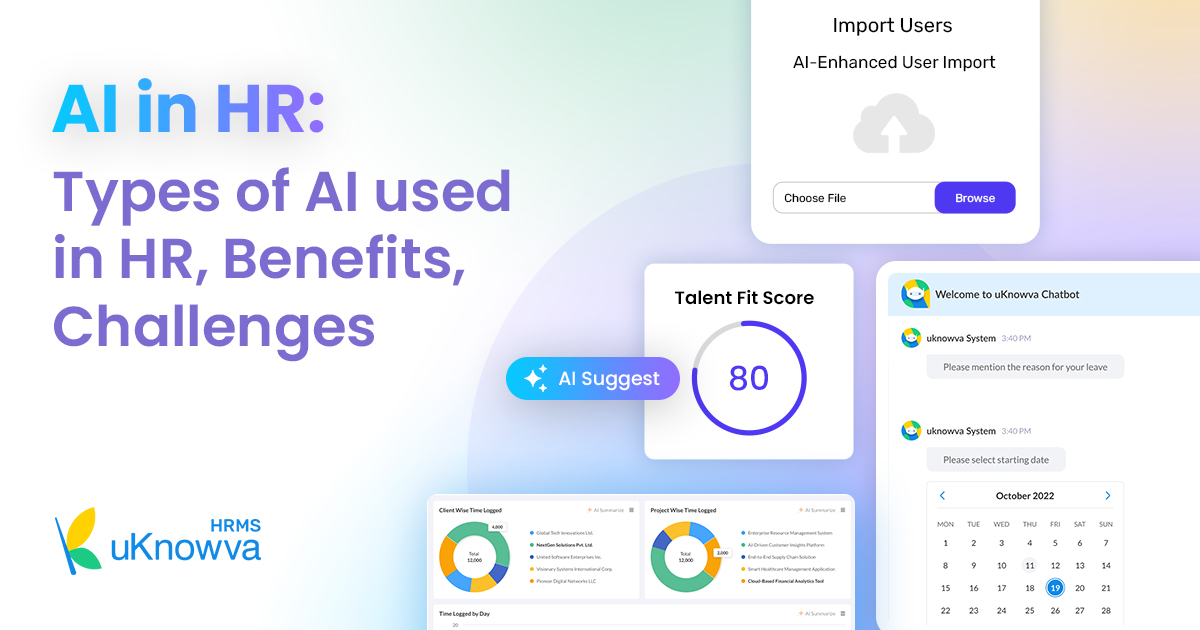
Tools like the recruitment features in uKnowva HRMS use AI to screen resumes, assess candidate fit, and even conduct automated video interviews. This shortens the hiring time and ensures an unbiased, data-driven selection.
AI chatbots handle routine employee queries about leave policies, payroll, or benefits, offering 24/7 support. For example, HR chatbots integrated into uKnowva HRMS improve response times and reduce HR’s workload.
AI-driven systems monitor productivity, suggest development opportunities, and analyze real-time performance data. These tools help managers provide unbiased, data-backed feedback.
AI-driven platforms suggest customized learning programs tailored to employees’ skill gaps and career goals. Tools like uKnowva HRMS’s learning modules help employees stay future-ready.
AI systems forecast attrition rates, hiring needs, and workforce trends, enabling HR to plan. Predictive analytics assures organisations avoid unexpected shortfalls or overstaffing.
Sentiment analysis powered by AI helps HR leaders measure employee morale, detect burnout risks, and design interventions to improve well-being.
AI-powered payroll modules automate calculations, compliance checks, and error detection—reducing manual mistakes and ensuring smoother operations.
Traditional hiring is slow and biased. AI automates resume screening, shortlists candidates based on skill match, and even analyses tone and behavior in interviews to predict cultural fit. It speeds up the recruitment process and also helps in minimising the impact of unconscious bias.
AI analyses patterns in employee behaviour, performance, and engagement to predict who might leave. Early interventions—like career growth discussions or workload adjustments—can save organisations from costly attrition.
Employees no longer want one-size-fits-all HR policies. AI personalises career development, learning suggestions, wellness programs, and even benefits, leading to higher satisfaction.
AI systems remove subjectivity from HR decisions by focusing on data rather than human prejudice. For example, promotions can be determined by performance metrics instead of personal preference.
AI tools provide detailed reports on team productivity, collaboration patterns, and time utilization. This helps HR leaders and managers redesign workflows for maximum efficiency.
Through chatbots and virtual assistants, AI provides immediate support. Employees no longer wait days for responses, which improves trust and engagement.
AI identifies current skill sets within the organisation and matches them with industry trends to suggest reskilling/upskilling programs. This ensures workforce readiness for the future.
The urgency to adopt AI in HR boils down to three critical reasons:
AI is not a mere tool now but a trusted ally for HR strategy.
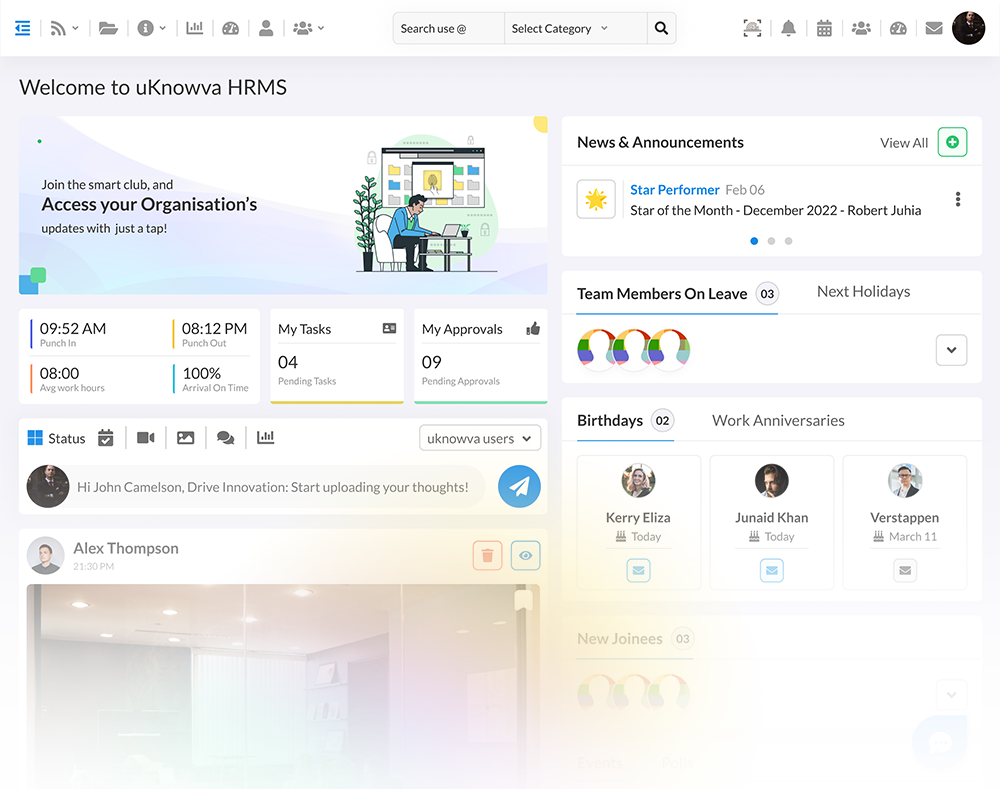
One of the most impactful platforms making AI accessible for HR leaders is uKnowva HRMS. It offers:
By integrating these AI-driven features, uKnowva HRMS empowers HR leaders to meet evolving workforce demands and ensure long-term success.
By 2030, AI in HR will shift its focus from efficiency to prioritise ethics, inclusivity, and employee well-being. The future is not about HR vs. AI—it’s about HR with AI, where technology acts as a partner to enhance human decision-making and elevate the employee experience. Some emerging trends to watch include:
Workforce Analytics & Planning
Predictive analytics to forecast hiring needs and workforce trends.
AI-driven insights to identify skill gaps and succession planning.
Data-backed decision-making to align HR strategies with business goals.
Employee Experience & Engagement
AI and DEI: Using AI tools to monitor diversity, equity, and inclusion, ensuring fair treatment.
Hyper-personalisation: Employee journeys will be customised—from career paths to benefits and wellness programs.
Real-time engagement tracking to boost satisfaction and retention.
Learning & Development
Adaptive learning platforms that recommend personalised training modules.
AI-driven skill assessments to create targeted development plans.
Continuous learning through microlearning and predictive career guidance.
Automation of Repetitive Tasks
Chatbots and virtual assistants handling routine HR queries.
Automated leave, payroll, and compliance processes for higher accuracy.
Freeing HR professionals to focus on strategic initiatives.
Well-being & Ethical AI Use
AI has become a game-changer in HR, transforming recruitment, engagement, productivity, and employee well-being. With tools ranging from chatbots to predictive analytics, HR leaders can now focus more on strategy and culture rather than administrative drudgery.
The time to act is now. Organisations that embrace AI in HR through platforms like uKnowva HRMS will be better positioned to attract, retain, and nurture top talent in an increasingly digital-first world.
AI in HR isn’t just about efficiency—it’s about creating workplaces that are smarter, more inclusive, and future-ready.
AI automates recruitment, payroll, and performance management while providing predictive insights for workforce planning and employee engagement.
AI-powered recruitment platforms, chatbots, performance management systems, learning platforms, and HRMS solutions like uKnowva HRMS are most impactful.
Yes. AI eliminates unconscious human bias by screening candidates based on skills and data rather than subjective factors.
AI measures sentiment, predicts burnout, and personalises career and wellness programs to improve employee satisfaction.
Adopting AI now helps HR leaders stay competitive, reduce costs, and create people-first workplace cultures.
uKnowva HRMS integrates AI for recruitment, engagement analytics, performance tracking, payroll automation, and learning recommendations.