







 Aditi Sharma
Table of Content
As India moves steadily into a data-first economy, the role of HR has expanded far beyond talent management and employee engagement. HR today stands at the intersection of people, technology, and trust—making it one of the most critical custodians of digital personal data within organisations.
Recognising this shift, uKnowvantage hosted an exclusive HR Roundtable Conference in Hyderabad, bringing together senior HR leaders, industry experts, legal minds, and practitioners to collaboratively build HR’s playbook for Digital Personal Data Protection (DPDPA).
The evening wasn’t about theoretical compliance checklists. It was about real conversations, lived experiences, and hard questions—all aimed at helping HR leaders understand their evolving fiduciary responsibility in a digitally connected workplace.
The discussions opened with a clear acknowledgment: data protection is no longer just an IT or legal concern. With HR systems holding sensitive employee information—salary data, Aadhaar details, medical records, performance reviews—HR teams are now frontline data fiduciaries.
As Uma highlighted early in the discussion,
“Make one act of holding the person accountable, spreading out the message to be responsible if you do not have the awareness.”
The message resonated strongly: accountability must be embedded into everyday HR practices, not treated as a once-a-year compliance exercise.
A powerful theme throughout the roundtable was employee awareness and rights under the Digital Personal Data Protection Act.
Anushree captured this shift succinctly:
“Every employee has the right to question how their data is being protected in the organisation.”
This marked a fundamental change in how HR leaders view transparency. Employees are no longer passive data providers; they are informed stakeholders who expect clarity, consent, and control.
The group discussed how HR policies, onboarding communication, and HRMS platforms must clearly explain:
One of the most insightful moments came when Dr. Ashish Mittal spoke about moving beyond surface-level understanding of personal data protection.
“We need to understand the dynamics and definition of personal data protection ourselves first. For example, there should be a mechanism where the employee gets an SMS or call if their salary was viewed by a registered account on the portal—for transparency.”
This sparked a deeper conversation around visibility and auditability—how HR systems must be designed to notify, log, and justify data access, not just restrict it.
The importance of consent-driven systems was reinforced repeatedly.
Amrrutha emphasised:
“Check, educate, and have consent-ready audits in the organisation related to data protection reports on DPDPA.”
Later, she added a critical operational lens:
“Do we have control over our data on the platform? Do we have consent to give access and revoke the same when sharing personal data?”
A key takeaway was the need for timely access revocation, especially when employees or leaders exit the organisation—an area where lapses often lead to internal data breaches.
The conversation naturally moved upward—to leadership responsibility.
Prakash Bharatam made a strong point:
“Directors should also be fiduciaries. Leadership should be educated on DPDPA for protecting employee data.”
Supporting this, Dr. Maddela noted:
“HR should have the support of the CEO or leader in educating everyone on DPDPA.”
The consensus was clear: data protection culture must be driven top-down, with leadership setting the tone for ethical data handling and compliance seriousness.
One of the most practical segments focused on internal data leaks, often overlooked compared to external cyber threats.
J M Chari asked a question that shifted the room’s attention inward:
“How do we prevent data sharing or internal data leakages?”
Amrrutha shared a real-world example that underscored the risk:
“In a given case, a new employee’s salary was disclosed to an existing employee. The new employee raised the issue citing DPDPA’s second pillar.”
These examples reinforced the need for role-based access, system guardrails, and zero-trust principles within HR platforms.
Beyond technology, the roundtable repeatedly returned to one simple truth: data protection begins with everyday discipline.
Uma shared a powerful example:
“Use shredders in the organisation or home. We stopped giving exclusive printers and moved to common printers so individuals take responsibility for their own data.”
Adding to this, Karthkeya highlighted how organisations must remain vigilant even at the physical level:
“There have been cases where newly hired people were terminated for attaching personal devices to organisational systems.”
He concluded with a reminder that resonated with everyone:
“We have to focus on our common sense when it comes to protecting our own data or someone else’s data.”
As discussions deepened, the role of HR as a data fiduciary became central.
Deepak Gupta stated:
“Workplace data protection is about collaboration between HR and leaders. We must safeguard employee data at any cost and take consent while storing, processing, or deleting it.”
Uma reinforced this with a sobering reality:
“HR is the fiduciary of employee data. Organisations must be ready to get sued in case of misuse. We have to keep deleting data that is no longer required and comply with employees’ right to ask.”
The conversation expanded beyond corporate boundaries when Sree Lata shared real-life examples of digital fraud and social engineering.
“Scammers impersonate delivery agents or customer support to extract personal data. This happens due to lack of awareness. We must be extremely vigilant—professionally and personally.”
Her insight reinforced that DPDPA awareness is as much a life skill as a workplace requirement.
As the roundtable concluded, Dr. Maddela summed up the collective sentiment:
“Organisations are getting sued. HR teams have to be more sensitive, practical, and pragmatic.”
He added a final thought that perfectly captured the evening’s essence:
“Use common sense in data protection—decide what data should be visible at what levels and predict possible outcomes.”
The uKnowvantage Hyderabad Roundtable was not just a discussion—it was a call to action. A reminder that digital data protection starts with HR, extends to leadership, and ultimately safeguards employee trust.
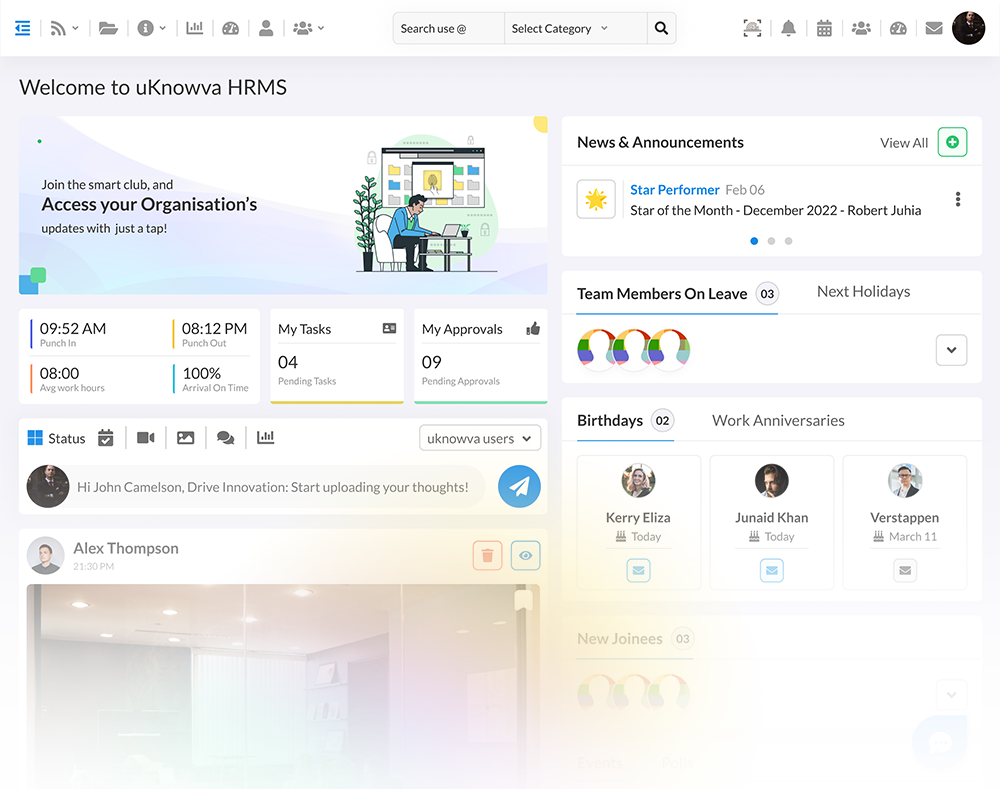
As organisations navigate the evolving DPDPA landscape, platforms like uKnowva HRMS play a crucial role in enabling secure, compliant, and transparent HR operations—empowering HR teams to protect what matters most: people and their data.
A big thank you to all the amazing attendees who made time to be with us.
Your presence and participation made the evening truly special. We also express our deep gratitude to every stakeholder who contributed to the event’s success—our vendors, attendees, internal and external communications teams, and everyone who worked behind the scenes. We couldn’t have done it without you!
We’re just getting started!
If you’re passionate about shaping the future of HR and want to contribute to insightful discussions:
Contact us at www.uknowva.com/contact-us to participate in our future Roundtables and make it a success with your inputs and insights!