Table of Content
Employee onboarding is no longer just another HR formality; it is a strategic business operation that directly affects productivity, retention, engagement, and employer branding. In the modern competitive talent market, organisations cannot afford a disorganised onboarding process that is supplemented by either a spreadsheet, email, or manual follow-ups.
A step-by-step Employee Onboarding Checklist will make sure that each new employee feels completely understood, confident and connected right at the very beginning. With the onboarding of on-site employees, remote employees, or workforces made up of hybrid teams, a clear HR onboarding workflow forms the basis of a successful user base in the long run.
The guide provides a detailed employee onboarding checklist, best practices, real-world advice, and a free template, which can be used by HR teams to create scalable, compliant, and engaging employee onboarding experiences.
Having an Employee Onboarding?
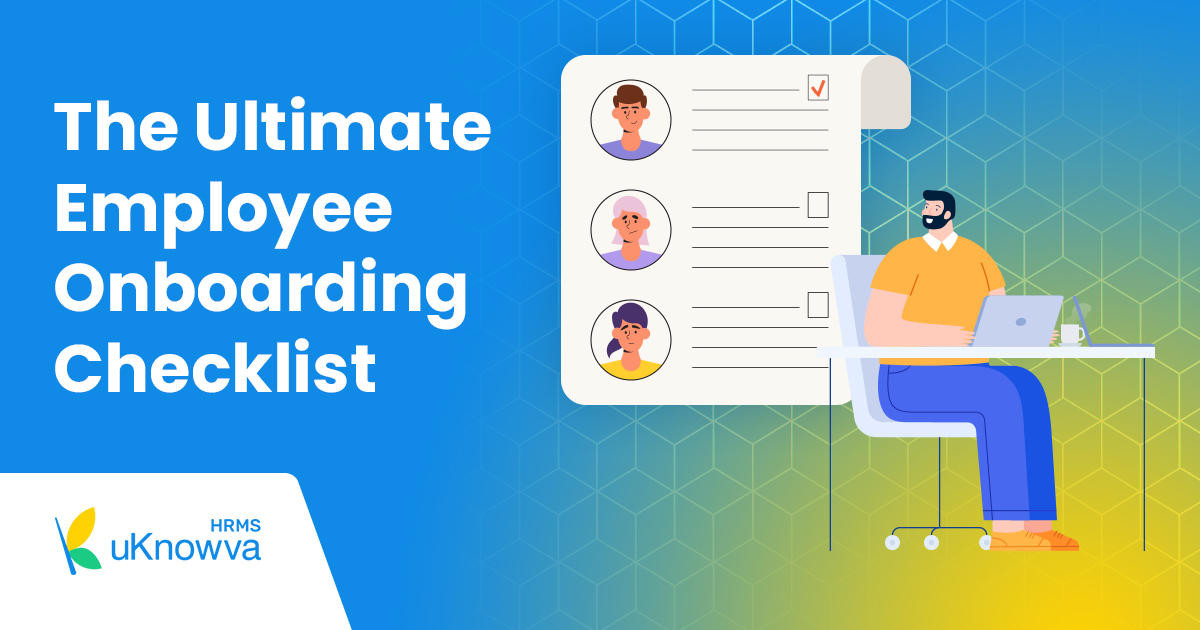
Onboarding is the structured process of welcoming and integrating a new employee into an organisation. It helps new hires understand their role, company culture, policies, and expectations, so they can become productive and engaged as quickly as possible.
In HR terms, onboarding typically includes:
Effective onboarding goes beyond the first day—it usually spans the first 30, 60, or 90 days, ensuring the employee feels supported, confident, and aligned with organisational goals.
In short, onboarding bridges the gap between hiring and performance, laying the foundation for long-term employee success and retention.
The concept of onboarding, not just through orientation
Onboarding is a structured, ongoing organizational process that helps employees integrate culturally, operationally, and professionally into the workplace. Unlike traditional orientation, which is limited to policy briefings and introductions, onboarding begins at pre-joining and continues well beyond the first 90 days, supporting employees throughout their early journey and into sustained performance.
Employee onboarding is the end-to-end process through which new hires are equipped with the knowledge, tools, relationships, and cultural understanding required to succeed and grow within an organization.
Key Elements of an Effective Onboarding Plan
The current HR onboarding processes are becoming more and more assisted by HRMS onboarding software, which allows automating, becoming transparent, and scalable across the locations and categories of staff.
For a deeper dive into the formal definition of organisational socialisation, refer to the SHRM’s comprehensive guide on understanding employee onboarding
The effects of employee onboarding are far more than simply first impressions. Strategic onboarding has a direct impact on the workforce stability and performance of the organization.
A structured onboarding process lays the foundation for employee success from day one. Here’s why it matters:
Strategic onboarding creates stickiness that results in a much higher retention rate per Deloitte's research.
An effective onboarding program delivers measurable benefits across the organization:
Organizations with well-planned onboarding programs consistently report higher employee retention. When employees receive structured support during the first few months, they are more likely to stay longer, perform better, and grow with the organization.
Early engagement builds emotional commitment, while clarity and support reduce the chances of early exits—making onboarding a critical driver of long-term workforce stability.
With up to 20% of staff turnover occurring within the first 45 days of employment, a standardized onboarding process is essential as highlighted by Harvard Business Review.
Companies that have well-planned orientation plans have very high retention rates. Researchers always indicate that when employees are supported within the first months of their employment, they have higher chances of remaining in the long-run and delivering higher results.
Nearly 20% of employee turnover occurs within the first 45 days, often due to poor onboarding experiences, according to Gallup.
A realistic onboarding model is one that HR teams can apply immediately—without complexity. A detailed employee onboarding checklist ensures consistency, accountability, compliance, and a smooth experience for every new hire, regardless of role or location.
| Onboarding Stage | Task | Owner | Timeline |
| Pre-Boarding | Issue and confirm the offer letter | HR | After the offer acceptance |
| Pre-Boarding | Complete background verification | HR | Before Day One |
| Pre-Boarding | Collect employee documents | HR | Before Day One |
| Pre-Boarding | Create an employee profile in HRMS | HR | Before Day One |
| Pre-Boarding | Allocate employee ID and official email | IT | Before Day One |
| Pre-Boarding | Share joining instructions and first-day agenda | HR | 2–3 days before joining |
| Day One | Welcome communication from the manager | Manager | Day One |
| Day One | HR orientation and policy walkthrough | HR | Day One |
| Day One | Device handover and system access | IT | Day One |
| Day One | Introductions to team and stakeholders | Manager | Day One |
| Day One | Role overview and short-term expectations | Manager | Day One |
| First Week | Attendance and leave setup | HR | Week One |
| First Week | Payroll and statutory setup | HR | Week One |
| First Week | Assign an onboarding buddy or mentor | Manager | Week One |
| First Month | Role-specific training and shadowing | Manager | First 30 days |
| First Month | Compliance acknowledgements | HR | First 30 days |
| First 60 Days | Independent task ownership | Employee | 31–60 days |
| First 60 Days | Skill development and feedback reviews | Manager | 31–60 days |
| First 90 Days | Performance goal alignment | Manager | 61–90 days |
| First 90 Days | Cross-functional collaboration | Employee | 61–90 days |
| First 90 Days | Career path discussion | Manager | By Day 90 |
| First 90 Days | Onboarding review and feedback | HR | By Day 90 |
A role-based onboarding checklist ensures clear ownership, accountability, and a seamless experience for new hires. When responsibilities are clearly divided, onboarding becomes faster, more consistent, and error-free.
Key takeaway: A clearly defined employee onboarding checklist by role ensures ownership across HR, managers, IT, and new hires—resulting in faster productivity, better compliance, and an improved employee experience.
Purpose: Preparing the stage before the employee joins
Pre-boarding starts the moment the offer is accepted and continues until the employee’s first working day. This phase reduces first-day anxiety and sets positive expectations.
Pre-Joining Formalities (HR)
New Employee Documentation Checklist
HR Onboarding Tasks
Outcome: Good pre-boarding reduces stress, builds excitement, and avoids confusion on Day One.
Purpose: Providing clarity, confidence, and connection
The first day sets the tone for the employee’s relationship with the organization.
Onboarding Process Steps
HR Onboarding Workflow Essentials
Outcome: A structured first-day checklist ensures no critical step is missed while creating a strong first impression.
Rationale: Ensuring engagement without physical presence
Remote and hybrid work models require a different onboarding approach—focused on connection, clarity, and consistency.
Remote Onboarding Checklist
Virtual welcome and induction session
Secure access to systems, tools, and devices
Digital document submission and e-signatures
Access to online training and learning modules
Scheduled virtual check-ins with HR and managers
Hybrid Onboarding Process
Balanced mix of virtual and in-office touchpoints
Clear communication and availability norms
Defined collaboration tools and workflows
Best Practices for Virtual Onboarding
Technology-enabled onboarding software in India plays a critical role in maintaining uniform experiences across distributed teams.
Turning onboarding performance-based
Orientation should not be the start and end of onboarding. The ninety-day period is the most important in changing the new employee from a student into a productive employee. A 30-60-90 day plan will assist in keeping all parties on track and allow for early success in performance- this will be the cornerstone in long-term retention and development.
The initial month is devoted to the comprehension of the role, culture, and people.
Get clear about work, KPIs, tools, and processes.
Know the values, norms, leadership expectations and modes of working within the company.
Begin working on the easy tasks with supervision to practice learning in a real-life situation.
Establish relationships with the manager, other team members, HR, and important stakeholders.
Outcome: The employee will feel welcome, enlightened and assured of what success will look like.
The second stage is focused on autonomy, competence, and regularity.
Work on basic tasks with little supervision.
Intimate knowledge lapses via training, shadowing and practice.
Know internal systems, policies, and cross-team dependency.
Engage in a formal check-in to correct and enhance performance.
Result: The employee will become a learner and turn into a dependable contributor.
The final step aligns the performance of individuals and organizational objectives.
Provide quantifiable results to meet the expectations of the role.
Establish both short and long term performance objectives with the manager.
Collaborate positively with other groups and stakeholders.
Talk about career prospects, career development, and the future.
Output: The employee is well assimilated, performance-oriented, and growth-oriented.
Why the 30-60-90 Day Plan Matters
The companies that adhere to the 30-60-90 day plan make onboarding a smooth process between induction and productivity and performance management. It clarifies, makes accountable, and provides momentum- new hires are made successful at the beginning and engaged in the long term.
Measuring onboarding effectiveness
To ensure onboarding delivers real business impact, HR teams must track the right KPIs and metrics. These indicators help evaluate whether onboarding is improving productivity, engagement, retention, and compliance—while identifying areas for continuous improvement.
Time-to-Productivity
Average time taken by new hires to perform core job responsibilities independently
Comparison of productivity benchmarks before and after structured onboarding
Why it matters: Shorter time-to-productivity reflects effective role clarity and training.
New Hire Retention Rate
Percentage of employees retained after 30, 60, 90 days, and one year
Early attrition rate within the first 3–6 months
Why it matters: High early retention signals a positive onboarding experience and cultural fit.
New Hire Engagement Score
Engagement survey results collected during the first 90 days
Participation in onboarding sessions, learning modules, and feedback activities
Why it matters: Engagement levels predict long-term performance and loyalty.
Onboarding Completion Rate
Percentage of onboarding tasks completed on time
Completion status of documentation, training, and compliance activities
Why it matters: Ensures consistency, accountability, and process adherence.
Training Effectiveness
Learning module completion rates
Assessment scores or post-training feedback
Why it matters: Measures how well onboarding equips employees with the required skills.
Manager Satisfaction Score
Manager feedback on new hire readiness and performance
Time spent on corrective guidance or re-training
Why it matters: Indicates how well onboarding supports both employees and managers.
Compliance Accuracy Rate
Accuracy of statutory documents and policy acknowledgements
Number of compliance errors or delays during onboarding
Why it matters: Reduces legal risk and payroll or policy-related issues.
New Hire Feedback (Onboarding Experience Score)
Why it matters: Direct insight into what’s working and what needs improvement.
Tracking employee onboarding KPIs transforms onboarding from an administrative activity into a data-driven performance enabler. When measured effectively, onboarding becomes a powerful tool for improving retention, accelerating productivity, and strengthening employee experience across the organization.
Employee onboarding in 2026 is no longer a one-size-fits-all process. With diverse roles, hybrid workplaces, and rising employee expectations, organizations are increasingly turning to AI and automation to deliver onboarding experiences that are faster, smarter, and highly personalised.
Personalised Onboarding Journeys
AI enables organizations to design onboarding workflows based on role, department, seniority, location, and employment type. Instead of generic induction programs, new hires receive role-relevant tasks, training, and content, helping them become productive sooner.
Intelligent Task Automation
Automation eliminates repetitive onboarding tasks such as document collection, approvals, reminders, and system provisioning. AI-driven workflows ensure that tasks are triggered automatically at the right time—reducing delays, errors, and manual follow-ups.
Adaptive Learning and Training
AI-powered learning systems recommend training modules based on skill gaps, job requirements, and learning pace. New hires receive personalized learning paths, ensuring they build the right skills without information overload.
Smart Communication and Virtual Assistance
AI chatbots and virtual assistants provide instant answers to onboarding-related queries—policies, leave rules, benefits, or system access—without waiting for HR responses. This improves clarity and enhances the employee experience from Day One.
Predictive Insights and Early Risk Detection
AI analyzes onboarding data to identify patterns related to engagement, productivity, or early attrition. HR teams can proactively intervene when new hires show signs of disengagement or delayed ramp-up.
Seamless Manager and IT Coordination
Automation ensures real-time coordination between HR, managers, and IT. System access, asset allocation, and approvals are aligned automatically, preventing onboarding bottlenecks.
Data-Driven Feedback and Continuous Improvement
AI tools collect and analyze onboarding feedback at multiple touchpoints. Insights help HR teams refine onboarding workflows, improve content, and optimize experiences continuously.
Enhanced Compliance and Security
Automated checks ensure completion of statutory forms, policy acknowledgements, and cybersecurity protocols. AI reduces compliance risks while maintaining accurate audit trails.
The Bigger Impact
By combining AI and automation, onboarding evolves from an administrative task into a personalized performance-enablement journey. Organizations benefit from faster time-to-productivity, improved engagement, reduced attrition, and a consistently positive first impression—setting new hires up for long-term success.
AI enables organizations to design onboarding workflows based on role, department, seniority, location, and employment type, according to McKinsey's latest AI survey
Evidence-based techniques that lead to quantifiable results. Onboarding Best Practices:
Companies that constantly revise their onboarding checklist of employees generate a sustainable competitive advantage.
Individualise onboarding experiences based on role, department, seniority, and work mode as recommended by McKinsey.
Where onboarding meets automation and scale. The onboarding of the present times must be modernized with modern systems. uKnowva HRMS helps organizations to move onboarding to the digital era, automate and optimize it with ease.
Being one of the most popular onboarding software in India, uKnowva HRMS removes manual dependencies and provides consistent onboarding at all locations, labour types, and business units.
Even well-intentioned onboarding programs can fail if common mistakes go unaddressed. Below are the most frequent onboarding pitfalls—along with practical solutions to prevent them.
1. Treating Onboarding as a Single-Day Event
Mistake: Limiting onboarding to orientation day leads to poor assimilation and early disengagement.
Solution: Extend onboarding across 30–60–90 days with structured learning, check-ins, and performance milestones.
2. Overloading New Employees with Information
Mistake: Dumping policies, processes, and tools at once overwhelms new hires and reduces retention.
Solution: Break information into phased, role-based modules and deliver learning progressively.
3. Lack of Role Clarity
Mistake: Unclear responsibilities and expectations create confusion and slow productivity.
Solution: Clearly define role goals, KPIs, and short-term deliverables from Day One.
4. Poor Alignment Between HR and Managers
Mistake: When HR and managers work in silos, onboarding becomes inconsistent and ineffective.
Solution: Establish shared onboarding ownership with clear responsibilities for HR and reporting managers.
5. Ignoring New Hire Feedback
Mistake: Failing to capture employee feedback results in repeated onboarding gaps.
Solution: Collect structured feedback at 30, 60, and 90 days and act on insights for continuous improvement.
By not falling into these traps, it will make onboarding a driver of growth, as opposed to a churn driver.
Technology as an enabler, not a complication. Onboarding HR Automation is necessary to modern organizations.
Key tools include:
Onboarding solutions are integrated to minimize errors, save time and present practical insights to HR leaders.
Employee onboarding is no longer optional—it is a strategic imperative. A well-structured Employee Onboarding Checklist ensures consistency, compliance, engagement, and productivity from day one. By combining best practices with HR automation and modern onboarding software like uKnowva HRMS, organizations can transform onboarding into a powerful driver of retention and business growth.
Prepare documentation, system access, role clarity, and a structured onboarding agenda to ensure a smooth start.
Effective onboarding significantly improves retention by increasing engagement, clarity, and confidence during the initial months.
It builds trust, aligns expectations, and helps employees integrate culturally and professionally.
An effective onboarding program typically spans 90 days, with continuous support beyond.
Traditional onboarding is manual and fragmented, while modern onboarding is automated, data-driven, and employee-centric.
Orientation is a short-term introduction, while onboarding is a long-term integration process.
Metrics include retention rates, time-to-productivity, engagement scores, and performance outcomes.