








 Aditi Sharma
Table of Content
In this blog post, we’ll explore everything you need to know about payroll in HR, from its core definition to why it’s vital for your business.
You’ll learn about key payroll components, HR teams' responsibilities, the role of compliance, and how modern tools like uKnowva HRMS streamline the entire payroll process.
Whether you're managing a startup or scaling an enterprise, this comprehensive guide will help you understand payroll processes, avoid common pitfalls, and implement best practices for efficient and error-free payroll management.
Payroll in HR involves the organised handling of employee compensation for their work. It includes calculating salaries, deducting taxes and benefits, generating payslips, complying with legal regulations, and maintaining accurate financial records.
Payroll is not just about paying employees; it’s about ensuring each individual is paid accurately, on time, and in compliance with employment laws.
It’s a critical HR responsibility that directly affects your workforce’s trust and your organisation’s reputation.
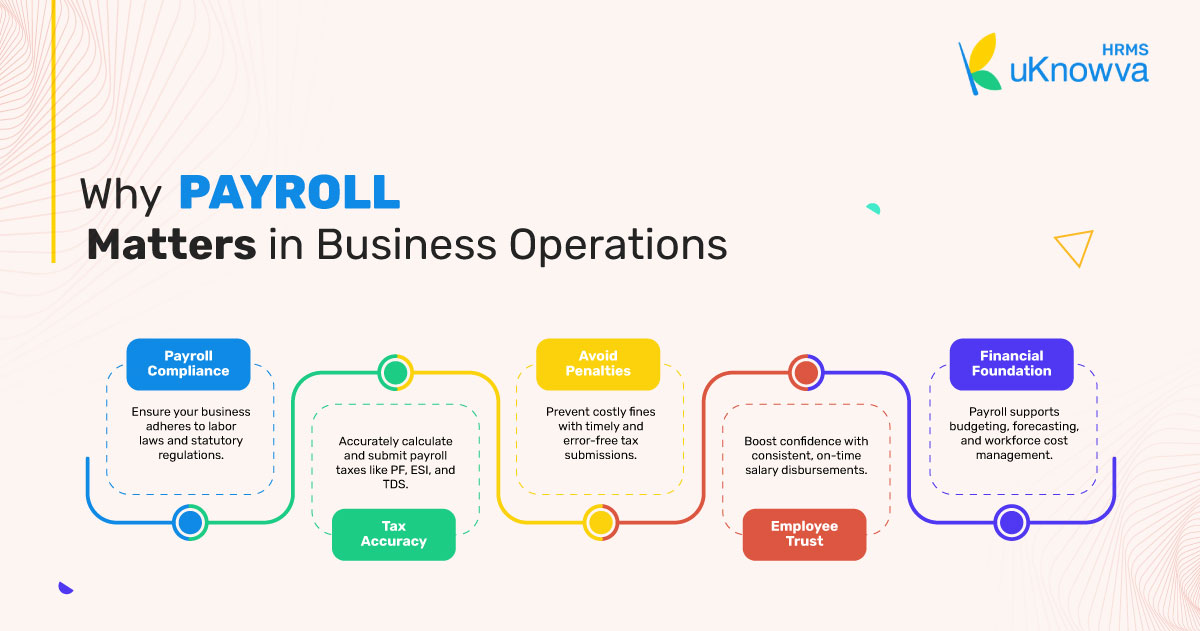
A well-run payroll process is essential for maintaining employee satisfaction and avoiding legal repercussions. It ensures you:
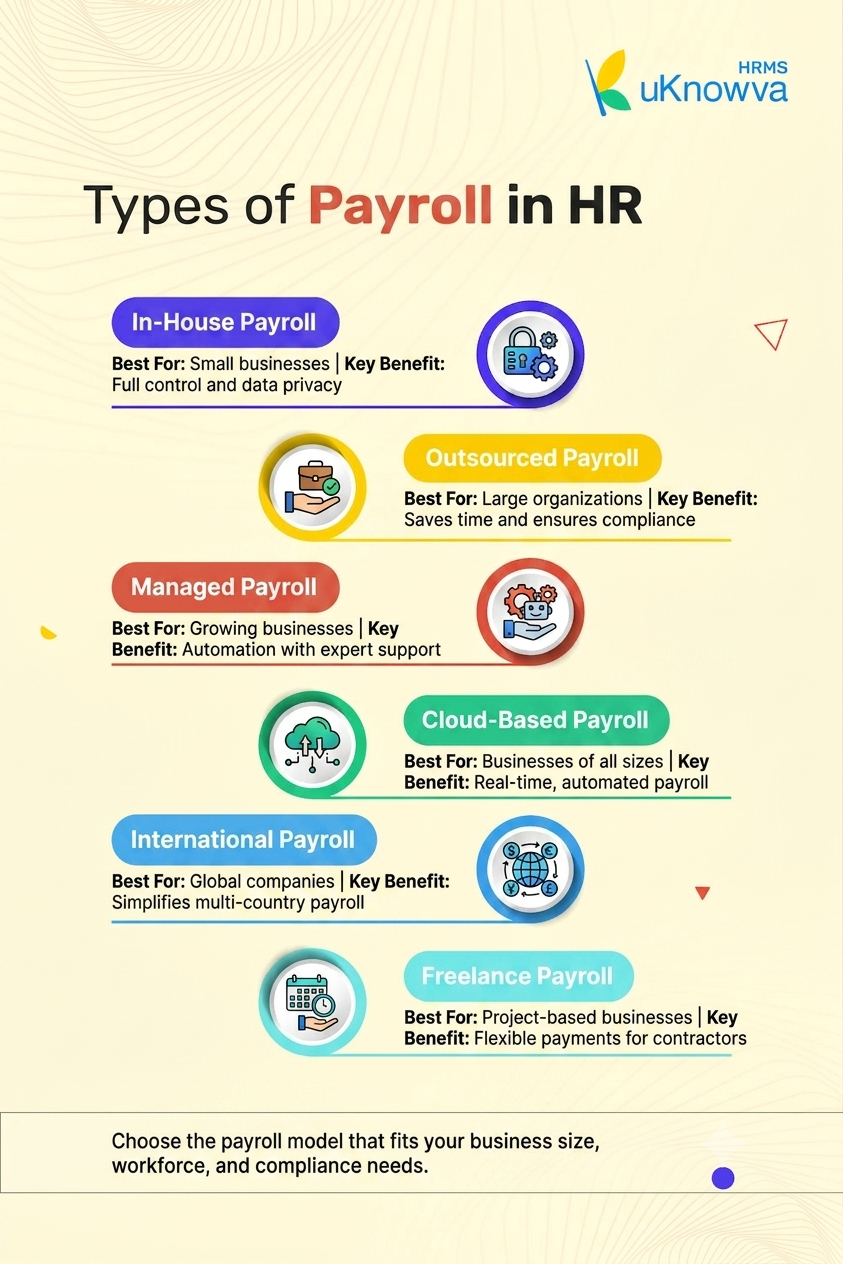
In-House Payroll
In-house payroll- This is where the HR department or the finance department of the company handles the whole payroll process. They do the calculations of payroll, deductions, taxes and benefits with the help of payroll software or by hand.
Outsourced Payroll
In this case, the company contracts an external agency or payroll services provider to do payroll calculations and compliance, tax filings and payslip production.
Managed Payroll
It is a mixed approach in which the organisation deploys payroll software (such as uKnowva HRMS) but pays external consultants to perform certain functions, such as compliance, auditing, or reporting.
Cloud-based or online payroll
Payroll is under cloud HRMS, where it automates the processing of salaries, calculation of taxes, and generation of payslips, all of which can be accessed online.
International Payroll
Applied to multinational companies employing or contracting workers. It ensures that it is not in violation of tax laws, exchange rates, and employment laws in the various regions.
Freelance Payroll or Contractual Payroll
It is designed for freelancers, consultants, or professionals whose work revolves around projects. Payments are done on a per-assignment, hourly, or milestone basis as opposed to monthly.
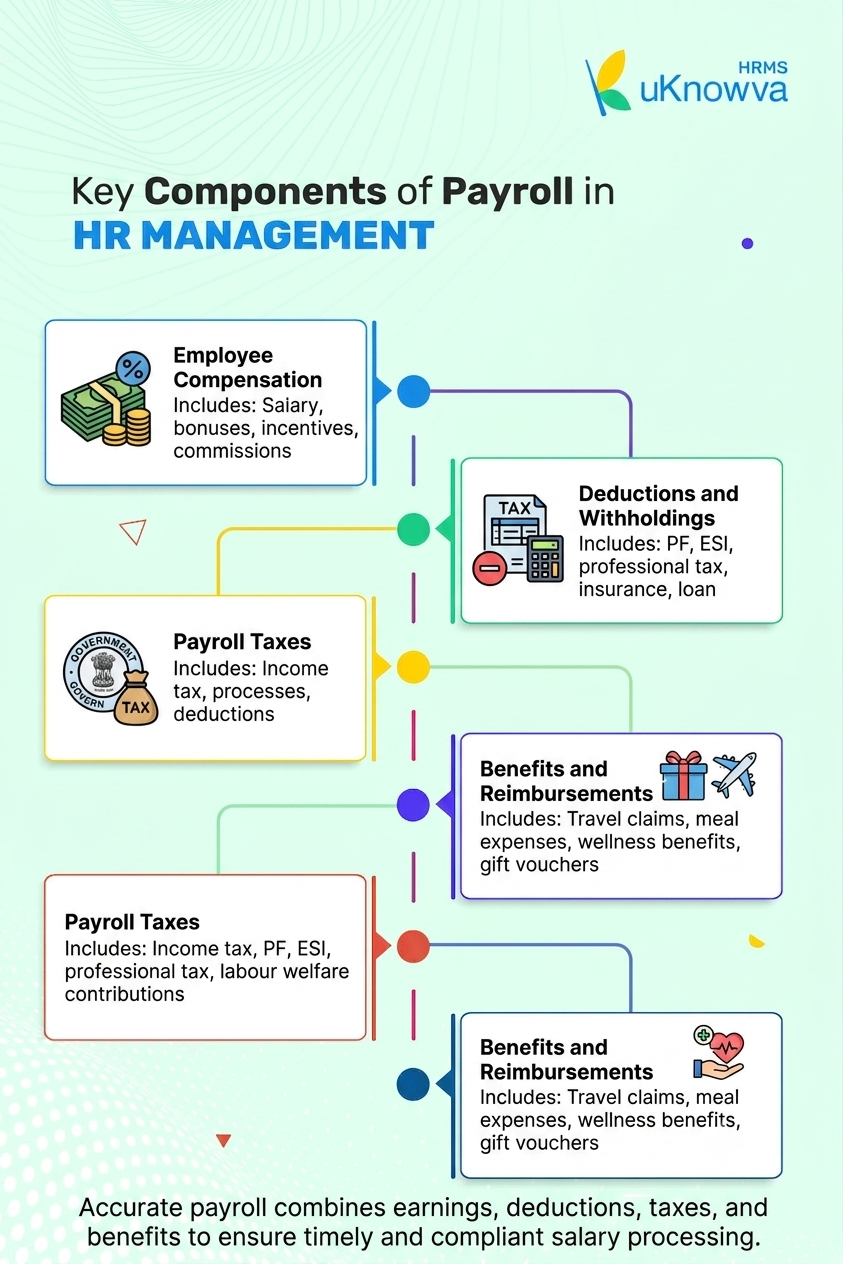
This includes:
Deductions may include:
These deductions are either statutory or voluntary and must be handled with complete accuracy to avoid disputes or legal issues.
Payroll taxes are essential and consist of contributions from both employees and employers. These taxes encompass:
Accurate calculation and timely remittance are crucial for maintaining compliance with local and national tax regulations.
HR is also responsible for incorporating:
HR payroll process can be defined as the process outlining the procedure of compensating the employees correctly and punctually. It makes sure that every single element of salaries, deductions, and statutory requirements is managed smoothly without breaching any guidelines or violating any transparency rules. The properly controlled payroll process will not only improve the satisfaction of the employees, but also will increase financial accuracy and the credibility of the organisation.
This stage involves:
Once data is verified, HR processes the payroll by:
After salaries are disbursed, HR must:
HR ensures payroll runs accurately and on time while staying compliant with labour codes and tax regulations. It manages employee data, validates attendance and leave inputs, coordinates with finance, and resolves payroll-related queries. HR also plays a key role in maintaining transparency, handling statutory filings, and ensuring employees are paid correctly and consistently.
Payroll errors can lead to underpayment, overpayment, or legal penalties. HR must ensure all data, like attendance, leaves, and incentives, is verified and updated before payroll is run.
HR is responsible for making sure the payroll process complies with:
While HR gathers and processes data, finance teams may manage budgets and fund transfers. Strong collaboration between the two ensures:
Accurate employee data is essential for payroll. This includes:
Modern HR payroll systems integrate with attendance software. Accurate time-tracking affects:
HR teams must be approachable and ready to answer employee queries about:
HR must ensure payroll aligns with:
Adhering to compliance safeguards protects the organisation against audits, fines, and legal actions.
Regular updates in tax laws require HR teams to:
It is mandatory to:
Both parties must contribute to statutory obligations. HR ensures accurate deduction and remittance of:
Delays in submitting returns or making payments can lead to:
Most companies now use digital filing systems like:
HR must ensure that payroll data aligns with the information reported.
Typos, outdated spreadsheets, or data mismatches are common but avoidable through:
Frequent legal updates can be confusing. HR teams should:
Incorrectly classifying freelancers, interns, or consultants can lead to tax misreporting. HR must:
One of the fastest ways to lose employee trust is through late or inaccurate salaries. Timely payroll reinforces dependability and professionalism.
Clear payslips and deduction breakups ensure transparency. Employees should never be left wondering why their net pay is lower.
When employees are paid right and on time, they feel valued. This directly impacts:
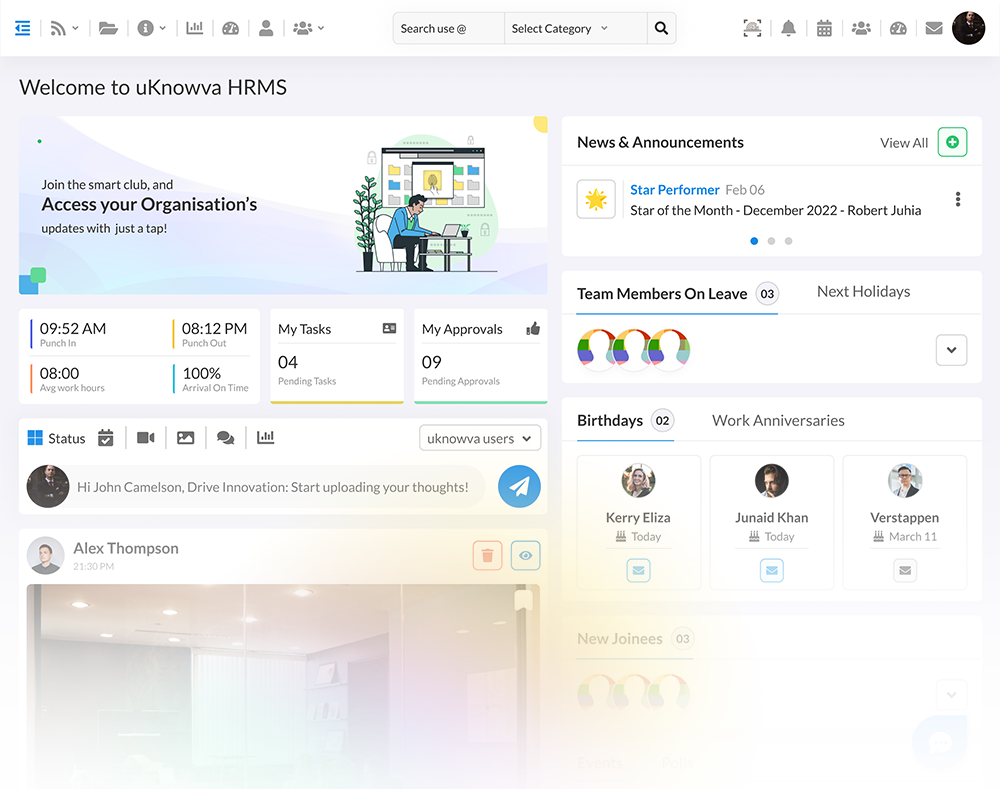
A fully integrated payroll module like the one offered by uKnowva HRMS reduces dependency on spreadsheets and manual tracking. With automation, even large enterprises can process payroll in minutes with near-zero errors.
HR teams can:
Payroll systems can integrate with:
This guarantees smooth operations and real-time data updates across all departments.
uKnowva HRMS helped Cadila Pharmaceuticals streamline payroll operations for 10,000+ employees for field staff, vendors, and contractors, all within a year of implementation.
The company transitioned from a global payroll solution to uKnowva HRMS, which eliminated the manual delays and inefficiencies. The system made payroll processing 30–40% faster as it offered:
Payroll software automates salary calculations, tax deductions, compliance, and payslip generation, reducing manual errors and processing time. It gives HR teams real-time visibility into payroll data, ensures statutory compliance, and frees them to focus on people-focused initiatives instead of repetitive administrative work.
Whether your business is small or enterprise-grade, payroll software helps:
Most software is built to reflect the latest tax and labour law updates, reducing the risk of compliance issues.
Detailed insights help HR:
Choosing the right HR payroll software for your business is crucial for ensuring timely and accurate employee compensation, tax compliance, and overall HR efficiency.
Start by identifying your business size, industry-specific needs, and budget. Look for features such as automated salary calculations, tax filing, payslip generation, compliance management, and employee self-service portals.
Integration with your existing HRMS or accounting software can significantly boost operational efficiency.
uKnowva HRMS stands out as an intelligent, cloud-based solution tailored for modern businesses. It offers a seamless payroll module that automates complex processes like TDS, PF, ESI, professional tax, and bonus calculations.
With its easy-to-use dashboard and AI-powered insights, uKnowva ensures transparency, accuracy, and compliance, all in real-time.
What makes uKnowva even more effective is its adaptability. Whether you're a startup or a large enterprise, uKnowva’s payroll system scales as you grow.
It also comes with customisable salary structures, employee payslip access, and integration with attendance and leave records for hassle-free payroll processing.
Ultimately, the best payroll software should reduce manual errors, save time, and ensure statutory compliance, exactly what uKnowva HRMS delivers with precision. Choose a solution that not only fits your current needs but also evolves with your business.
Effective payroll management depends on accuracy, consistency, and compliance. By automating calculations, maintaining updated employee data, and staying aligned with statutory requirements, organisations can reduce errors and delays. Regular audits, clear documentation, and timely payroll processing build employee trust while giving HR teams better control over costs and reporting. When payroll is managed well, it becomes a reliable operational process rather than a recurring risk.
Schedule internal audits every quarter to:
Every organisation should have an updated payroll policy that includes:
Transparency is key. Keep employees informed about:
Open communication builds trust and reduces confusion.
A typical payroll process flow includes:
SOPs eliminate guesswork. They ensure every payroll team member knows:
AI is revolutionising payroll by:
Chatbots and AI assistants are also helping employees understand payslips and tax declarations.
Blockchain offers:
A smart cloud payroll platform allows:
Payroll errors can affect employee trust, create compliance risks, and increase administrative work. Understanding the most common payroll mistakes helps HR teams improve accuracy, ensure timely salary payments, and stay compliant with applicable regulations.
1. Incorrect Employee Information
Outdated or inaccurate employee details, such as bank account information, tax information, or salary structures, can lead to payroll errors. Regularly reviewing employee records helps prevent payment issues.
2. Missing Payroll Deadlines
Delays in payroll processing can impact employee satisfaction and compliance. A well-planned payroll calendar helps ensure salaries are processed on time.
3. Errors in Salary Calculations
Mistakes in salary, overtime, bonuses, or deductions can result in incorrect payments. Automated payroll software helps improve accuracy and reduce manual errors.
4. Incorrect Tax Deductions
Applying incorrect tax rates or missing statutory deductions can lead to compliance issues. HR teams should stay up to date with current tax and payroll regulations.
5. Poor Attendance Tracking
Inaccurate attendance and leave records often cause payroll disputes. Integrating attendance with payroll helps ensure correct salary calculations.
6. Employee Misclassification
Incorrectly classifying employees or contractors can affect payroll, taxes, and benefits. Proper classification helps maintain compliance.
7. Lack of Payroll Audits
Regular payroll reviews help identify calculation errors, duplicate payments, and compliance gaps before they become bigger problems.
8. Weak Payroll Data Security
Payroll data contains sensitive employee information. Secure access controls and protected data storage help safeguard confidential records.
9. Poor Payroll Record Keeping
Maintaining accurate payroll records simplifies audits, resolves employee queries, and supports legal compliance.
10. Relying on Manual Payroll
Manual payroll becomes difficult as organisations grow. Payroll software improves efficiency, reduces errors, and streamlines payroll management.
In today’s fast-paced business landscape, understanding what payroll is in HR is essential for both compliance and employee satisfaction.
It's not just a backend operation—it’s a crucial touchpoint that shapes your company culture, compliance standing, and employee loyalty.
Whether you’re a startup or a global enterprise, investing in efficient payroll processes and tools can streamline operations, avoid penalties, and build a happier, more engaged workforce.
Why is payroll important within human resources?
Payroll ensures employees are compensated accurately and on time, which directly affects satisfaction and retention. It also supports compliance, financial planning, and smooth workforce management.
How should a small business owner set up payroll within HR?
A small business should establish clear pay structures, collect employee data, and choose reliable payroll software. They must also define processes for attendance, leave tracking, tax deductions, and timely payouts.
How does payroll function as a core responsibility within the HR department?
Payroll links compensation, employee data, attendance, and statutory compliance into one unified workflow. It ensures fair pay, maintains trust, and supports accurate financial reporting.
How do HR and payroll departments ensure compliance with labour laws and tax regulations?
They stay updated on statutory requirements, maintain proper documentation, and apply accurate deductions. Using compliant HRMS/payroll software helps automate filings and reduce compliance risks.
What are the primary challenges HR professionals face in payroll administration?
Common challenges include managing errors, inconsistent data, complex statutory rules, and changing regulations. Manual processing, scattered records, and high-volume calculations increase the difficulty.
Explain the role of automated payroll processing in modern HR operations.
Automated payroll reduces errors, speeds up calculations, and ensures consistent, compliant salary processing. It frees HR teams from manual work and enhances transparency and employee trust.
What is payroll processing in HR?
Payroll processing in HR involves collecting employee data, calculating gross and net pay, deducting taxes and contributions, generating payslips, and transferring salaries to employees.
Is payroll part of HR?
Yes, payroll is part of HR in most organisations.HR is responsible for managing employee compensation, benefits, attendance, and compliance, all of which directly impact payroll. While finance may support salary disbursement and accounting, HR typically owns payroll accuracy, employee data, and statutory compliance.
Why is payroll important in HR management?
Payroll is crucial because it directly impacts employee satisfaction, ensures statutory compliance, and protects the business from legal and financial risks.
How does HR ensure payroll compliance?
HR teams stay updated with labour laws and tax regulations, maintain proper records, use payroll software, and ensure timely filing of statutory returns.
Can payroll be automated?
Yes, modern HRMS platforms like uKnowva HRMS offer automated payroll solutions that reduce errors, save time, and ensure compliance effortlessly.
Try uKnowva HRMS for smarter, faster payroll management. Book a demo today.