








 Aditi Sharma
Table of Content
HR professionals need to review and process a huge number of resumes in a very short period. This is where resume parsing technology steps in, transforming the recruitment process by automating the collection and analysis of candidate information.
By using resume parsing tools, like a CV Parser, HR departments can boost productivity, reduce errors, and make better hiring decisions.
Let’s study these benefits in detail below before prepping you up for using it to reduce the hiring roadblocks and onboarding the best talent in record time!
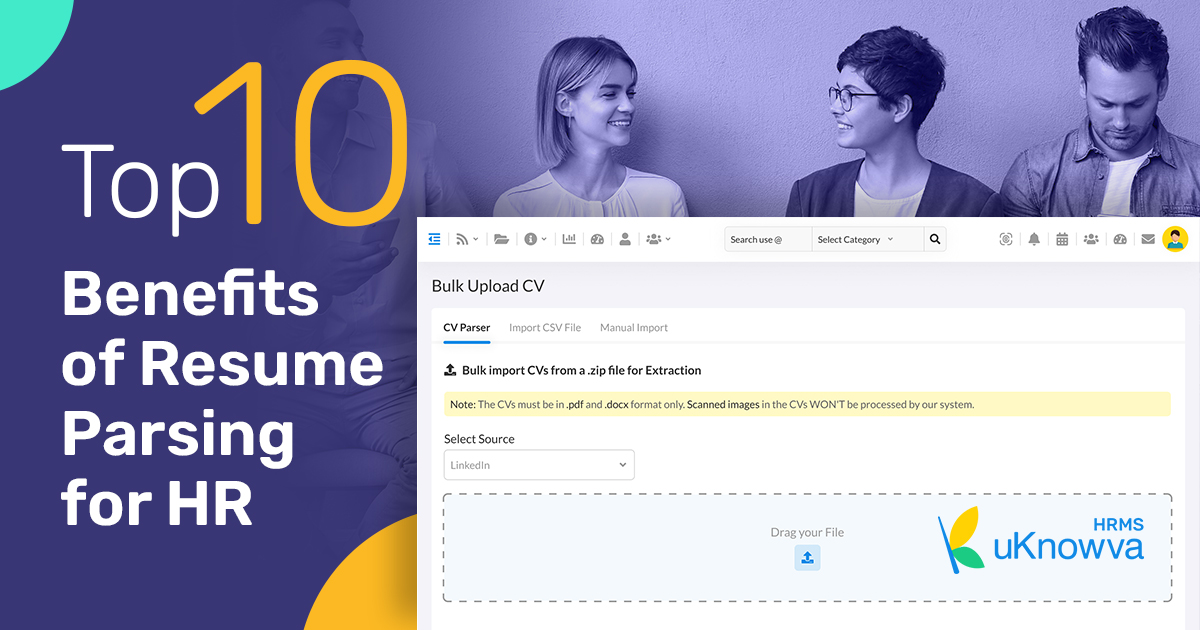
One of the biggest advantages of resume parsing is the time it saves for recruiters.
By automating the extraction of data from resumes, HR teams can skip the manual data entry process.
Imagine the hours saved when instead of manually entering details for hundreds of resumes, the software does it in seconds!
With manual data entry, there’s always the risk of human error. A mistyped name or a misplaced job title could lead to a significant misunderstanding about a candidate’s qualifications.
CV parsers accurately capture information, minimising errors and ensuring that the right details are recorded for each applicant.
This accuracy is crucial in identifying the right candidate for the job.
Resumes come in all shapes and formats. One candidate might use a creative layout, while another may stick to a plain text format.
Resume parsing helps standardise data by extracting information from varied formats and organising it in a consistent structure.
This makes it easy for HR to compare candidates’ qualifications, skills, and experience in a like-for-like format.
In a competitive market, speed is often essential. The faster a company can process applications, the faster it can schedule interviews and make hiring decisions.
Resume parsing reduces the time it takes to sort through applications, enabling HR teams to identify top candidates sooner.
By streamlining this process, companies can move quickly on skilled candidates before other offers come their way.
A streamlined and fast hiring process isn’t just beneficial to HR; it’s also a huge plus for candidates.
When companies use resume parsing, they’re able to respond to applicants more quickly, giving them updates on their application status sooner.
This responsiveness creates a positive impression on potential hires, enhancing the company’s reputation and attracting quality candidates.
Resume parsing embedded in an HR software like uKnowva HRMS often comes with built-in filtering features that lets HR filter resumes based on various parameters.
These parameters include years of experience, educational background, and top skill to automatically shortlist candidates who match these criteria.
By helping to quickly filter out underqualified candidates, resume parsing ensures that recruiters focus only on the most promising applicants, improving the quality of the talent pool.
Many resume parsing tools integrate seamlessly with Applicant Tracking Systems (ATS).
This integration means parsed resumes are automatically stored and organised within the ATS, where recruiters can easily track and manage them.
It also ensures that no candidate information is lost in the process, making it easy for HR to revisit applications when new positions open up or when similar roles need filling.
With resume parsing, HR departments have access to data that can help make informed hiring decisions.
For example, parsed data can reveal trends about the kinds of applicants who are applying, the most common skills among candidates, and even areas where applicants may be lacking in certain qualifications.
By analysing these insights, HR teams can better understand their candidate pool and adjust their recruiting strategies to target the right talent.
Resume parsing can help reduce unconscious bias by removing irrelevant details like names, ages, and addresses before candidates are screened, helping to level the playing field for all applicants.
Additionally, resume parsing tools can store data in compliance with privacy regulations, ensuring that sensitive information is handled securely.
Finally, all the benefits of resume parsing come together to boost overall productivity for HR departments.
With automated data extraction, improved accuracy, and faster processing times, HR staff can spend less time on tedious tasks and more time on strategic decision-making.
By empowering HR professionals with efficient tools, resume parsing allows them to focus on finding the best talent for the company and improving the overall hiring strategy.
In a world where competition for top talent is fierce, the benefits of resume parsing are too significant to ignore.
From saving time to improving candidate experience, resume parsing tools like uKnowva HRMS, help HR teams to enhance the recruitment process.
Resume parsing is the process of using software to extract information from resumes, such as contact details, work history, education, and skills and organising it in a structured format.
By speeding up the application review process, resume parsing allows companies to respond to applicants sooner, providing timely updates and improving the overall candidate experience.
While it can reduce some unconscious bias by hiding certain details (like names and addresses) before screening, resume parsing alone cannot eliminate bias. It’s one tool among many for promoting fair hiring practices.