Table of Content
Offboarding of employees is not a mere administrative cost-cleanup exercise in 2026, but a highly important HR, legal, IT and employer-branding exercise. As more data protection norms become stricter, hybrid workforces are used, and compliance grows more scrutinised, organizations should adopt exits as seriously as onboarding.
A clear Employee Offboarding Checklist can guide the organizations to safeguard knowledge, defend systems, and meet legal requirements, as well as be able to conclude offboarding relationships with all departing employees. Structured offboarding protects the business continuity and reputation regardless of whether the departure is voluntary or not.
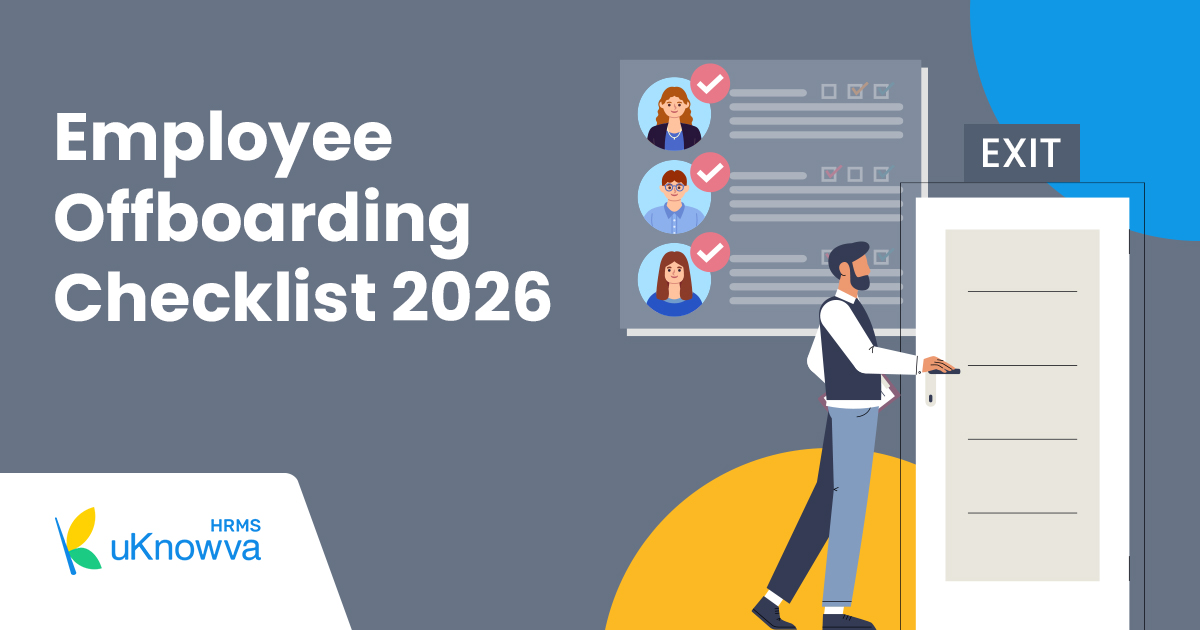
Employee offboarding is the structured process an organization follows when an employee leaves. It covers documentation, knowledge transfer, system access removal, final settlement, compliance, and communication across teams.
A well-managed offboarding process ensures that:
| Aspect | Employee Offboarding | Employee Termination |
| Definition | A structured process to manage an employee’s exit from the organization smoothly and compliantly | A formal decision to end an employee’s employment due to performance, misconduct, or business reasons |
| Nature of Process | Planned, systematic, and often collaborative | Often immediate, corrective, or legally driven |
| Applicability | Applies to all exits—resignation, retirement, end of contract, or termination | Applies specifically to involuntary exits |
| Focus | Knowledge transfer, compliance, asset recovery, and positive exit experience | Legal compliance, risk mitigation, and organizational protection |
| Employee Experience | Respectful and process-driven | Can be sensitive and emotionally challenging |
| Documentation | Exit forms, handover documents, final settlement, and exit interview | Termination notice, legal records, disciplinary documentation |
| IT & Security Actions | Planned access revocation aligned with the last working day | Immediate access revocation to prevent risk |
| Final Settlement | Standard settlement including salary, leave, benefits, and gratuity (if applicable) | Settlement may vary based on legal terms and circumstances |
| HR Involvement | Coordinated effort between HR, IT, finance, and managers | Heavily managed by HR with legal and leadership involvement |
| Objective | Ensure smooth transition and protect business continuity | Protect the organization and enforce employment |
| Aspect | Onboarding | Offboarding |
| Purpose | Introduce employees to the organisation and enable productivity | Ensure a secure, compliant, and respectful exit |
| Stage in the lifecycle | Beginning of employment | End of employment |
| Primary focus | Role clarity, engagement, performance, and culture | Risk mitigation, continuity, compliance, and closure |
| Ownership | HR with managers and team support | HR with IT, finance, managers, and legal |
| Key activities | Orientation, training, goal setting, system access | Knowledge transfer, access revocation, and settlement |
| Risk level | Low operational risk | High legal, data, and compliance risk |
| Automation value | Improves employee experience | Prevents security and compliance failures |
| Business impact | Faster ramp-up and retention | Protection of data, reputation, and continuity |
Offboarding plays a critical role in managing compliance, cybersecurity, and employer reputation. As organizations handle sensitive data, distributed teams, and stricter labour regulations, the way employees exit the organization matters as much as how they are onboarded.
Effective offboarding helps organisations:
Poorly managed offboarding, on the other hand, leads to data exposure, loss of knowledge, payroll conflicts, and negative employer reviews that can impact hiring and brand trust.
The duty of employee offboarding does not belong to one particular function. Effective offboarding needs to have clear ownership between HR, managers, IT, finance, and leadership to allow an easy, compliant, and safe departure.
Primary Owner: HR Team
The entire offboarding process is the responsibility of HR, such as compliance with the policy, documentation, compliance, exit interviews, and departmental coordination. HR makes sure that the offboarding checklist is adhered to end-to-end.
Manager of Hiring / Reporting Manager
The managers will be involved in the transfer of knowledge, handing over tasks and projects, communicating with the clients and facilitating the transition of the employee. They are very important in ensuring continuity.
IT Team
IT has the ownership of system access management, data security, device recovery and implementation of cybersecurity offboarding activities to avert unauthorised access or data breach.
Finance & Payroll Team
Final payroll, reimbursements, settlement of gratuities and benefits, calculation of taxes, final payslip and settlement statements are handled by the finance department.
Leadership Legal (Where Applicable)
Sensitive exits, terminations, or cases requiring a lot of compliance involve leadership and legal teams to make sure that the risk is mitigated, and the case is carried out legally.
The Departing Employee
The employee will handle handovers, handing back of assets and making the necessary declarations, as well as taking part in the exit formalities.
A well-structured offboarding checklist ensures every employee exit is handled consistently across teams, roles, and locations. Without a clear checklist, offboarding becomes reactive, increasing the risk of missed steps, compliance gaps, and security issues.
The key benefits of using a formal employee offboarding checklist include:
A clear offboarding timeline helps organizations manage exits systematically while ensuring compliance, security, and business continuity. Below is a high-level view of how the employee offboarding process typically unfolds.
| Timeline Stage | Key Activities |
| Day 0: Exit Initiation | Resignation or termination confirmation, acknowledgement of last working day, initiation of offboarding workflow |
| Day 1–7: Planning & Notifications | Notify HR, IT, finance, and leadership; define handover plan; share offboarding checklist with employee |
| Notice Period | Knowledge transfer, project and client handover, documentation updates, asset tracking, and regular manager check-ins |
| Last Working Day | Asset collection, system access revocation, exit interview, compliance acknowledgements |
| Post Exit (Within Statutory Timelines) | Final settlement processing, gratuity and benefits settlement, issuance of experience/service letters, HRMS record updates |
A successful employee offboarding process depends on clear ownership and coordination across multiple teams. Defining roles and responsibilities ensures compliance, data security, smooth knowledge transfer, and a positive employee exit experience.
HR Team Responsibilities
The HR team owns the overall offboarding workflow and compliance. Their responsibilities include initiating the offboarding process, managing exit documentation, conducting exit interviews, updating HRMS records, and ensuring adherence to labour laws, policies, and statutory timelines.
Reporting Manager Responsibilities
The reporting manager ensures business continuity during the transition. This includes planning and overseeing knowledge transfer, reallocating responsibilities, completing performance and handover documentation, and supporting the employee through the notice period while maintaining team productivity.
IT and Security Team Responsibilities
The IT and security team safeguards organizational data and systems. Their role includes revoking system access, securing company data, retrieving devices and digital assets, managing email and system deactivation, and executing cybersecurity offboarding steps as per company policy.
Finance and Payroll Team Responsibilities
The finance and payroll team manages all financial settlements. This includes processing final payroll, calculating leave encashment, gratuity and benefits settlement, recovering dues if any, and ensuring timely issuance of final settlement statements and tax documents.
Leadership or Admin Responsibilities
Leadership and administrative teams provide oversight and final approvals. They ensure policy alignment, approve exceptional cases, validate compliance and risk management, and help maintain organizational reputation by supporting a professional and respectful employee exit process.
Certify Departure and Documentation
Notify HR, IT, and Leadership
Get Paperwork Legal and Compliance
Knowledge Transfer Process
Project and Client Handover
IT Offboarding (Security-Critical)
Gather Digital Assets and Equipment
Final Payroll, Benefit and Entitlement
Calculations and payslips of taxes.
Conduct Exit Interview
Update HRIS & Internal Systems
The quality of data is very important after leaving:
Certain employee exits require additional care, controls, and coordination. Below are key special offboarding scenarios explained with clear pointers.
Remote Employee Offboarding
Involuntary Termination / Layoffs (With Legal & Security Steps)
Contractors, Interns, and Temporary Staff
An important point in the life of the employee is the offboarding process. It may pose legal, security, and reputational risks when it is managed poorly. The following are some of the pitfalls that an organization ought to avoid in the offboarding process.
Offboarding is a very important concern in many organizations, yet attention is not given to exits. Weak planning contributes to a lack of compliance, data risks, and poor employee experiences.
The inability to turn off email, HRMS, CRM, VPN and cloud access instantly puts the organization at risk of cybersecurity and data confidentiality.
Loss of resignation letters, exit approvals, handover documents or statutory forms may pose legal and audit problems in future.
Failure to capture important project information, customer, and process knowledge breaks the continuity and impacts the productivity of the team.
Isolated implementation results in waiting time in the recovery of the assets, final settlement, and updating of the system, which aggravates the staff and even internal teams.
The omission of exit interviews implies foregoing some good understanding of attrition drivers, work-related problems and ways in which to improve the situation.
The reputation of the employer and brand credibility is harmed by late payment of salaries, miscalculation of gratuities or pending reimbursement.
Using the identical process and neglecting the location-specific legislation, contracts, and data regulations heightens the compliance risk.
Senseless layoffs or dismissals without understanding, explanation, and paperwork may result in controversies and damaged reputation.
Failure to update HRIS, payroll, compliance registers and org charts contributes to wrong workforce data and reporting errors.
These errors can be avoided, which safeguards the organization and its people.
As employee offboarding becomes more complex in 2026, many organizations rely on HRMS and automation tools to manage exits consistently, securely, and at scale. Manual follow-ups, spreadsheets, and email-driven processes increase the risk of missed steps, delays, and compliance gaps.
Well-designed offboarding tools help teams standardise workflows, improve accountability, and reduce security and legal risks.
Key capabilities to look for include:
When implemented correctly, offboarding software improves speed, accuracy, and employee experience while lowering operational risk.
An effective Employee Offboarding Checklist is not an option anymore; it is a strategic requirement in 2026. Whether it is compliance and cybersecurity, employer branding and retention of knowledge, systematic offboarding cushions the organization on all levels.
A documented, automated, and people-centric offboarding method is vital since it ensures easy exits without jeopardising trust, security, and continuity of operations.
A formal process ensures legal compliance, data security, consistent exits, and a positive employee experience.
Timely documentation, access revocation, and compliance checks prevent misuse of company data and legal disputes.
Ask structured questions, document responses, analyse trends, and feed insights into HR policy improvements.
Clear communication, proper documentation, IT access control, final settlement, and respectful closure.
Common offboarding documents include the resignation or termination letter, acceptance of resignation, exit checklist, asset handover form, knowledge transfer documents, final settlement statement, experience or relieving letter, and statutory forms related to payroll and benefits.
Offboarding should ideally be completed within 15–30 days, depending on notice period policies, final settlement timelines, and statutory requirements. Critical steps like IT access revocation should happen on the employee’s last working day.
Follow contractual terms, labor laws, notice requirements, and document every step clearly.
Immediately disable system access, retrieve devices, change shared credentials, and audit permissions.
Remote offboarding requires stronger IT controls, asset logistics, and virtual communication.
Use a simple standardized checklist and affordable HRMS tools to automate and track exits efficiently.