






 Aditi Sharma
Table of Content
Many organizations believe they are becoming data-driven in HR. Dashboards are live. Reports are automated. AI pilots are underway. Yet, beneath this surface progress lies a less visible risk that CHROs increasingly confront: decisions are being made faster, but not always better.
The issue is rarely intent or capability. It is data quality. Incomplete records, inconsistent definitions, duplicated employee profiles, outdated role structures—these are not technical inconveniences.
They are leadership liabilities. As HR takes on greater responsibility for workforce strategy, skills planning, and organizational resilience, clean HR data becomes foundational, not optional.
Traditionally, data hygiene sat quietly within HR operations or payroll teams. Errors were fixed reactively. Exceptions were tolerated. The impact felt local.
That era is over. Today, HR data informs board-level conversations on growth, productivity, cost, risk, and capability. When the underlying data is weak, even sophisticated analysis produces false confidence.
Clean HR data signals something deeper: leadership discipline. It reflects whether an organization takes its people systems as seriously as its financial systems.
The next generation of HR leaders will be judged not only on insight, but on the integrity of the data behind it.
Poor HR data rarely announces itself as a crisis. Instead, it shows up as friction:
These gaps slow decision-making and weaken credibility at the executive table. Over time, leaders stop asking HR for predictive insight and revert to intuition.
Clean data, by contrast, accelerates trust. It allows HR to speak with clarity about workforce readiness, skill gaps, and future scenarios—without over-correcting or hedging every recommendation.
Employees may never see HR databases, but they feel their effects. Inaccurate data leads to payroll errors, delayed benefits, misaligned roles, and irrelevant learning paths. Each instance chips away at trust.
When HR data is clean and connected, experiences become more coherent. Employees are not asked to “fix the system.” Managers are not forced to work around it. Conversations become simpler because context is already present.
Experience-led HR operations depend on this foundation. Without reliable data, even well-intentioned personalization feels arbitrary. With it, fairness and consistency scale naturally.
AI does not forgive messy inputs. It amplifies them. Models trained on inconsistent or biased data produce outputs that appear sophisticated but rest on fragile ground.
This is why many AI-led HR initiatives stall after initial excitement. The technology works. The data does not.
As one observes through lived experience:
"AI is rewriting HR, not by replacing people but by removing friction. Yet its power rests on one foundation — clean, reliable data. With quality data, AI can predict talent needs, personalise experiences, and elevate productivity. This is why HR must now lead the charge in making organisations truly AI-ready".
Deputy General Manager
ACME Group
The implication for CHROs is clear: AI readiness is less about tools and more about discipline. Data quality is the work no one sees—until it is missing.
Many organizations attempt to improve data quality through audits, one-time clean-ups, or added controls. These efforts help, but they do not scale.
Sustainable data quality comes from systems designed to reduce ambiguity at the source. Clear data ownership. Consistent definitions across modules. Intelligent workflows that prevent duplication and flag anomalies early.
Connected HR ecosystems play a critical role here. When employee data flows seamlessly across hiring, performance, learning, and workforce planning, errors surface quickly and context is preserved.
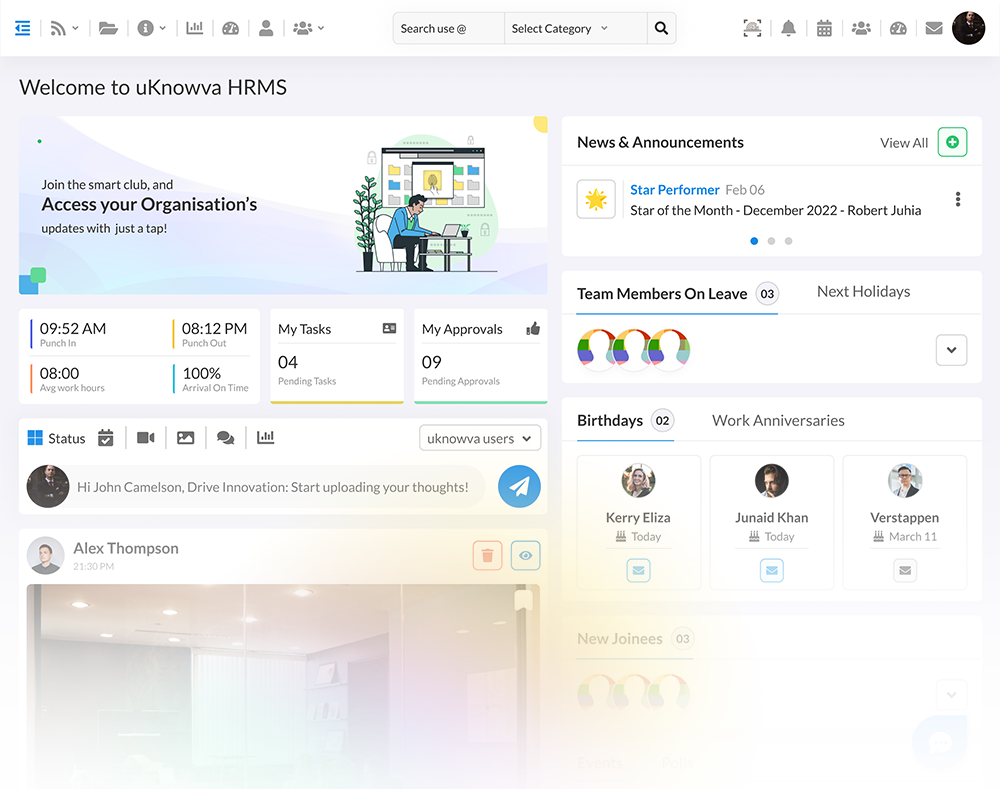
Platforms such as uKnowva HRMS enable this integration quietly by aligning data structures with how HR actually works, rather than forcing workarounds.
One of the hardest calls for CHROs is knowing when to move fast with imperfect data and when to pause. In volatile environments, waiting for “perfect” data is unrealistic. Acting on unreliable data, however, carries long-term consequences.
Senior HR leaders make this trade-off consciously. They understand where data is directional and where it must be exact. They communicate confidence levels transparently. Most importantly, they invest continuously in improving the baseline rather than accepting chronic gaps as inevitable.
Clean data does not slow organizations down. It reduces rework, second-guessing, and decision fatigue.
As HR becomes more influential, its stewardship responsibilities grow. Stewardship of culture. Stewardship of trust. And increasingly, stewardship of data.
Future-ready CHROs will be those who treat HR data as a shared organizational asset—not an HR byproduct. They will build teams that respect data governance without becoming bureaucratic. They will insist on visibility, consistency, and accountability, even when it is uncomfortable.
In doing so, they elevate HR’s role from service provider to strategic partner—one credible insight at a time.
Clean HR data is not about perfection. It is about intent, integrity, and leadership maturity. And it will quietly define who is ready for what comes next.
Because data quality directly affects credibility. Clean data enables confident recommendations and positions HR as a trusted advisor, not a support function.
Yes, but not through one-time efforts. It requires system design, clear ownership, and ongoing governance embedded into daily workflows.
AI models amplify existing flaws. Inaccurate or inconsistent data leads to misleading insights, increasing risk rather than reducing it.
Clarity. Align definitions, roles, and data ownership across HR processes before investing further in analytics or AI.
Initially, it may feel slower. Over time, it accelerates transformation by reducing rework, exceptions, and mistrust.
By designing systems that prevent errors upfront rather than correcting them later. Good governance should feel invisible to employees.
More. As decisions become increasingly data-led, the quality of that data will distinguish thoughtful leadership from reactive management.