










 Play the audio of the blog
 Pause
Continue
Stop
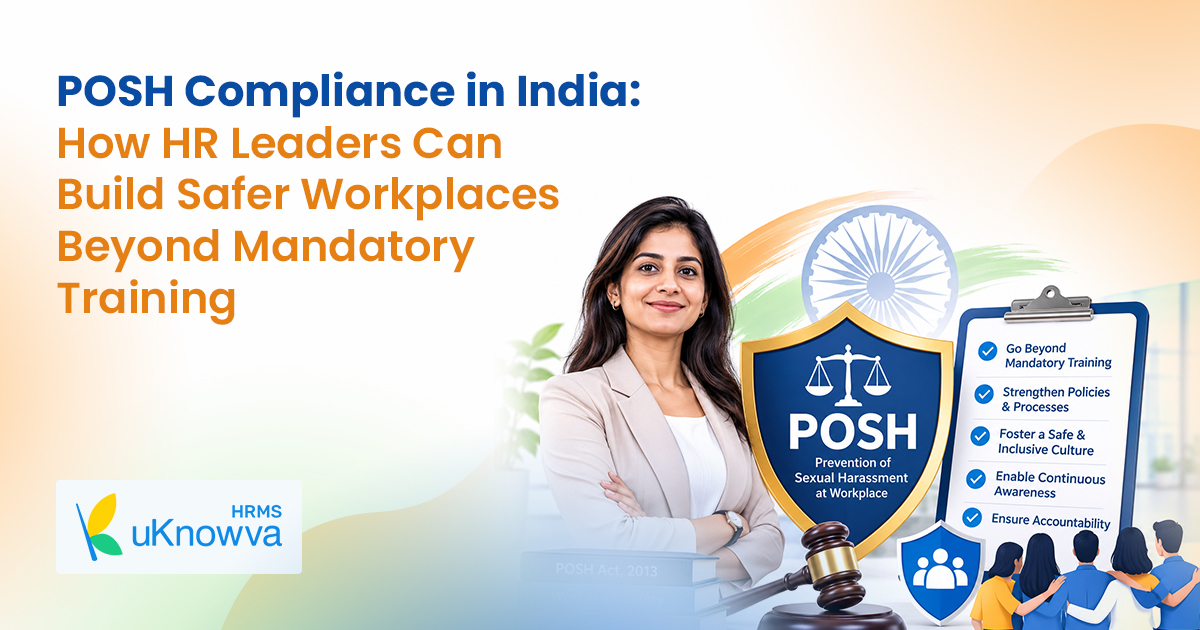
In the modern corporate ecosystem, statutory compliance is often viewed as a destination, a box to be checked, an annual report to be filed, or a mandatory e-learning module to be completed. However, when it comes to the Prevention of Sexual Harassment (POSH) Act, 2013, treating compliance purely as a legal obligation is a systemic failure of leadership.
Mandatory training sessions and annual awareness decks are foundational, but they do not automatically yield a safe, respectful workplace culture. True safety is built in the spaces between compliance deadlines. It thrives in an organization's daily micro-behaviors, leadership accountability, and psychological safety.
As HR leaders and POSH practitioners, our mandate must evolve from mere legal adherence to active cultural transformation.
Many organizations boast 100% completion rates for their annual POSH modules. Yet, columns of data rarely reflect the psychological comfort of an employee on the floor. Relying strictly on mandatory training creates a dangerous illusion of safety because:
To bridge the gap between policy and practice, HR changemakers and Internal Committees (IC) must adopt a more holistic, continuous strategy.
An Internal Committee is only effective if employees trust it enough to approach it. Building this trust requires visible, unwavering confidentiality and objectivity.
The fear of retaliation whether it is an adverse performance appraisal, social exclusion, or being labeled "troublesome" is the single biggest reason harassment goes unreported. While the complainant interacts with the IC, their daily reality is managed by their immediate supervisor.
The boundaries of the workplace have permanently shifted. Harassment is no longer confined to office corridors or physical conference rooms. It has migrated to late-night direct messages on chat platforms, inappropriate remarks during video calls, or casual boundary-crossing on personal messaging apps.
Safety cannot be the sole responsibility of HR or IC. A truly safe workplace is self-policing, where peers look out for one another.
Culture is caught, not just taught. True safety cannot be operationalized solely at the grassroots level if executives and senior management operate under a different set of rules. For a POSH framework to carry absolute integrity, executive leadership must step into an active ownership role rather than treating the mandate as an administrative function delegated to HR.
The Zero-Tolerance Threshold: Executive leaders must visibly demonstrate that zero tolerance applies to everyone universally, with zero exemptions for high performers, high-impact business drivers, or revenue generators. When the boardroom treats compliance with the same analytical urgency as financial audit protocols, safety is institutionalized.
Walking the Talk: True psychological safety requires executives to champion transparency. This involves regularly reinforcing anti-retaliation policies at leadership tables and participating in the same sensitization dialogue as the rest of the workforce. When leaders actively measure workplace health and psychological metrics as part of their organizational KPIs, compliance transforms into systemic trust.
Stepping into the role of a POSH Presiding Officer demands a delicate, unwavering balance. It requires the empathy to listen to deeply distressing narratives without bias, coupled with the rigid objectivity required to conduct a thorough, legally defensible inquiry.
We must remember that the POSH Act is built on the principles of Natural Justice. The process must be impeccably fair to both parties.
As HR custodians, our ultimate goal shouldn't just be to penalize wrongdoing, but to rigorously uphold an environment where fairness, equity, and dignity are non-negotiable standards for every single employee irrespective of their designation or tenure.
Building a safer workplace is not a project with a clear end date; it is an ongoing, daily operational commitment. It requires us as HR leaders to look closely at our organizational culture, question our blind spots, and continuously champion accountability at the very top.
Let us move past the compliance checklist. Let’s build workplaces where safety is felt, dignity is standard, and respect is woven into the very fabric of our organizational identity.
A question to ask “What steps is your organization taking to move beyond mandatory compliance?”