







 Aditi Sharma
Table of Content
In the current business environment, where change is always imminent and talent is the most valuable resource, organisations can no longer afford to depend on conventional HR practices.
Employees require not just a paycheck but growth, purpose and constant learning. Firms that cannot offer this are likely to lose their best talent to their competitors who are.
Learning and development in HRM refers to the continuous process of building employee knowledge, skills and capabilities to improve performance and support long-term growth. It goes beyond one-time training and focuses on ongoing learning throughout an employee’s career.
It extends beyond training programs to instil a culture of continuous learning that supports employee engagement as well as business performance.
Learning
Definition: Learning is an ongoing process of learning, development and acquisition of knowledge, skills and behaviours through learning and practice or experience.
Emphasis: General knowledge and general enhancement.
Examples: Reading industry research or completing online courses to keep up with things, which is done by an employee.
Development
Definition: Development is a long-term strategy, which is oriented at growth, i.e. development of an employee to fit him/her in new positions and duties in the future.
Concentration: Career development, leadership preparation, and self-development.
Example: Leader development programme to equip employees to become managers.
Training
Definition: Training is structured short-term activity designed to enhance particular skills or competencies that are needed in a current job.
Focus: Short-term performance and work-related skills.
Example: Training on how to use new HR software or workplace safety compliance training.
Strategic L&D makes sure that the training of employees is not a random and not a one-sided process but is directly related to the organizational goals. Aligning the skill development to the business priorities, the companies will be able to create the working force leading to the growth and contributing to the long-term success.
Employees can work better in their tasks when they are provided with specific learning opportunities. Strategic L&D helps eliminate the skills gaps, boost efficiency, and gain confidence that leads to increased productivity and improved results throughout the organization.
Workers who think their career development is appreciated become more involved and devoted. Strategic L&D reveals the willingness of a firm to the development of the professionals aspect, thus enhancing job satisfaction and lowering the turnover rate.
Established development programmes equip employees with the challenges of tomorrow such as emerging technologies, new factors in the markets and management. This is a proactive strategy that makes sure that the organisation is flexible and strong amidst a competitive environment.
The strategic L&D is also goal-oriented and performance-based, unlike ad-hoc training. This enables companies to quantify the return on investment in the form of increased productivity, innovation and general business performance.
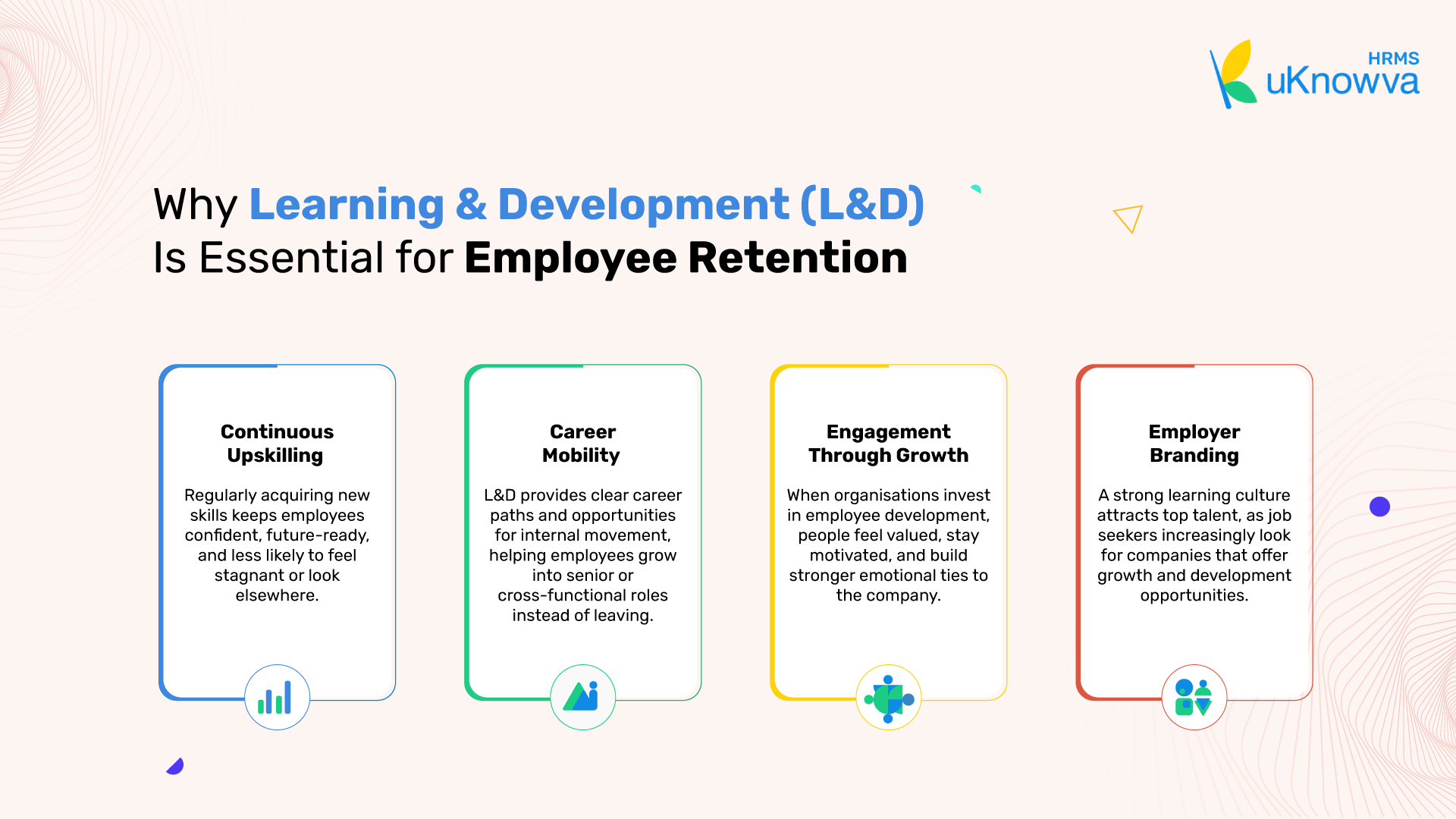
One of the most acute challenges that HR leaders face is retention. Employees currently change jobs not only due to their higher pay, but also due to their opportunities to grow. That is where L&D can assist in eliminating this problem:
Employees feel secure about their future in the firm when they acquire new skills on a regular basis. Upskilling will keep them up to date in their discipline, be it learning a new digital tool, leadership, or industry certification.
Otherwise, they can be afraid of stagnation and seek growth opportunities externally.
Employees desire to have a vision of career in front of them. Formal L&D initiatives demonstrate to them how they can be transferred to senior levels or even transferred to other units of the same organisation.
To illustrate, a sales executive may be trained on cross-functional and acquire mentorship to become a product manager. This type of internal career mobility eliminates the necessity of external recruitment and retains workers.
By investing in people development, organisations show that they care and respect them. This enhances morale and increases the emotional attachment of the employee to the company.
It involves more than happy employees; it involves motivated employees who work harder because they feel that their efforts are appreciated.
Organisations with a good learning culture get a pull towards talent. Most job seekers are currently doing research on whether a company is offering learning opportunities or not before submitting an application.
When you incorporate L&D as an observable component of your culture, you increase your reputation as a growth-friendly employer, which subsequently contributes to retention and recruitment.
Well-trained employees are not only faster but also more accurate in their work. Proper learning programs reduce time wasted on trial and error, providing staff with the tools and knowledge needed to execute tasks confidently.
This boost in efficiency and quality directly impacts team and company performance.
Organisations that prioritise learning are better equipped to handle rapid changes—be it technological advancements, shifting regulations, or evolving customer demands.
Employees who are constantly learning are more adaptable and innovative, enabling the company to stay ahead of the curve.
A strong L&D culture encourages experimentation, critical thinking, and openness to change.
If you examine high-performing teams across industries, you’ll often find a common denominator: a strong emphasis on learning and development.
Industry leaders such as Adobe, Amazon, and Tata Consultancy Services (TCS) have consistently credited their performance excellence to robust L&D initiatives.
These organisations demonstrate that investing in talent development yields tangible business outcomes.
Gone are the days of generic training programs. Today’s employees expect learning experiences that are relevant to their specific roles, career goals, and personal interests.
Personalised learning pathways—crafted based on performance data, career aspirations, and individual learning styles—keep employees engaged and motivated to improve.
Classroom-based learning is only part of the picture. Real development happens through hands-on experience, shadowing, and continuous feedback.
Encouraging mentorship relationships and providing on-the-job training opportunities helps bridge the gap between theory and practice, fostering stronger skills and greater confidence.
Identifying and nurturing leadership potential early helps build a resilient management pipeline.
Dedicated programs that focus on soft skills, emotional intelligence, strategic thinking, and decision-making equip future leaders to step into managerial roles with clarity and competence. Source: LinkedIn Talent Blog
These initiatives also signal to employees that the organisation invests in their long-term growth.
Microlearning—delivering content in short, focused bursts—caters to the modern employee's busy schedule.
When integrated into mobile or cloud-based platforms, learning becomes seamless and accessible at any time.
Whether during a commute or a coffee break, employees can upskill without disrupting their workflow, making continuous learning a habit rather than a chore.
L&D has a direct effect on employee productivity and their workplace feeling of belonging:
Boosts Productivity
Employees who have been trained are better and quicker in their duties. As an illustration, by training your customer service staff in conflict resolution, they will attend to queries more effectively, minimizing wait time and enhancing customer satisfaction. Training results in increased productivity, which translates to business outcomes. See Merit Summit corporate case studies
Drives Innovation
Learning fosters curiosity. Staff that is motivated to seek new tools, techniques, or approaches will offer more inventive solutions.
As an example, educating developers on the use of AI tools could encourage them to create automation that can help the company save hundreds of working hours.
Improves Morale
Working on a regular basis may lead to burnout and disconnection. L&D programs eliminate this sameness by enabling employees to venture into new fields of knowledge.
This feeling of improvement maintains morale because the employees are not completing a job, but are creating a future.
Supports Collaboration
Cross-functional training causes workers to be more understanding of other teams. By way of example, a marketing professional who has been exposed to the fundamentals of finance works well with the finance team. This decreases inter-departmental conflicts and enhances teamwork.
HR needs to proactively assess where the team is lacking and which skills will be needed in the future.
Training isn't effective unless it's tied to what the business is trying to achieve — whether that’s customer satisfaction, speed, or innovation.
From feedback surveys to performance metrics, HR must demonstrate the return on investment of every training initiative.
Technology has entirely changed the way organisations think about L&D.
AI-powered Personalisation
AI interprets the work of employees, their interests, and career objectives to suggest individual learning plans. cess. . For instance, if an employee shows interest in leadership, AI can suggest leadership courses tailored to their current role.
Learning Management Systems (LMS)
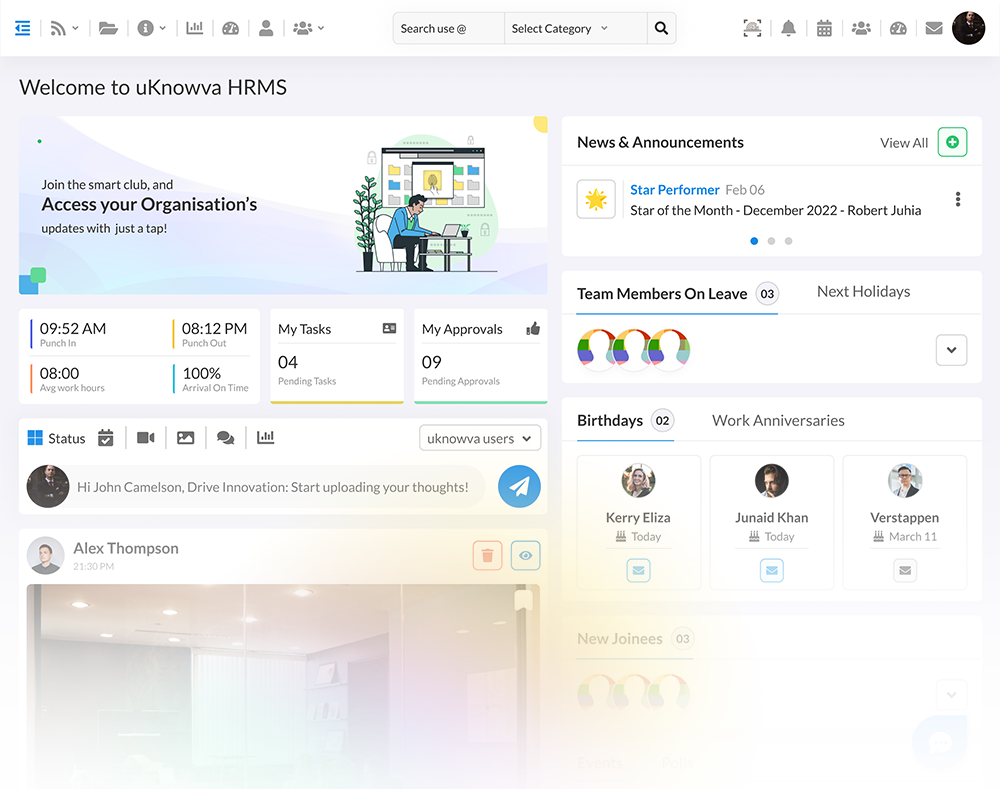
An LMS centralises all learning resources in one place. Platforms like uKnowva LMS let HR track progress, assign courses, and provide feedback while employees access courses anytime.
Gamification
Learning becomes fun and employees are more motivated. Badges, points, and leaderboards are gaming elements that turn learning into a challenge, and increase the participation rates.
Mobile Learning
Using mobile friendly platforms, employees can continue learning when they are on the move, at commutes, during breaks, or when traveling. This enables learning to be continuous and flexible to meet the requirements of a modern work-life balance.
Analytics Dashboards
Real-time dashboards let HR leaders track course completion rates, engagement, and impact. This data-driven approach ensures continuous improvement of training programs.
All organisations experience obstacles in their attempt to develop effective L&D programs:
Budget Constraints
Most companies are reluctant to invest in training because they consider training as a cost, rather than an investment. But the price of non-training (turnover or skills shortfall) is a lot higher.
Employee Resistance
Other employees will consider training a waste of time. To counter this, HR needs to develop interesting, applicable, and adaptable learning experiences that are explicitly helpful to the job of the employee.
Measuring Impact
Training can be hard to directly relate to the business. To address this, firms must establish quantifiable KPIs prior to instituting programs such as decreasing customer complaints or promoting internally.
One-Size-Fits-All Programs
Non-specific training does not appeal to heterogeneous employees. The solution to this challenge is personalisation. Role, skill-level, and interest-based tailored programs make the programs more engaging.
The process of learning does not only have a functional impact on employees:
Boosts Confidence
Continuous learning makes employees feel more competent in dealing with challenges, which in turn increases their self-esteem. This trust usually comes in the form of improved performance and leadership abilities.
Reduces Burnout
As soon as the employees have an opportunity to escape the routine and get to know something new, it rejuvenates their mindset. As an intellectual vacation, learning can help to prevent burnout.
Strengthens Belonging
An organization that invests in human resource communicates to its employees that they are treasured. This feeling of belonging causes workers to be more devoted and dedicated.
Encourages Curiosity
The habit of curiosity that is a result of continuous learning is a prerequisite to innovation. Interested employees will tend to question the status quo and suggest more suitable solutions.
To determine the effectiveness of their L&D programs, organisations can evaluate them in a few different ways:
Business KPIs
Did training decrease the number of errors? Do the sales improve following the upskilling of the sales team? The connection of the training results to the hard numbers justifies itself.
Employee Performance
The learning will be proven through better task performance, quicker project completion, or good quality work.
Engagement Metrics
Employee enthusiasm is expressed in high attendance at training programs and high scores in feedback. Poor engagement is an indicator that requires program redesigning.
Retention Data
When you have trained employees that are staying longer, are applying internally and advancing their career, then you know that L&D is being utilized as a retention strategy.
L&D will be artificial intelligence, mixed reality, and people-focused. Trends include:
With industry development, the only strategy that will be sustainable is to ensure that employees continue to learn, to unlearn, and relearn.
Creating a truly impactful L&D environment requires more than just implementing programs. It involves building a culture that values, supports, and celebrates learning at every level. The 70/20/10 model is a common L&D framework
Leadership support is often a critical factor in the success of any L&D initiative. When executives champion learning initiatives and lead by example — enrolling in courses, attending workshops, or sharing their learning journeys — it sends a powerful message.
Their involvement helps allocate resources, align learning goals with business strategy, and foster a culture where learning is a strategic priority, not a side activity.
For employees to truly engage in learning, they need to feel psychologically safe. This means cultivating an environment where asking questions, making mistakes, and trying new approaches are not just accepted but encouraged. Employees should feel confident that their growth is supported and that errors made in the learning process are seen as opportunities rather than failures.
Recognition is a powerful motivator. Whether an employee completes an online certification, applies a new skill in a real project, or mentors a colleague, these achievements should be acknowledged.
Recognising learning achievements, whether minor or significant, emphasizes the importance of growth and strengthens a learning-oriented workplace culture.
Recognition can be formal (e.g., awards or shoutouts during meetings) or informal (e.g., peer recognition platforms or team acknowledgements).
HRM Learning and Development is no longer a choice, it is a strategic necessity. L&D enhances performance, increases engagement and decreases attrition by ensuring that personal development aligns with organisational objectives.
Changes such as uKnowva HRMS simplify this transition process by providing combined and AI-based L&D solutions that are connected directly to performance, payroll, and employee engagement modules.
Investing in L&D not only trains employees, but also creates future leaders, innovators and drivers of growth in companies.
What is Learning and Development in HR?
Learning and Development (L&D) in HR is the process of enhancing employees’ skills, knowledge, and behaviours to improve their performance and support career growth. It goes beyond traditional training — it creates a culture of continuous learning that strengthens employee engagement, boosts productivity, and drives organisational success.
What is the aim of Learning and Development?
The primary aim of L&D is to align employee growth with business objectives. It ensures that employees are upskilled and future-ready while also feeling supported in their personal and career growth. Ultimately, L&D aims to:
What are the activities of Learning and Development?
Key L&D activities include:
How can you improve workplace Learning and Development programs?
To improve L&D programs, organisations should:
Who would benefit most from Learning and Development?
L&D benefits everyone in the organisation:
Is Learning and Development part of HR and talent management?
Yes. L&D is a core function of HR and a key component of talent management. While HR ensures compliance, payroll, and workforce planning, L&D focuses on upskilling and career development. Together, they work to attract, develop, engage, and retain top talent — ensuring business continuity and growth.
What does a Learning and Development professional do?
An L&D professional is responsible for:
They act as strategic partners to HR and business leaders, ensuring that workforce development aligns with long-term organisational goals.