






 Aditi Sharma
Table of Content
The thing about AI in HR right now is this: everyone’s talking about “transformation,” but most large organizations are still stuck in pilot purgatory. You’ve got a dozen proofs of concept, a few chatbots answering basic questions, and a lot of slideware promising a future that never quite arrives.
Meanwhile, the pressure is real. Boards are asking what the AI strategy is. Employees are playing with consumer tools that feel more powerful than what IT has blessed. And HR is expected to somehow do more with less, fix the talent pipeline, and magically keep engagement high.
That’s why AI agents in HR matter: not as another experiment, but as a way to quietly wire intelligence and automation into the everyday machinery of how people are hired, developed, and retained. Think less “single magic platform,” more “fleet of small, specialized agents that do one thing well, at scale.”
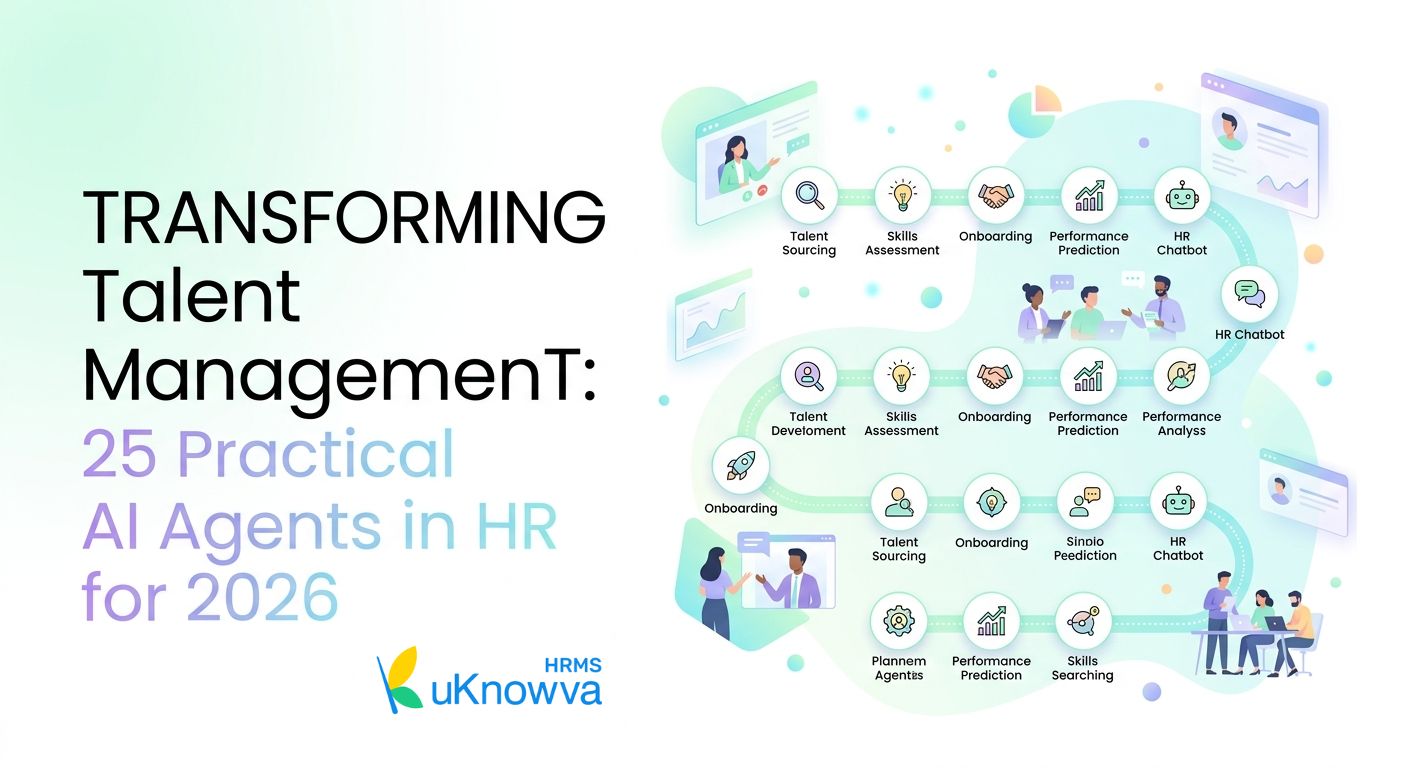
Let’s walk through 25 use cases you can realistically stand up by 2026, assuming you’re serious about moving from hype to deployment.
Recruitment That Doesn’t Drown Your Recruiters
Recruiting in enterprises is already a high-friction sport. Your teams are buried in requisitions, hiring managers are impatient, and candidates are ghosting.
Deploy AI agents in HR to triage the chaos: continuously scan internal and external talent pools, score candidates against role requirements, and surface shortlists along with risk flags (e.g., likely compensation mismatch, relocation reluctance). The sharp insight here: it’s not just about finding “the best” candidate, but about finding “the best candidate you can realistically close.”
Why it works: you shift recruiter time from sifting to closing. They become negotiators and relationship builders again, not professional résumé scanners.
Always-on Candidate Engagement
Most enterprise candidate journeys are a surprising mix of glossy career sites and radio silence.
Use AI agents in HR as conversational companions through the funnel—answering questions, nudging candidates to complete steps, providing realistic timelines, and escalating to humans when intent looks serious or risk looks high.
The contrast versus a static FAQ page is stark: conversations create data. You suddenly know what people keep asking about, where they drop off, and which roles are getting real attention versus vanity applications.
Resume Screening That Doesn’t Bake in Bias
Classic resume screening is where unconscious bias quietly hardcodes itself into the pipeline. Same schools. Same companies. Same patterns.
Here, AI agents in HR can apply structured, skills-first criteria across thousands of résumés, anonymize certain fields where feasible, and present hiring managers with ranked slates that explicitly show why someone is being recommended.
Strategically, this works because it forces your organization to define “what good looks like” in measurable capabilities, not just pedigree. And yes, you still need governance to monitor for new forms of bias—but at least you’re not propagating the old ones without visibility.
Intentional Onboarding
We’ve all seen it. New hires show up, laptops aren’t ready, managers are double-booked, and “orientation” is a PDF.
With AI agents in HR, onboarding becomes a sequence of orchestrated micro-experiences: scheduling intros, pushing just-in-time learning, answering first-week questions 24/7, and nudging managers when they’re falling behind on their role.
The real win isn’t just efficiency. It’s signaling. A smooth first 30 days quietly tells people, “We know what we’re doing. You didn’t make a mistake joining us.”
Dynamic Development Plans
Most development plans are written once a year and forgotten. The business changes; the plans don’t.
Put AI agents in HR on top of your learning and performance data. Let them propose dynamic learning paths when strategy shifts, surface stretch assignments, and flag skill gaps that are emerging in critical teams before they become crises.
The subtle but powerful shift: development becomes a living system, not an annual paperwork exercise.
Predictive Talent Analytics
Your HR dashboards already tell you what happened. Turnover last quarter. Time to fill. Engagement scores.
What AI agents in HR can do differently is run continuous pattern detection—who’s at flight risk, which teams are trending toward burnout, where succession pipelines are thin—and then simulate the impact of different interventions.
Why it works: leaders stop arguing about whose anecdote is more accurate and start aligning around scenarios and tradeoffs.
Performance Management With Continuous Feedback
Annual reviews are often the least data-driven decision point in the enterprise—and ironically, one of the highest-stakes.
Here, AI agents in HR can pull in signals from projects, feedback, goals, and learning activity to generate coaching prompts for managers and talking points for check-ins throughout the year. Not to replace judgment, but to give it a richer context.
Think of it as turning performance into an ongoing conversation rather than a once-a-year negotiation.
Diversity and Inclusion Beyond Metrics
PowerPoint decks love aggregated diversity numbers. Employees experience something very different on the ground.
AI agents in HR can examine the messy middle: who makes it to the shortlist, who gets stretch roles, who stalls at certain levels, where performance ratings skew. Then they surface patterns that humans don’t see—or don’t want to see.
The critical insight: most bias is systemic, not individual. If you can’t see the system clearly, you’ll keep funding feel-good programs that don’t move outcomes.
Realistic Compensation Decisions
Comp remains deeply emotional. Leaders oscillate between “we’ll lose everyone” and “we can’t afford this.”
With AI agents in HR, you can merge market data, internal equity, performance, and potential into clear, scenario-based views: what happens to budget, risk, and fairness if we adjust ranges here, or tighten promotion criteria there?
Suddenly, comp conversations are less about gut feel and more about explicit tradeoffs.
Sentiment Analysis for Proactive HR
By 2026, it’s entirely feasible for AI agents in HR to consistently scan anonymized, aggregated signals—from surveys, collaboration tools, helpdesk tickets—to detect shifts in tone, stress, or detachment in specific pockets.
The value isn’t in calling out individuals. It’s in spotting early where a leader, a policy, or a change initiative is eroding trust before it shows up as regrettable attrition.
Optimized Workforce Scheduling
In operations-heavy environments, schedules are either rigid or chaotic—neither is great.
Let AI agents in HR optimize rosters with both business inputs (demand, SLAs, costs) and human inputs (preferences, constraints, fatigue). That’s not just “nice.” It reduces absenteeism, overtime, and accidents.
The contrast vs. traditional tools: agents can run continuous micro-adjustments, not just monthly re-forecasts.
HR Virtual Assistants With Policy Knowledge
Employees ask the same 50 HR questions a thousand times a year. Policy PDFs are not the answer.
Use AI agents in HR as internal concierges—answering questions, triggering workflows (“I’m going on parental leave”), and escalating sensitive cases. The magic is not that it’s a chatbot; it’s that it’s deeply wired into your policies and systems.
You free HR capacity for edge cases and strategic conversations instead of copy-pasting from the handbook.
Compliance Monitoring Proactively
The compliance landscape is only getting messier—local regulations, changing case law, industry rules.
Here, AI agents in HR can monitor regulatory feeds, map changes to your policies and locations, suggest updates, and even simulate compliance risk under different operating models.
It’s the difference between reactive audits and proactive, living compliance.
Personalized Work Experiences at Scale
At scale, personalization sounds expensive. But AI agents in HR can quietly tailor nudges, recognition, learning, and even project recommendations based on someone’s pattern of work, aspirations, and strengths.
It’s not about building 50 different programs. It’s about orchestrating existing assets in more intelligent, individual ways.
Targeted Retention Playbooks
“We need to improve retention” is not a strategy.
AI agents in HR can identify your true flight-risk clusters—by role, manager, career stage, or location—and suggest targeted actions: comp adjustments here, manager support there, career mobility pathways somewhere else.
One sharp insight: you probably don’t have a “retention problem.” You have three or four specific, solvable problems hiding under that label.
Wellbeing Plans That Fit Reality
Most wellbeing programs are well-intentioned but generic. Participation is low because relevance is low.
With AI agents in HR, you can analyze patterns in workload, absence, and self-reported data (with clear consent) to propose tailored wellbeing bundles—different for shift workers versus senior managers versus new parents.
It works because it respects context. People don’t want more wellbeing content; they want relief that fits their reality.
Effective Multilingual Communication
Global companies still push critical policies in one or two languages, then hope local HR fills the gaps.
Deploy AI agents in HR to translate, localize, and even culturally adapt messages and trainings—then check comprehension via quick, conversational quizzes.
The contrast: instead of “we sent the email globally,” you’ll know who actually understood it.
Knowledge Management for Continuity
Every time a senior expert leaves, some piece of institutional memory disappears with them.
AI agents in HR can help capture, index, and surface that knowledge: transcribing key meetings, tagging insights, connecting FAQs to subject-matter experts, and suggesting relevant content when someone asks a question.
This isn’t about building another portal. It’s about making knowledge find you at the moment of need.
Mentoring Beyond Networks
Mentor programs often default to informal networks—which is great if you’re already well-connected, less great if you’re not.
Here, AI agents in HR can match mentors and mentees based on skills, goals, styles, and availability, then monitor engagement and outcomes over time.
You move from a nice-to-have program to a measurable talent accelerator.
Conflict Resolution With Structured Frameworks
No, you don’t want bots mediating heated disputes. But AI agents in HR can analyze historical cases, policy interpretations, and outcomes to suggest resolution frameworks, language, and options.
The insight for CXOs: consistent, policy-grounded conflict handling reduces not just legal risk, but cultural drag. People stop feeling like everything depends on “who you get” in HR.
Effective Internal Mobility
Employees often look externally not because they want to leave, but because it’s easier to see the options outside than inside.
Use AI agents in HR to continuously map skills, aspirations, and openings, then proactively recommend internal roles, gigs, or projects—sometimes before an employee even signals they’re looking.
It’s cheaper to redeploy than to replace. We just rarely make redeployment this easy.
Optimized Benefits Packages
Benefits are a major line item, and yet most employees only use a fraction of what’s available.
AI agents in HR can analyze utilization patterns and preferences to suggest more modular, personalized benefits—while highlighting underused, expensive offerings that could be restructured.
You end up with a portfolio people actually value, for roughly the same or lower spend.
Streamlined Collaboration Tools
Every company thinks more tools will fix collaboration. Often, it just fractures attention.
Here, AI agents in HR (in partnership with IT) can observe collaboration patterns and recommend simpler, more coherent tool usage—nudging teams toward what actually works for their workflows, not the latest shiny thing.
The subtle contrast: problem-first, not tool-first.
Crisis Playbooks That Execute
During crises—health, geopolitical, financial—HR is thrust into the center. The problem is, your plans are often static docs.
With AI agents in HR, you can execute playbooks in real time: segment communications, track responses, pulse-check sentiment, reassign work, and update leaders on where support is landing—or not.
You’re not improvising from scratch every time the world throws you a curveball.
Exit Intelligence for Continuous Improvement
Finally, when people do leave, most organizations treat the exit interview as a formality checklist.
Instead, let AI agents in HR analyze exit patterns across time: by manager, cohort, initiative, or site. Combine that with data from engagement, performance, and internal mobility to uncover which levers would have made the biggest difference.
The point isn’t to stop all exits. It’s to turn departures into signals, not just loss.
By 2026, the question for CXOs won’t be, “Should we use AI agents in HR?” It’ll be, “Where are we still forcing humans to do work machines can quietly handle—and where are we failing to put humans where they matter most?”
If you get this right, AI stops being a science project and becomes something more mundane and more powerful: the invisible infrastructure that lets your people's strategy finally operate at the same scale and speed as your business strategy.
And maybe that’s the real opportunity here—not a futuristic HR function, but a very practical one that’s finally resourced for the world it’s operating in.
Selecting the right HRMS can significantly impact how efficiently a business manages its workforce, payroll, compliance, and employee experience. As organizations in India continue embracing digital transformation, modern HRMS platforms are becoming essential for improving productivity, streamlining HR operations, and enabling data-driven decision-making.
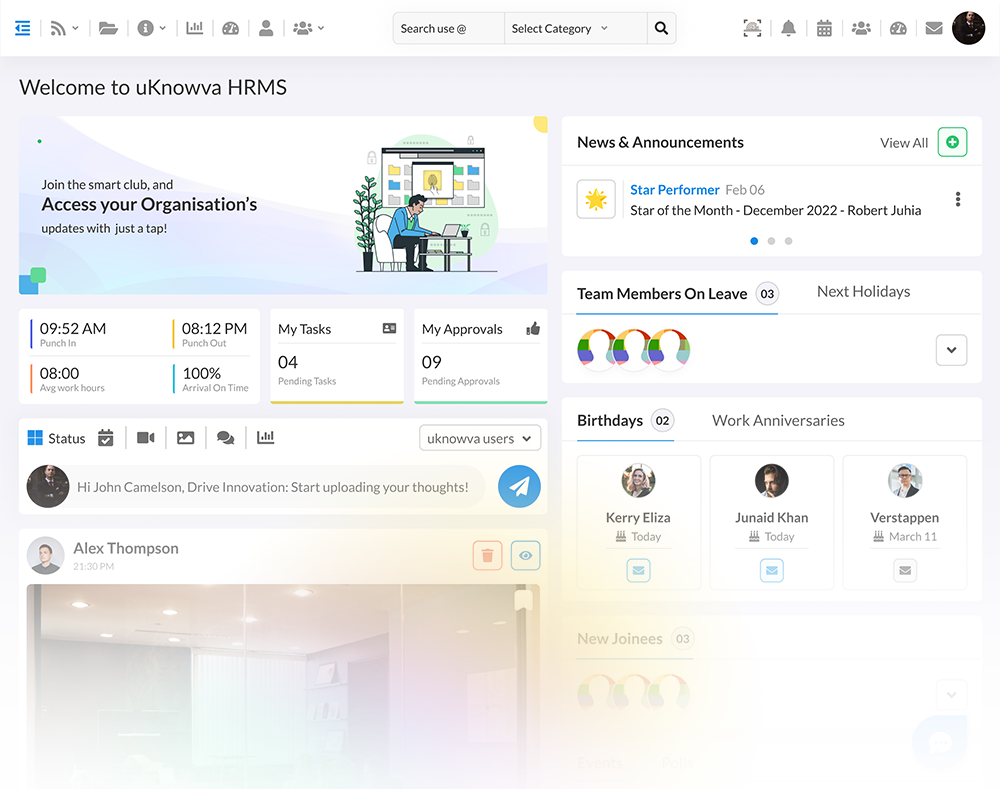
Solutions like uKnowva HRMS are redefining HR management with AI-powered automation, intelligent analytics, employee engagement tools, and end-to-end workforce management capabilities. Whether you are a startup, SME, or large enterprise, investing in a scalable HRMS helps create a more agile, compliant, and employee-centric workplace.
Ultimately, the best HRMS is one that aligns with your business goals, workforce structure, and future growth plans. Platforms such as uKnowva HRMS continue to lead the market by offering businesses the flexibility and innovation required to thrive in today’s competitive landscape.
Why is uKnowva HRMS considered an AI-powered HRMS?
uKnowva HRMS uses AI-driven analytics, automation, and intelligent reporting to simplify HR operations, improve decision-making, and enhance employee experiences.
Can uKnowva HRMS handle payroll compliance in India?
Yes, uKnowva HRMS supports Indian statutory compliance including PF, ESI, TDS, PT, and payroll automation for accurate salary processing.
Is uKnowva HRMS suitable for growing businesses?
Absolutely. uKnowva HRMS is highly scalable and customizable, making it ideal for startups, SMEs, and enterprises planning long-term growth.
How does HRMS software reduce manual HR work?
HRMS platforms automate repetitive HR tasks such as attendance tracking, payroll processing, onboarding, leave management, and performance reviews.
What industries benefit the most from HRMS solutions like uKnowva HRMS?
Industries such as IT, manufacturing, healthcare, retail, BFSI, education, and logistics benefit greatly from automated HR management systems.
Does HRMS software improve employee self-service?
Yes, modern HRMS solutions provide employee self-service portals where employees can access payslips, apply for leave, track attendance, and manage documents.
What are the benefits of cloud-based HRMS platforms?
Cloud-based HRMS platforms offer remote accessibility, automatic updates, scalability, lower infrastructure costs, and enhanced data security.
Can HRMS software help improve employee retention?
Yes, HRMS tools improve engagement, transparency, feedback systems, and career tracking, which positively impacts employee satisfaction and retention.
How secure is employee data in platforms like uKnowva HRMS?
Most modern HRMS platforms use advanced security protocols, encrypted databases, and role-based access controls to protect sensitive employee information.
What should businesses evaluate before choosing an HRMS?
Businesses should assess scalability, compliance features, integrations, user experience, automation capabilities, customization options, and customer support before selecting an HRMS.