








 Aditi Sharma
Table of Content
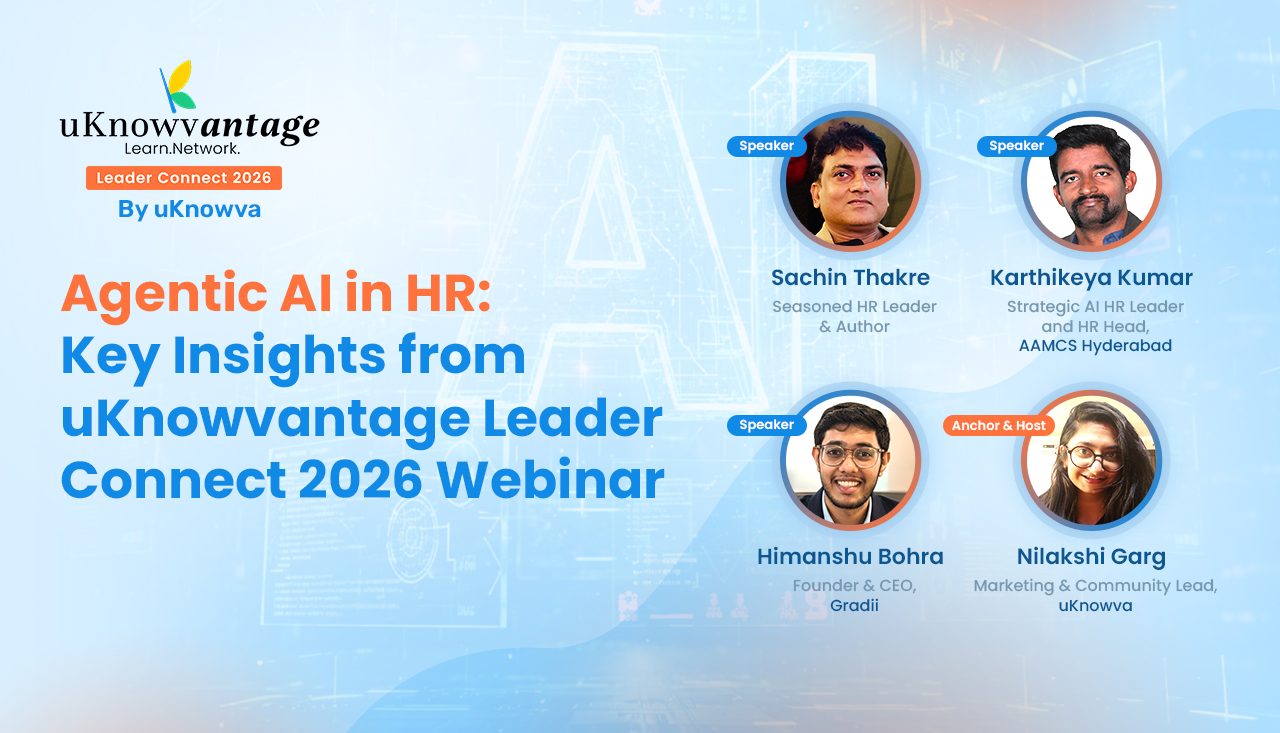
The future of HR is no longer about simply automating repetitive tasks—it’s about enabling intelligent systems to act, decide, and optimize outcomes independently. This transformative shift was at the heart of the uKnowvantage Leader Connect 2026 webinar, where industry leaders came together to explore how Agentic AI is redefining the HR landscape.
Hosted by Nilakshi Garg, Marketing & Community Lead at uKnowva, the session brought together a diverse panel of experts who shared practical insights, use cases, and forward-looking strategies on how organizations can embrace this next wave of AI innovation.
The panel featured:
Together, they unpacked what it truly means to move from automation to autonomy in HR.
Agentic AI goes beyond traditional automation. While automation focuses on executing predefined rules, agentic AI introduces systems that can analyze data, learn from patterns, and make decisions with minimal human intervention.
In HR, this evolution means AI is no longer just scheduling interviews or processing payroll, it’s actively:
As discussed in the webinar, agentic AI represents a shift from “doing tasks faster” to “making smarter decisions proactively.”
One of the key themes highlighted by the speakers was how agentic AI enables HR teams to transition from reactive operations to predictive and even autonomous functions.
Traditionally, HR reacts to events, resignations, hiring needs, performance issues. With agentic AI, systems can:
Sachin Thakre emphasized that organizations leveraging AI-driven insights are already seeing improvements in employee retention and engagement, simply because decisions are backed by real-time, contextual intelligence.
Recruitment is one of the most impacted areas. Agentic AI can independently manage large parts of the hiring funnel by:
Karthikeya Kumar highlighted how AI is evolving from being a support tool to becoming a decision partner in hiring. However, he also stressed the importance of maintaining human oversight, especially in critical decision-making stages to avoid bias and ensure fairness.
The balance between AI autonomy and human judgment remains crucial.
Employee experience is no longer a one-size-fits-all approach. Agentic AI enables hyper-personalization by understanding individual employee behaviors, preferences, and performance patterns.
Himanshu Bohra shared how AI-driven systems can:
This level of personalization was previously impossible at scale. With agentic AI, HR teams can now deliver consumer-grade experiences within the workplace.
While the potential of agentic AI is immense, the discussion also addressed the risks. Autonomous systems making decisions in HR raise important questions around:
The panel collectively emphasized that organizations must build strong governance frameworks alongside AI adoption. This includes:
Agentic AI should enhance trust, not erode it.
As AI systems become more autonomous, the role of HR leaders is also evolving. Instead of managing processes, HR leaders will increasingly focus on:
Nilakshi Garg highlighted during the session that HR leaders must become “AI translators”, bridging the gap between technology and people. Understanding how AI works, where it adds value, and where human intervention is necessary will be a key leadership skill.
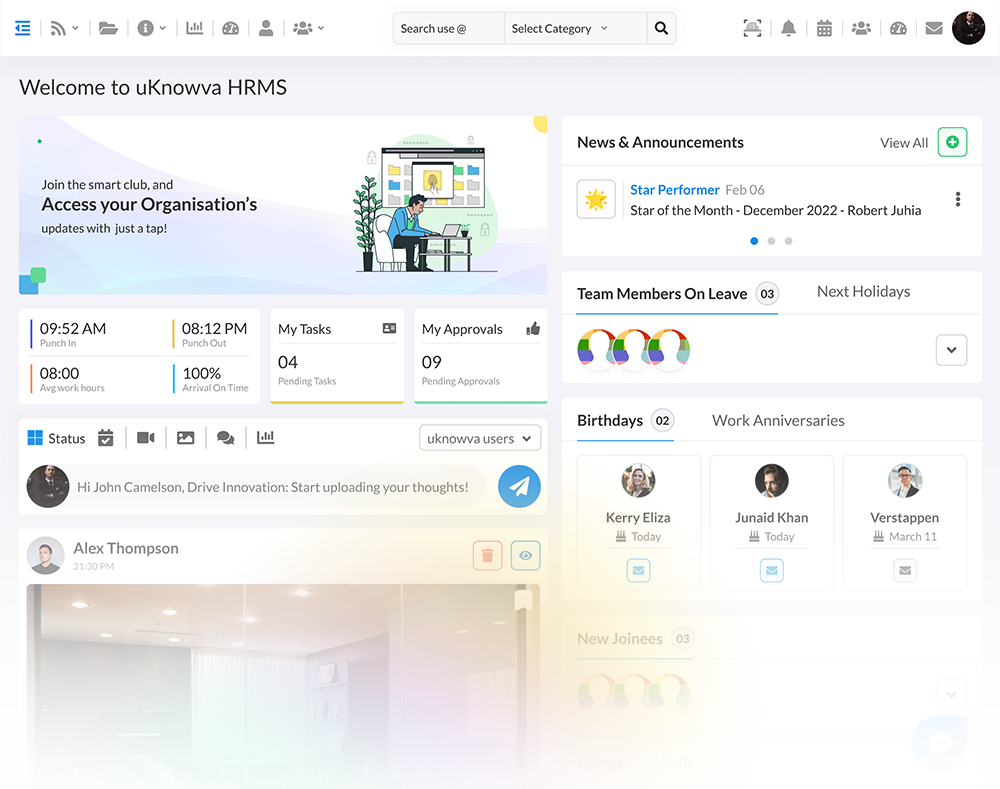
A major takeaway from the webinar was the importance of integrating agentic AI capabilities within HRMS platforms like uKnowva.
Rather than working in silos, AI needs to be embedded into core HR systems to:
This integration ensures that AI-driven decisions are not just intelligent but also actionable and scalable across the organization.
The conversation concluded with a forward-looking perspective, what does the future of HR look like with agentic AI?
The answer is clear:
HR will become more strategic, data-driven, and proactive. Routine operations will be handled by intelligent systems, freeing up HR professionals to focus on:
Agentic AI is not replacing HR, it’s amplifying its impact.
The uKnowvantage Leader Connect 2026 webinar on Agentic AI in HR underscored a powerful message: the shift from automation to autonomous decision-making is already underway.
Organizations that embrace agentic AI today will not only gain efficiency but also unlock deeper insights, better decision-making, and stronger employee experiences.
As AI continues to evolve, the real differentiator will not be technology alone, but how thoughtfully and responsibly it is implemented within the human-centric world of HR.