








 Nilakshi Garg
Table of Content
From sustainable practices to ethical conduct, ESG encompasses various aspects that contribute to long-term success and societal impact. Because of this, ESG and HR is an intertwined role and vertical to decipher and implement in sustainable businesses.
HR professionals pay heed to strategising and implementing approaches that are good for the company, people, and the overall environment. They know what is the best course of action for everyone involved in a decision to run the business operationally well.
However, often new age leaders do not understand the bridge between ESG and HR. Thus, today we want to highlight how being ESG conscious is crucial for HR leaders of today and tomorrow to optimise business performance and scale operations from one end to another.
So, read the post ahead and figure out the ways to know why human resource professionals must emphasise ESG in 2024.
Want to skip the post?
Schedule a FREE consultation call.

HR professionals play a vital role in integrating ESG principles as one of the cornerstones of tomorrow-ready and future-conscious organisations.
They are responsible for crafting and executing ESG policies, updating compliance and staying abreast with latest regulations.
By aligning HR practices with ESG goals, organisations can enhance their reputation, attract top talent, and drive long-term value creation.
ESG considerations have a profound impact on talent acquisition strategies.
In today's rapidly changing and highly complex job market, candidates are increasingly prioritising employers who demonstrate a commitment to sustainability, social responsibility, and ethical business practices.
HR professionals must incorporate ESG messaging into their employer branding. This helps attract purpose-driven candidates who align with the company's values and mission.
ESG initiatives extend beyond environmental sustainability to encompass employee well-being.
HR departments are tasked with prioritising the health and safety of employees, promoting work-life balance, and supporting initiatives that enhance overall employee satisfaction and engagement.
By investing in employee well-being, organisations can create a positive workplace culture that fosters productivity, innovation, and loyalty.
Diversity, equity, and inclusion are the core elements of ESG conscious organisations.
HR professionals thrive to create all-inclusive, diverse, and equitable workplaces. Such workplaces make employees feel heard, respected, and recognised for their contributions.
They can infuse smarter workforce management solutions to open internal communication channels. Through these channels, employees can recognise each other’s talent, strengths, and achievements on the go.
By championing DEI initiatives, organisations can address systemic inequalities, promote social justice, and drive positive change within their communities.
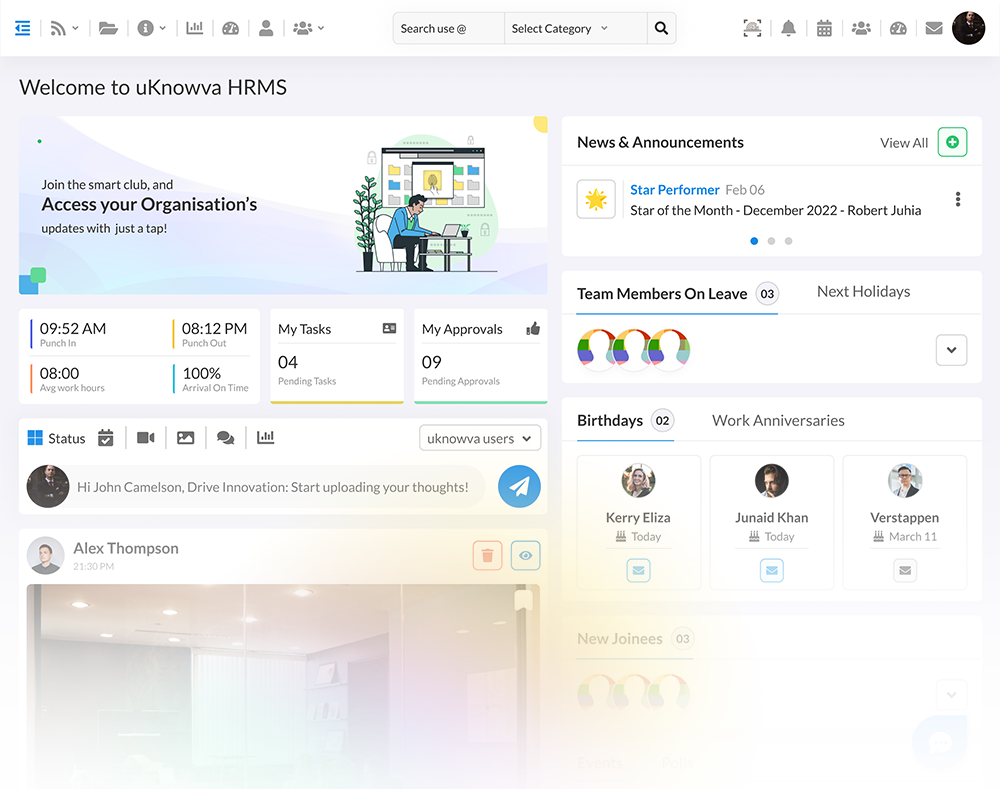
A modern HRMS allows HR professionals and their employees to create discussion forums or groups. It opens the way to create communities and support one another even during the most crucial working hours or days.
Educating employees on ESG principles and best practices through an eLMS is essential for driving meaningful change within organisations.
HR departments can facilitate training and development programs that raise awareness of sustainability issues, promote responsible business conduct, and empower employees to incorporate ESG considerations into their daily workflows.
By investing in continuous learning, organisations build a workforce that is knowledgeable, engaged, and committed to advancing ESG goals.
Effective ESG integration requires collaboration across various departments through an anywhere accessible social intranet.
HR professionals can work closely with departments such as finance, operations, and marketing to embed ESG considerations into business strategies, decision-making processes, and performance metrics.
By fostering cross-functional teamwork, organisations leverage diverse expertise and create value at every stage of synergising efforts for sustainable growth.
Transparent communication builds credibility with stakeholders, including employees, investors, customers, and communities.
HR professionals help stakeholders engage, communicate ESG initiatives, and solicit feedback to inform decision-making and improvement efforts.
By prioritising transparency and accountability, organisations can enhance their reputation, mitigate risks, and strengthen relationships with key stakeholders.
ESG matters to HR professionals because it represents an opportunity to drive positive change, enhance organisational performance, and create shared value for stakeholders.
By integrating ESG principles into HR practices, organisations can attract and retain top talent, foster a culture of responsibility and innovation, and contribute to a more sustainable and equitable future.
What is ESG, and how does it relate to HR?
ESG stands for Environmental, Social, and Governance criteria. It's a framework used to evaluate a company's impact beyond financial performance. HR plays a vital role in implementing ESG principles by ensuring employee well-being, diversity, and ethical practices within the organisation.
How can HR departments integrate ESG principles into their practices?
HR can integrate ESG principles by fostering a diverse and inclusive workplace, implementing sustainable HR policies, promoting employee health and safety, and ensuring ethical business conduct.
What are the benefits of incorporating ESG into HR strategies?
Incorporating ESG into HR strategies can lead to improved employee engagement, enhanced employer branding, reduced turnover, better risk management, and increased attractiveness to socially responsible investors.
What role does diversity and inclusion (D&I) play in ESG initiatives within HR?
D&I is a crucial aspect of ESG as it promotes fairness, equality, and respect within the workplace. HR can foster diversity and inclusion by implementing inclusive hiring practices, providing diversity training, and creating a supportive work environment for all employees.