








 Nilakshi Garg
Table of Content
Setting up an effective ESG strategy is essential in the workplace. It helps you boost the likelihood of success in the long run by drawing the attention of investors. If you’re a human resource manager, this blog post will guide you through in knowing what elements you need for an effective and impactful ESG strategy.
Such a strategy will build an organisation that attracts valuable and high-performing talent. It will put less of a burden on the environment and make the culture stand out in the market.
If your organisation is ready to scale up and want to evolve its EG consciousness over a period, read the post ahead.
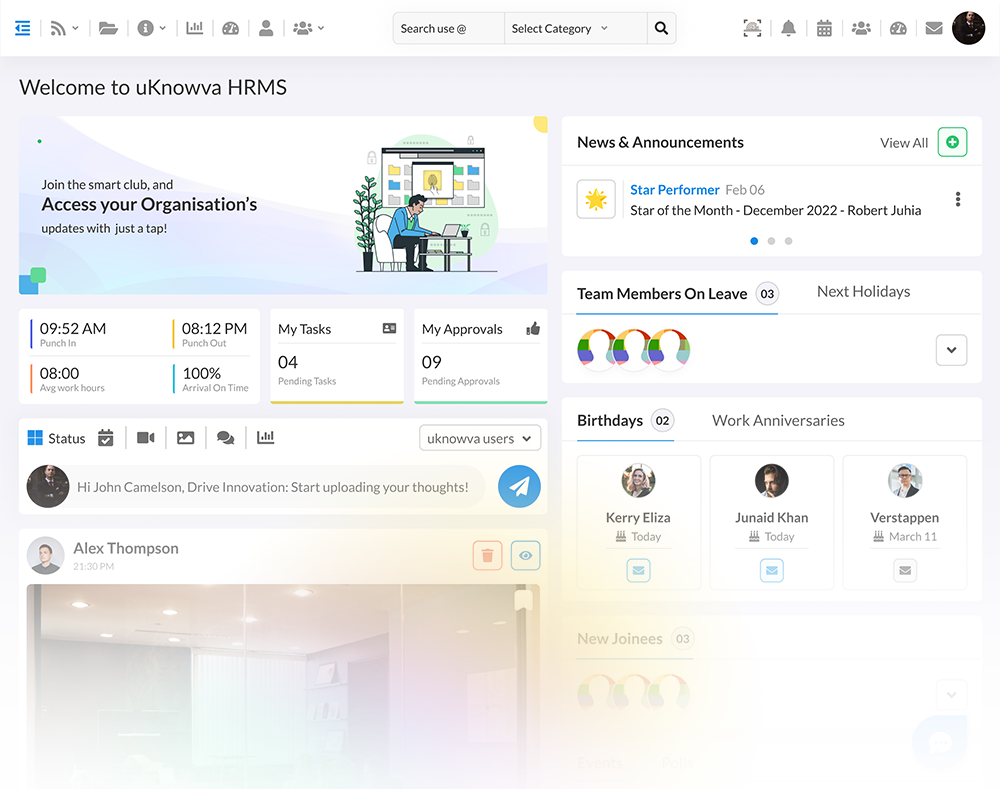
We will recommend you the best tool, uKnowva HRMS, that streamlines tasks in one click. It removes dependency on the paperwork and you get to be one of the volunteers of an environmental, social, and governance-friendly organisation.
Want to skip the post?
Schedule a FREE consultation call.

One of the best ways to reform and regulate an effective ESG strategy is to implement paperless workflow management solutions. That is, when you do uKnowva, you get results that boost productivity without actually harming the environment much.
Implement tools like AI Suggest and CV Parser to level up your hiring game and process. You will then start hiring the best talent based on the updated and upgraded skills required for a job.
Using the CV Parser, you can filter out the irrelevant resumes and focus on attracting those who are culturally and professionally fit for the job.
Keep a stringent check on your HR policies and update those in lines with the kind of culture you want to promote. That will require everyone in the organisation to read and digitally sign the same for further auditing and processing.
Update and keeping up with the compliance will benefit the organisation to come across as a favourable business environment and unit. New employees can easily read these policies and be acquainted with what is usually expected out of them in the long run.
Provide the right tools to your staff with special needs so that their productivity increases with time. The best example here is uKnowva HRMS, which can enable large font sizes and icons for visually impaired staff or workers.
More than that, we offer multilingual features in our HRMS for helping out those workers who are not familiar with the standard English language. This will help seniors to build a rapport with their staff who are wage workers or have poor communication.
Invest in the eLMS function to provide ongoing learning and development opportunities to your staff. They need to grow and evolve with time to remain employable in the long run.
This can be a self-serving module where employees can check new training modules in the portal. The modules can be available for everyone or for a specific user group, depending on the learning expectations of the employer.
When employees have equal learning opportunities, they are able to skill up together. They can create a rapport with one another while learning new courses and modules. This is a strategic way to prepare your high-performers and sincere staff for challenging roles in the future.
Implement a Happiness Meter through virtual biometrics to focus on employee sentiments and promote their well-being. With live insights on who is feeling happy, sad or tired, you can reform the cultural norms of your organisation.
Also, you will know who is the most productive and who is facing a lot of work pressure with such insights. Then, you can add widgets like Nasch to offer employee well-being programs and benefits while using our HR management software.
Go green and paperless for freelancers, gig workers, wage workers, and remote workers across the globe or nation. This will equip the organisation with the best of the best staff at the negotiated price or cost.
Provide an interactive platform like an intranet to help your staff collaborate and connect for shared job responsibilities and roles. This will help them join communities, groups, and forums. There, they can open dialogues, have difficult conversations, and resolve conflicts.
Such a strategy helps HR leaders to work closely with the staff regularly and know their real emotions. Then, each user group or business unit can focus on building a community, all the while celebrating wins and occasions like:
One of the core functions and elements of ESG to achieve is to help your team volunteer for social causes. This helps the culture in the organisation to be more sympathetic and considerate.
The more people volunteer for a common cause in the social world, whether offline or online, the more they will understand each other’s contributions and timely values.
HR leaders can create events, polls, surveys and much more online on the intranet. This opens a forum for the workforce to take charge and lead the way for cultural, social, and societal changes with a progressive mindset.
We read the top 9 ways to establish an effective ESG strategy in the blog post above. So, if you feel the same and want to implement these at once, read out to our HRMS customer support team. They will guide you through the best ways to start implementing these solutions and make it big with ESG strategies at scale.
How can companies measure the success and impact of their ESG strategy?
Companies can measure the success and impact of their ESG strategy by establishing key performance indicators (KPIs) related to ESG goals, collecting relevant data and metrics, conducting regular performance evaluations, benchmarking against industry peers, and disclosing ESG performance to stakeholders.
What are some best practices for communicating an organisation's ESG strategy to stakeholders?
Some best practices for communicating an organisation's ESG strategy to stakeholders include being transparent and honest, using clear and accessible language, tailoring communications to different stakeholder groups, providing relevant examples and case studies, and soliciting feedback and input from stakeholders.
How can companies continuously improve and evolve their ESG strategy over time?
Companies can continuously improve and evolve their ESG strategy by monitoring industry trends and emerging issues, engaging with stakeholders to understand evolving expectations, conducting regular reviews and evaluations of ESG performance, adapting strategies based on lessons learned, and fostering a culture of innovation and continuous improvement.