








 Aditi Sharma
Table of Content
In the modern constantly connected, digital-first work environment, workers are demanding immediate response, flawless communication, and custom experiences- similar to those they receive on customer-facing websites.
But here's the reality:
As organizations highly invest in customer experience, employee experience tends to trail it behind, particularly in the HR interactions.
It is still taking hours (or days) before employees can get simple questions answered, such as leaves balance or pay roll clarification and policy detail. HR teams, in their turn, have to deal with a range of recurrent questions, emails, and follow-ups.
It is here that a people-based HR experience chat is a game changer.
It is not merely about the implementation of chatbots or other messaging devices, it is about smart, caring, and humanistic interactions that not only improve the satisfaction of the employees but also the efficiency of HR.
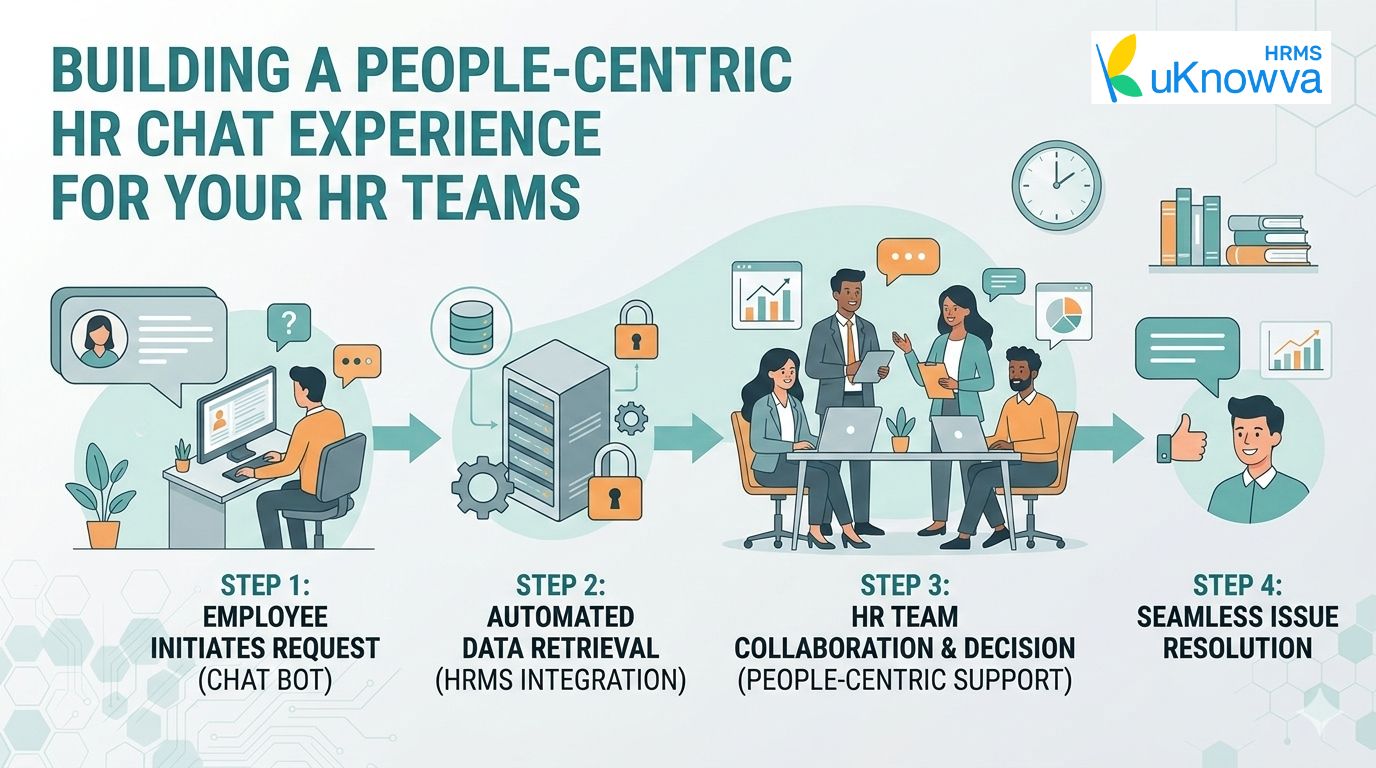
An HR chat with people is more than automation. It is aimed at the personalized, intuitive, and responsive interaction of HR.
Rather than handling employees as tickets or queries, it handles them as people with unique needs, preferences and expectations.
This means:
The goal is simple:
Enhance HR assistance to be as simple and entertaining as talking with a co-worker.
It is worthwhile to consider what is wrong in existing systems before knowing how to create a people-centric experience.
Delayed Responses
The HR departments tend to handle a lot of communication channels such as emails, calls, tickets and there is a delay in responding to employee queries.
Repetitive Queries
Many of the HR queries are the same issues like leaves, payroll dates, and benefits which use precious HR time.
Lack of Personalization
Conventional systems offer generic answers which are insensitive to contextual elements of employees like position, place or years of service.
Poor Employee Experience
When the employees are required to make numerous calls to get simple responses or go through complicated systems to get simple answers, they get frustrated.
Limited Accessibility
The HR support is usually limited to working hours and once the employees need it most, they do not have it.
The gaps indicate the necessity to be smarter and more human-centered.
To create a genuinely working HR chat system, one will need a careful combination of technology, design, and empathy.
Real-time and Precise Reaction
The modern day workplace is obsessive with speed. The employees are looking to get responses immediately.
A people-oriented chat system would guarantee that employees have the ability to:
Organizations will reduce waiting time, thus enhancing efficiency as well as employee satisfaction.
Personalized and Contextual Interactions
Employees are not equal and neither should be their interactions with the HR
An effective HR chat is based on employee data and customizes the response based on:
An example would be where the sales employee at a different region may be subject to different leave policies than any corporate employee. A one-on-one system is relevant in all interactions.
Flexible Human and AI working together
Robots are great--but human feelings cannot be replaced.
The people-centric approach will ensure:
This hybrid model has the elements of efficiency and emotional intelligence, which makes it balanced in experience.
Omnichannel Accessibility
Modern employees are working on devices and platforms, laptops, mobile apps, and collaboration tools.
An HR chat system must be available in the modern form through:
This will allow the employees to reach the HR at any time and place- without strain.
Life Long Learning and Improvement
A smart HR chat system is developed with time.
It is through the analysis of interactions that organizations are in a position to:
The experience of the people-centric HR chat will not be attained through a mere chatbot but through an integrated and intelligent HR ecosystem.
It is in this area that uKnowva HRMS comes in transforming.
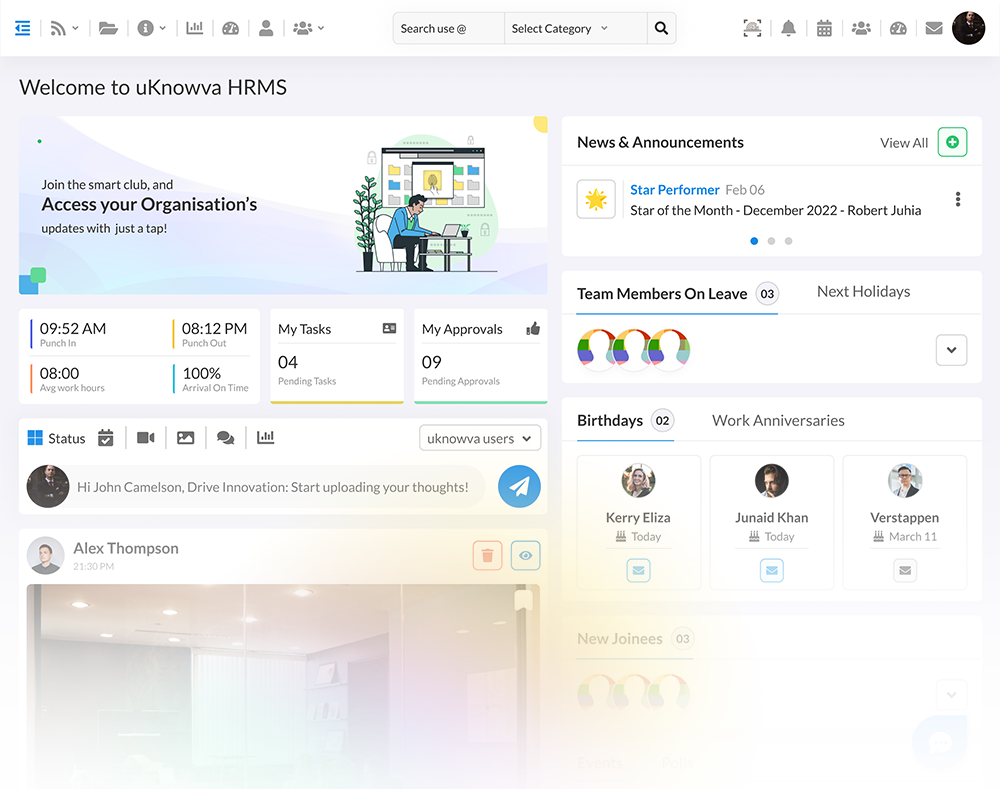
uKnowva concentrates the information about the employees, which allows the use of chat systems to provide the context-related responses to each user.
Intelligent automation will see uKnowva respond to high volumes of repetitive queries in real-time- releasing HR teams to undertake strategic work.
uKnowva also integrates chat behavior with HR functions, through which leaves can be managed, payroll questions can be answered, etc.
HR teams are able to see employee concerns, trends in queries and levels of engagement- assisting them in making informed decisions.
uKnowva provides the employees with the feeling of support and appreciation at each contact point by offering speed, accuracy, and customization.
The introduction of a people-first HR chat system will make tangible organizational-wide change.
Fast and correct response minimizes frustration and improves customer experience.
Automation minimizes the amount of work done by HR teams and enables them to concentrate on strategic initiatives.
The messages of the chat are valuable data about employee needs and issues.
When employees are listened to and encouraged, the level of their engagement is heightened dramatically.
Chat systems do not add to the workload of HR as the organizations start expanding and provide steady support.
As much as the benefits are immense, there are critical issues that have to be addressed by organizations.
Excessive automation may make communication impersonal. One should retain the human touch.
The management of sensitive data of employees will need high-security measures and adherence to regulations.
When implementing new systems, there needs to be training and cultural alignment in the organization.
Implementing a chat system is not a single process that can be done once and that is enough.
Organizations need to be strategic in order to achieve maximum success:
With the changing technology, HR chat systems will no longer be a tool of question solution, but an active engagement tool.
The capabilities of the future might include:
Building a people-centric HR chat experience is no longer optional—it’s essential for modern organizations.
It bridges the gap between efficiency and empathy, ensuring that employees receive the support they need—when they need it.
By leveraging intelligent platforms like uKnowva HRMS, organizations can transform HR interactions from reactive processes into proactive, engaging experiences.
Because at the end of the day, HR is not just about managing processes—it’s about empowering people.
And the organizations that understand this will lead the future of work.