






 Nilakshi Garg
Table of Content
In the dynamic business landscape of the Philippines, effective succession planning has become a crucial element for long-term organisational success. This article delves into the pivotal role that HRMS software plays in facilitating seamless succession planning within Philippine companies.
Want to skip this post?

Succession planning involves identifying and developing internal talent or employees to fill leadership positions within an organisation. It ensures a smooth transition of responsibilities when current leaders retire, resign, or move on to other roles.
One of the primary challenges faced by Philippine companies is the relatively limited pool of skilled professionals in certain industries. This scarcity makes succession planning even more critical.
Often, employees do not have the right skills and talent to take on harder or more challenging projects there. The world of work is already evolving at a rapid pace. Thus, employees need to indulge in regular training and development programs to become indispensable at a global level.
Traditional succession planning methods, often relying on manual assessments and spreadsheets, are insufficient in today's fast-paced business environment. They lack the agility and precision required for effective talent management.
Firms in the Philippines also need to evolve. These firms and the management that runs the operations need to think ahead of time. They need to research well and know about the latest trends in the job and talent market when it comes to developing world-class talent for creating legacies in the firm.
When firms do not indulge in smart HR software like uKnowva, they often fall short of the talent to consider for succession planning programs. They have no idea whom to hire when the existing leader quits or switches the firm.
Thus, to evolve and cushion the aftereffects of rising turnover rates, they have to gain the trust of the current workforce. For that, they need to learn to provide the right tech tools in the Philippines, especially to the deskless workers, who are easily getting replaced by fast-paced companies.
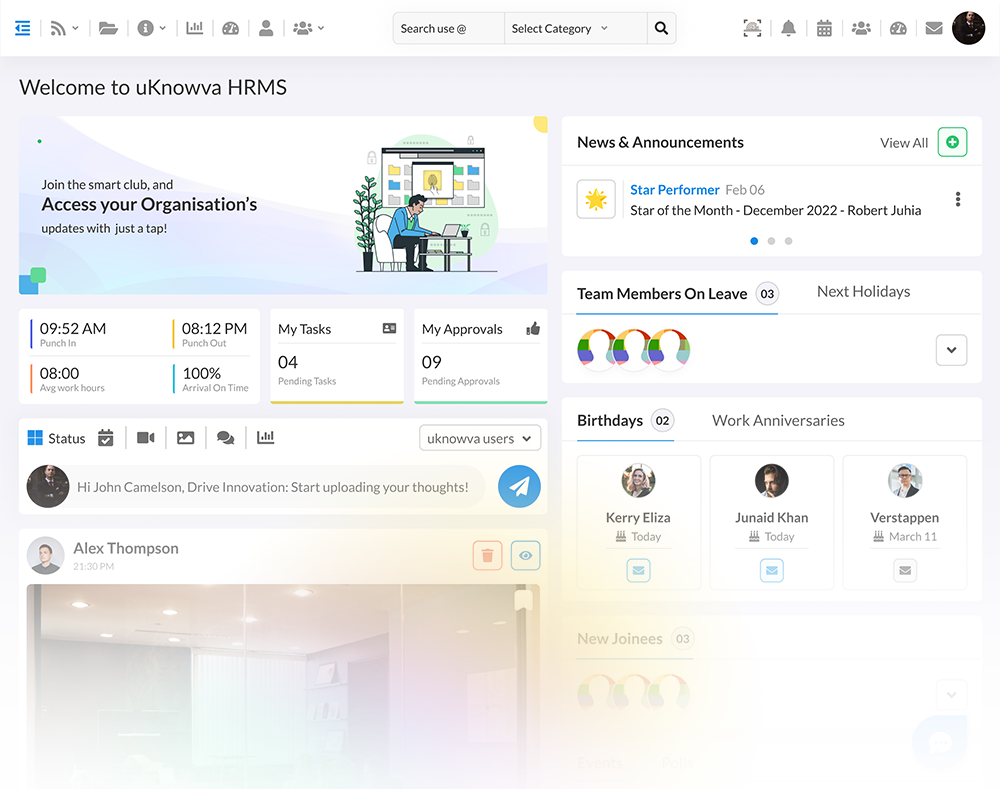
A robust HRMS system serves as a centralized repository for employee data. It maintains detailed records of skills, qualifications, performance evaluations, and career aspirations. This wealth of information is invaluable in identifying potential successors.
HRMS software employs sophisticated algorithms to conduct skill gap analyses. By comparing the required competencies for a role with the skills possessed by current employees, it identifies areas where training and development are needed.
Utilizing historical data and performance metrics, HRMS systems can forecast potential successors for key positions. This proactive approach allows companies to groom high-potential employees for leadership roles.
Regular performance evaluations are integral to succession planning. HRMS software automates this process, ensuring that managers have up-to-date insights into employee performance and potential.
Philippine companies should allocate resources toward continuous training and development programs. This not only enhances individual skills but also broadens the pool of potential successors.
Encourage senior employees to mentor their junior counterparts. This knowledge transfer not only accelerates skill development but also strengthens the leadership pipeline.
Combine the power of HRMS software with advanced assessment tools to gain a comprehensive understanding of employee capabilities and potential.
In conclusion, HRMS software is a powerful tool that can significantly bolster succession planning efforts within Philippine companies. By leveraging its capabilities, organizations can proactively identify and nurture future leaders, ensuring continuity and success in the ever-evolving business landscape.
Yes, HRMS software can be scaled to meet the needs of small businesses, offering tailored solutions for effective succession planning.
Succession plans should be reviewed at least annually or more frequently if there are significant organizational changes.
Yes, modern HRMS software often offers seamless integration with other systems such as payroll, performance management, and learning management platforms.
Critical features include a robust talent database, skill gap analysis tools, succession forecasting capabilities, and performance tracking modules.
Many HRMS solutions offer customizable features and configurations, allowing them to align with the unique requirements of different industries in the Philippines.