






 Aditi Sharma
Organizations are experiencing a workforce problem in 2026 that is not reflected in attrition rates, exit interviews, or recruiting dashboards. It is silent, subtle and even non-existent--and very destructive.
Greetings to the age of silent resignation.
Employees do not simply walk out of organizations anymore but have stayed without participation. They make their logins, perform given tasks, attend meetings and meet deadlines. However, on top of that, it lacks initiative, there is no innovation, and not much emotional investment.
Such people, as they are commonly known as quiet stayers, are not causing problems at the surface. However, deep down, they are gradually sucking out productivity, undermining culture, and watering down your long-term strategy.
The uncomfortable truth?
You will have less resignation in 2026--but disengagement as never previously seen.
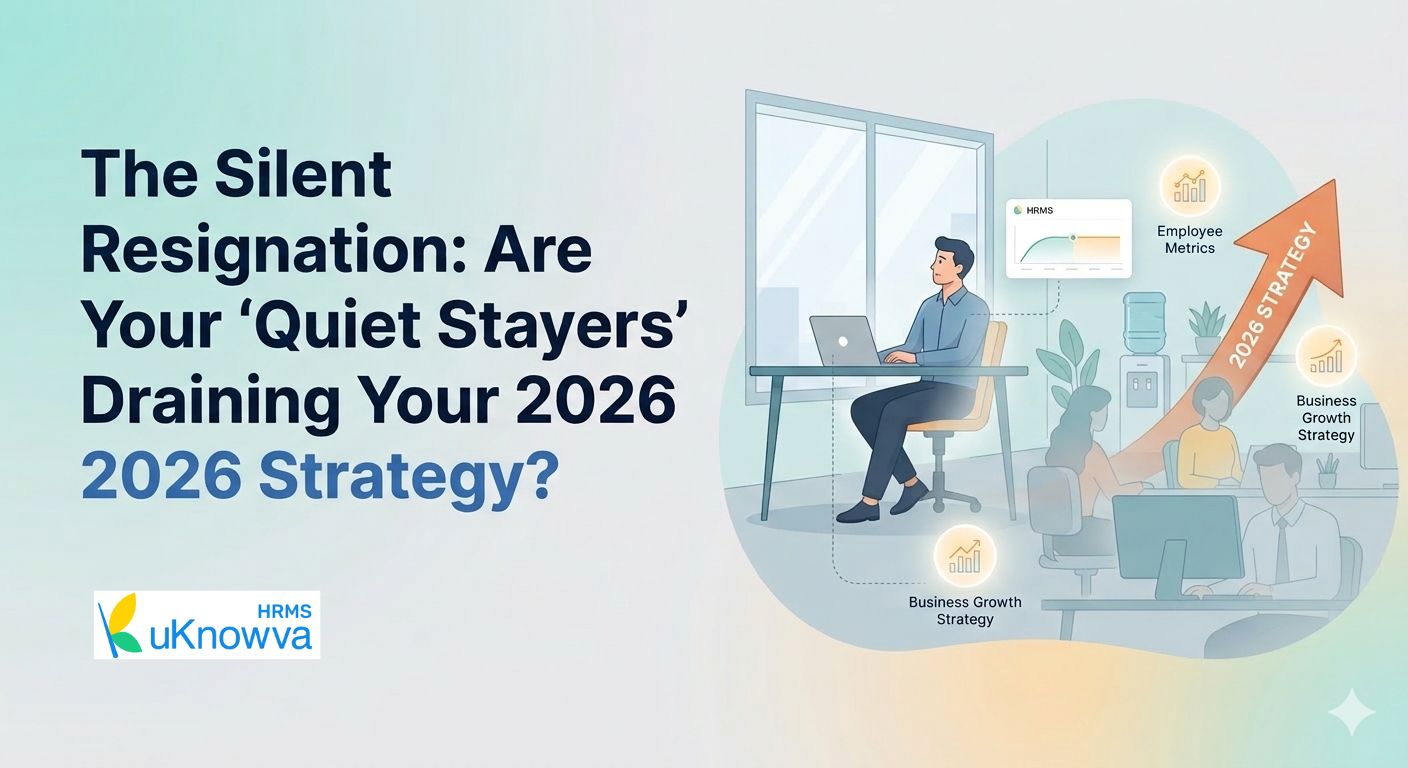
Silent resignation does not involve any employee giving up their jobs, it involves the employee shutting their minds and heart to their job.
In contrast to the past, when disengaged employees were seen, quiet stayers do not appear disgruntled as such. They are obedient, dependable and usually safe actors. However they work to limits--doing nothing but what must be done.
This becomes a functional, but stagnant operationally, workforce.
Quiet stayers typically:
The threat is in the fact that such behaviors are commonly considered as stability, but the truth is that it is the beginning of the signs of deep disengagement.
The phenomenon of silent resignation does not appear out of thin air, it is a result of changing the workplace relations and unfulfilled expectations of the workers.
Under the conditions of an uncertain economy, employees are less prone to risk in changing employment. Rather, they prefer to remain -but insure themselves by decreasing work. This generates a stay but be disengaged attitude and employees save their energies instead of putting them in.
The contemporary employees are very ambitious and growth oriented. Employees gradually lose interest where they can not see their future in an organization whether it is promotion, skills acquisition or role expansion.
Annual review is not timely feedback and not timely recognition. This makes the employees feel undervalued as their work is not noticed over an extended duration, and the performance and recognition are no longer associated.
Although the hybrid and remote work models have brought out flexibility, they have also minimized spontaneity in interactions, building of teams, and emotional attachment. In the long run, this undermines participation and solidarity.
In the modern world, employees want to find meaning in their job. Where personal values or influence is lost in the sense that an organization aims at seeming unrelated to organizational goals, motivation drops quietly.
Quiet stayers might appear at face value as low risk employees: they are not quitting, right? Their influence is much greater and more expensive.
As work is being done, lack of proactive thinking, ownership and initiative lessen general productivity. Teams could deliver on time--but seldom do more than what was expected of them.
Organizations survive with ideas, creativity and problem solving. Quiet stayers seldom add value to the work they are supposed to do, thus they have minimal inventions and opportunities that they miss.
Participation and energy influence the culture of the workplace. Disengagement becomes contagious and a culture of doing minimum effort is created where only doing the minimum is a culture.
A leader usually thinks that all is going well because quiet stayers do not complain of dissatisfaction. This puts an unsafe distance between perceived and actual levels of engagement.
Dissatisfied employees are unable to implement business plans with great confidence. Even the most brilliant plans fail because of lack of motivation in employees to make it move.
Silent resignation has to be identified by examining more than just conventional performance indicators. These indications are faint--yet consistent.
Attention Seeking Behaviors to Be Observed:
Nonetheless, it is extremely hard to determine such patterns manually - particularly in large or hybrid workplaces.
It is at this point that data-driven HR is required
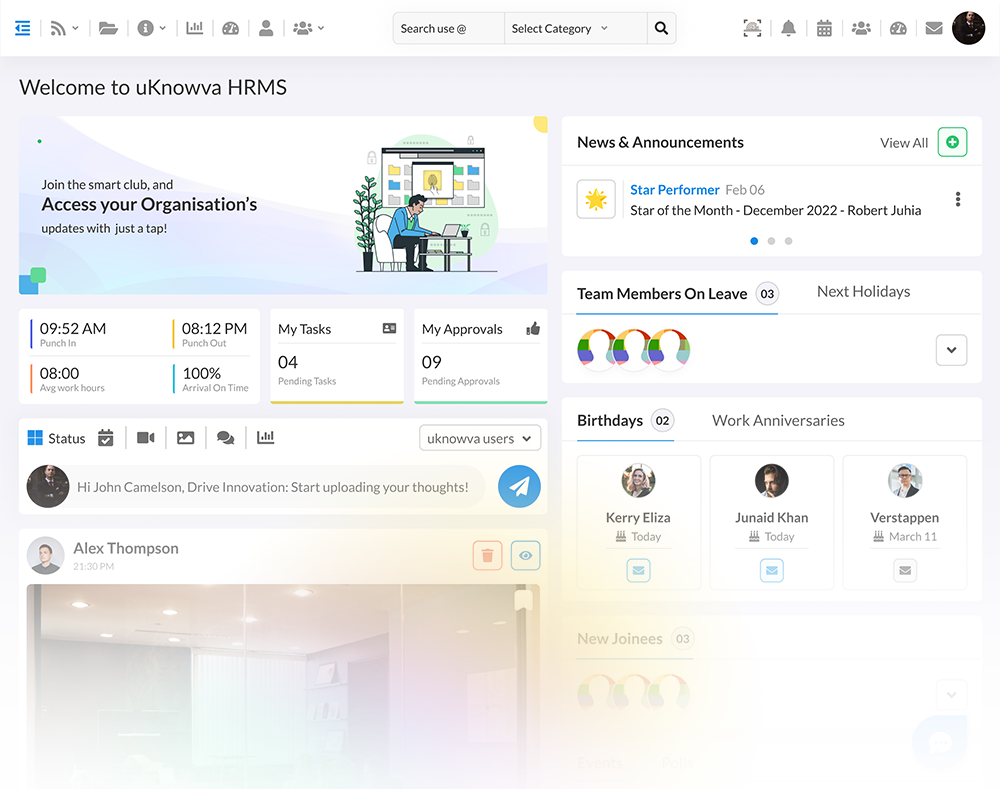
The HR approaches in the modern world need to be shifted towards intelligence-based insights rather than observation. This is where a web based application such as uKnowva HRMS is very vital.
uKnowva helps to conduct pulse checks instead of using annual surveys. This enables organizations to know the sentiment of the employees in real time and recognize engagement changes at an early stage.
Using data points like attendance pattern, task completion pattern, and frequency of interactions, HR teams are able to identify the initial signs of disengagement.
uKnowva substitutes the obsolete review periods with continuous performance management. This facilitates the process of recognizing stagnant employees.
The analytics based on AI can signal the employees who might be in the danger of being disengaged and the HR teams can take the necessary actions before things get out of control.
As all workforce data is incorporated into a single platform, leaders have a comprehensive perspective of engagement, performance, and productivity at the organizational level.
Simply put, uKnowva HRMS assists companies to open their eyes and see things like they have never seen before.
Renewing employee engagement cannot be done with just shallow programs, but it needs to be a core change in how companies treat employee experience.
In order to know their performance, employees must be asked frequently. The constant feedback develops clarity and confidence, and strengthens their importance in the organization.
Employees would remain engaged and motivated when they are aware of how they can develop in the organization.
Managers are also very important in employee experience. Engagements can be enhanced by training them on effective communication, appreciation of contributions, and facilitating growth.
The various employees are driven by various factors; they include learning, recognition, flexibility, or purpose. Relying on data insights can be used to customize engagement approaches.
Open and honest dialogue can be used to find out problems in the organization and foster trust.
The uKnowva HRMS can be scaled and measured as tools such as uKnowva encompass engagement strategies and guarantee their implementation on a regular basis regardless of the team or location.
The goal is not just to eliminate disengagement—but to reignite potential.
When organizations actively address silent resignation, they unlock a workforce that is:
Employees who feel heard, valued, and supported are far more likely to transition from passive contributors to active drivers of growth.
To stay competitive in 2026, organizations need to go beyond traditional HR practices. They need intelligent, adaptive systems that can evolve with workforce expectations.
uKnowva HRMS enables organizations to:
By combining automation, analytics, and AI-driven insights, uKnowva helps organizations transform HR from a support function into a strategic powerhouse.
Silent resignation is one of the most critical workforce challenges of 2026—precisely because it is so easy to overlook.
Quiet stayers don’t disrupt—they dilute.
They don’t resign—they retreat.
And if left unaddressed, they can quietly undermine even the strongest business strategies.
The organizations that succeed in the coming years will not just focus on retention—they will focus on engagement, visibility, and proactive intervention.
Because in today’s workplace, success is not defined by how many employees you retain—
but by how many are truly engaged.
Silent resignation refers to employees who remain in their jobs but disengage mentally, doing only the minimum required work.
Quiet stayers are employees who choose to stay in the organization but are no longer actively engaged or motivated.
It reduces productivity, innovation, and employee morale, while making it harder for organizations to execute long-term strategies.
Common causes include burnout, lack of growth opportunities, poor management, unclear goals, and weak performance feedback systems.
By tracking behavioral patterns like reduced participation, lack of initiative, stagnant performance, and low engagement levels using HR tools.
Both involve disengagement, but silent resignation focuses more on emotional withdrawal while maintaining job responsibilities.
It creates a culture of minimal effort, reduces collaboration, and can spread disengagement across teams.
Through continuous feedback, career development opportunities, better manager communication, and personalized engagement strategies.
uKnowva HRMS provides real-time insights, performance tracking, and engagement analytics to identify and address disengagement early.
Yes, by building a transparent, feedback-driven culture and leveraging HR technology to monitor and improve employee engagement continuously.