







 Aditi Sharma
Imagine an HR manager beginning the day with 200 pending employee queries to read, approvals to be completed, attendance to be checked, recruits to be processed, and performance reviews to be reminded. When the administration is done, there is not much time remaining for decisions.
Now envision an HRMS system that can manage every day's requests, detect workforce patterns, and alert any concerns, as well as suggest the next step.
This is the direction enterprise HR technology is going.
Conventional HRMS solutions were mainly used for record keeping, payroll management, and routine HR automation. But the next generation of HR software promises to take the next step, integrating artificial intelligence (AI), predictive analytics, intelligent automation and connected employee experiences.
For CHROs, the issue is no longer just whether or not to adopt an HRMS. It's whether their current technology is able to accommodate the future of work.
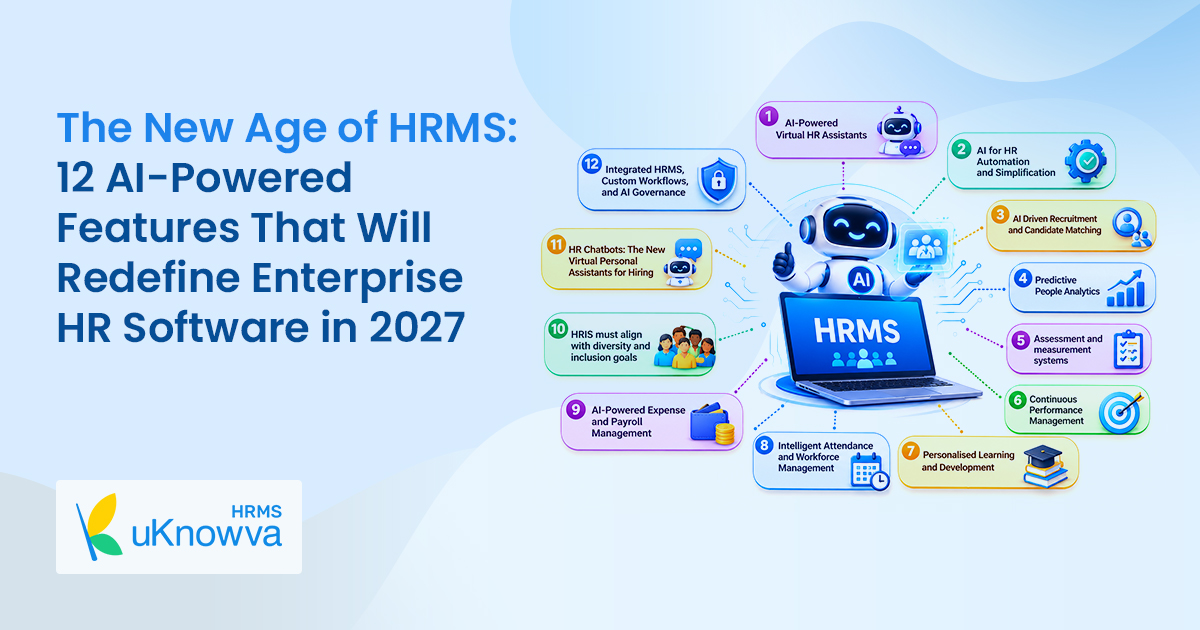
Don't allow employees to call HR for routine queries. Virtual assistants, powered by AI, can respond rapidly to leave information, attendance, holiday, payslip, company policy or employee benefits queries.
For instance, if someone asks, "How many leave days do I have," the employee can get a response without having to click through several screens.
Agentic AI can assist users in completing multi-step actions within a set of permissions and approvals, whereas chatbots can answer questions.
The goal is not to eliminate HR involvement from decision-making but to decrease the repetitive co-ordination and allow HR time to engage in strategic work.
Large numbers of applicants and the need to find the right candidates with the necessary skills and experience often means recruitment teams have to deal with a lot of applicants. Recruitment tools powered by AI can assist in streamlining this process.
Recruiters should still use human judgment and adequate checks on candidate assessments and make hiring decisions.
Traditional HR reports are about what happened. Predictive analytics can assist HR leaders to delve and examine what may be on the horizon.
These insights can help CHROs shift from a reactive to a more proactive approach to workforce decisions. The predictions however should be seen as a guide, not as a guarantee.
Organisations want to know what skills they possess and what skills they need to acquire to meet their changing business needs.
Organisations can leverage skills intelligence to better utilise their current workforce rather than only recruiting from outside the organisation.
An annual performance review might not be sufficient to give managers a clear picture of employee development, particularly in multi-location teams.
AI can help you summarize feedback and find patterns but employee decisions must still have human oversight, such as ratings of performance.
A normal training program may not be able to meet the individual needs of each employee. Relevance of development can be achieved by using AI-based learning systems.
This aids organisations in developing a culture of ongoing learning, instead of training being seen as a one-off task.
Without connected systems, attendance management can be a challenge when working with multiple locations, shifts, and work arrangements.
Organisations need to choose the best way to attend according to their needs, employee privacy and relevant regulations.
Payroll accuracy has a direct impact on employee trust. Intelligent automation can assist HR and finance functions to cut repetitive tasks and detect discrepancies.
AI can help to highlight any possible mistakes, and payroll experts should cross-check calculations and approve changes that impact on sensitive data.
While employee engagement surveys can be helpful, there is a need for organisations to have a means to gain insight into repetitive issues in the workplace.
The principles of data practice that sentiment analytics should be based on are transparent and responsible. Staff should be aware of the collection and use of their information.
Today's employees are becoming more and more accustomed to HR services that are not dependent on an in-office desktop.
A mobile-first experience can help to make HR processes more readily available to distributed and deskless workforces.
An HRMS's worth lies in its functionality. Inconsistent data can result in duplicate records, manual effort, and more.
A connected technology environment provides HR leaders with a more unified and consistent perspective on workforce operations, and enables responsible automation.
The more features an HRMS has, the better it is not necessarily. CHROs need to assess if the platform addresses genuine business challenges and meets the evolving needs of businesses.
Before investing, consider:
More than the number of features it has, the next generation of HRMS will be determined. Its true benefit will be when it is integrated with employee information, intelligent automation, and workforce analytics, as well as integrated into everyday HR activities.
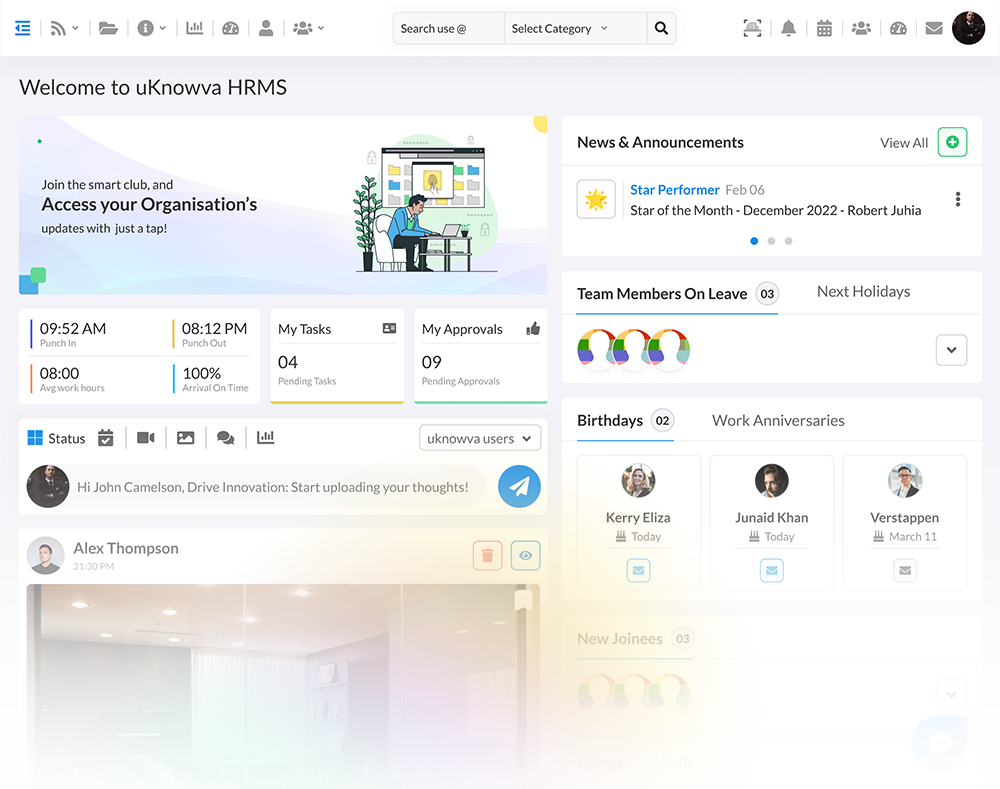
HRMS platforms like uKnowva HRMS mirror this migration towards streamlined HR processes with features like employee lifecycle management, customizable workflows, performance management, and AI-driven support with uKnowva Virtual AI Assistant.
CHROs are at a sweet spot in 2027, where they need to look at HR technology in a different way and re-imagine its role in the business. Well-thought out technology choices will empower the organisations to streamline their operations, enhance employee experiences, and make data-driven decisions about their workforce.