






 Aditi Sharma
Table of Content
The role of Human Resources has evolved dramatically over the past few years. HR is no longer limited to hiring employees, processing payroll, or maintaining records. Today, HR leaders are expected to provide strategic insights that help businesses improve workforce productivity, reduce turnover, identify future skill gaps, and drive organizational growth.
This transformation has been made possible by Artificial Intelligence (AI) and HR Analytics. These technologies are enabling organizations to move from reactive decision-making to proactive workforce planning. Instead of relying on assumptions, HR teams can now make decisions backed by real-time data and predictive insights.
As Indian businesses embrace digital transformation in 2026, AI-powered HR software is becoming a critical investment for organizations that want to stay competitive.
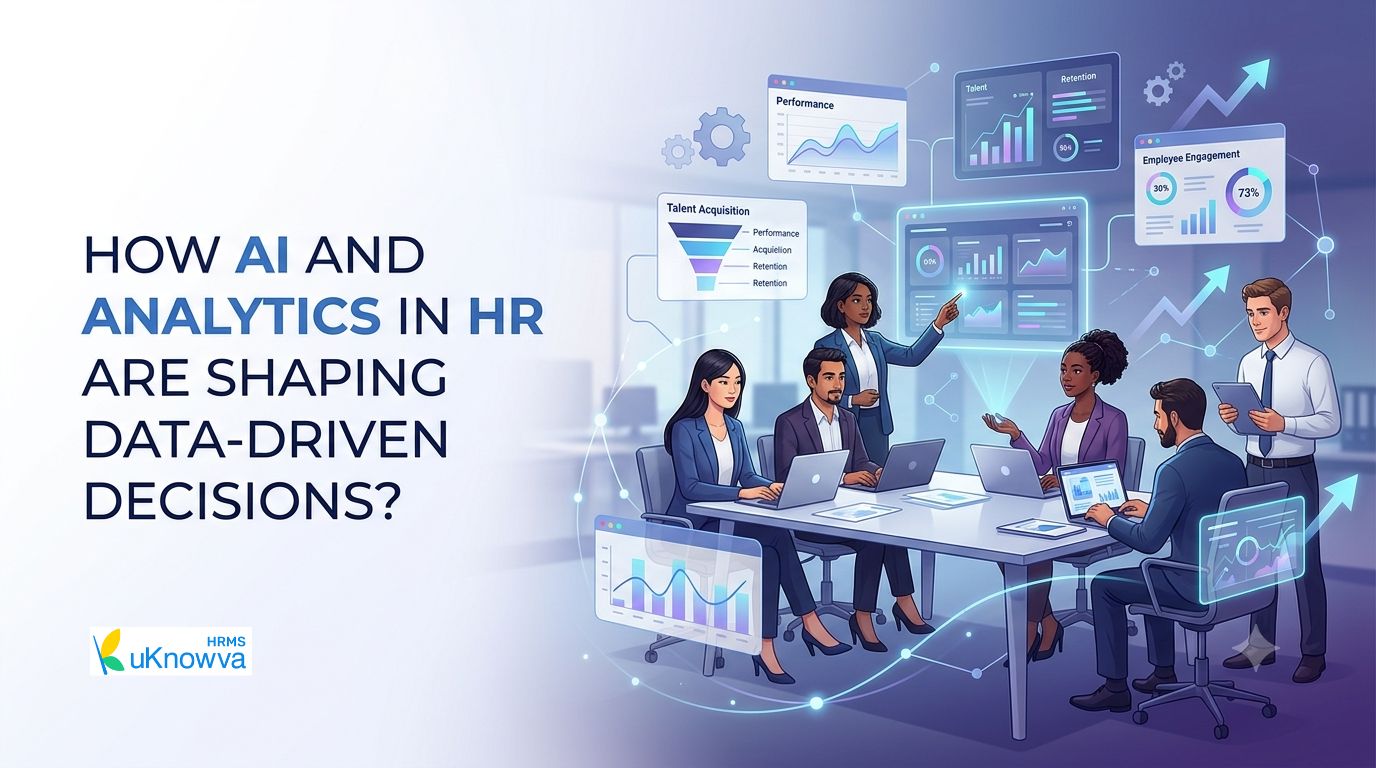
Artificial Intelligence in HR refers to the use of machine learning, natural language processing (NLP), predictive algorithms, and intelligent automation to improve HR processes.
AI helps HR professionals automate repetitive tasks while delivering valuable insights for better decision-making.
Common AI applications include:
Rather than replacing HR professionals, AI enables them to focus more on strategy, employee development, and organizational planning.
HR Analytics is the process of collecting, analyzing, and interpreting employee data to improve workforce decisions.
Instead of relying on intuition, organizations use HR analytics to understand workforce trends and measure the impact of HR initiatives.
Key HR metrics include:
When combined with AI, these metrics become predictive rather than simply descriptive.
Recruitment is one of the biggest beneficiaries of AI.
Modern HR software can automatically:
Analytics also helps recruiters understand:
This enables organizations to improve hiring quality while reducing recruitment costs.
Employee turnover remains one of the biggest challenges for organizations.
Traditional HR identifies resignations after employees submit notice.
AI-powered predictive analytics helps identify potential flight risks before employees decide to leave.
It analyzes factors such as:
HR leaders can then proactively improve employee experience through career development, recognition, learning opportunities, or role changes.
Annual performance reviews are gradually being replaced by continuous performance management.
AI enables organizations to:
Managers receive real-time insights instead of waiting until year-end evaluations.
This creates a more transparent, objective, and growth-focused performance culture.
Every employee has unique learning needs.
AI-powered HR platforms recommend personalized learning paths based on:
Instead of assigning the same training to everyone, organizations can create individualized development journeys that improve employee engagement and business outcomes.
AI and analytics enable organizations to forecast workforce needs with greater accuracy.
Businesses can predict:
These insights help HR leaders align talent strategies with long-term business objectives.
Employee experience has become a key driver of business performance.
AI helps organizations continuously monitor employee sentiment using:
HR teams can identify issues before they become larger problems, leading to improved morale, stronger retention, and higher productivity.
HR is increasingly becoming a strategic business partner.
With advanced analytics dashboards, leadership teams gain instant visibility into workforce performance.
Executives can make informed decisions about:
This shift transforms HR from a support function into a data-driven business enabler.
Modern organizations require more than basic HR software—they need an intelligent platform that combines automation, AI, and analytics.
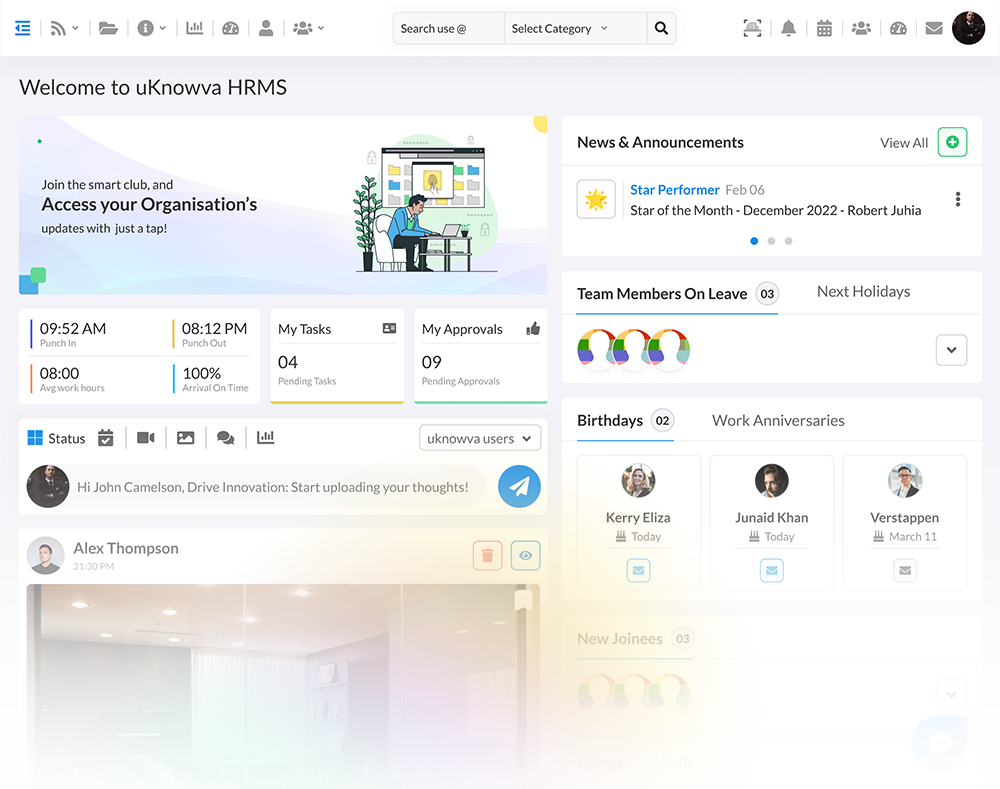
uKnowva HRMS offers an integrated solution that empowers HR teams with:
By centralizing HR data and delivering actionable intelligence, uKnowva HRMS helps organizations make faster, smarter, and more strategic workforce decisions.
Artificial Intelligence and HR analytics are redefining the future of workforce management by enabling organizations to make smarter, faster, and more accurate decisions.
From recruitment and employee engagement to performance management and workforce planning, AI helps HR leaders move beyond manual processes and intuition toward predictive, data-driven strategies.
Businesses that embrace intelligent HR technology today will be better prepared to attract top talent, improve employee experiences, and achieve sustainable growth.
uKnowva HRMS combines AI, automation, and advanced analytics into one comprehensive platform, empowering organizations to optimize HR operations, unlock workforce insights, and build a future-ready organization with confidence.
1. What is AI in HR?
AI in HR uses technologies like machine learning and natural language processing to automate HR processes, improve hiring, enhance employee engagement, and provide predictive workforce insights.
2. What is HR Analytics?
HR Analytics involves collecting and analyzing employee data to improve hiring, retention, productivity, workforce planning, and overall business performance.
3. How does AI improve recruitment?
AI automates resume screening, matches candidates to job roles, schedules interviews, reduces hiring bias, and helps recruiters identify the best talent faster.
4. What are predictive HR analytics?
Predictive HR analytics uses historical workforce data and AI algorithms to forecast employee turnover, hiring needs, performance trends, and future workforce requirements.
5. How does AI help reduce employee attrition?
AI identifies patterns such as declining engagement, absenteeism, performance changes, and workload issues, allowing HR teams to take proactive retention measures.
6. Why is HR analytics important for businesses?
HR analytics provides actionable insights that improve workforce planning, employee performance, recruitment efficiency, engagement, compliance, and strategic decision-making.
7. Can AI replace HR professionals?
No. AI supports HR professionals by automating repetitive administrative tasks, allowing them to focus on strategic planning, employee development, and business growth.
8. How does uKnowva HRMS use AI and analytics?
uKnowva HRMS offers AI-powered recruitment, workforce analytics, predictive insights, performance management, automated workflows, and real-time dashboards to support informed HR decisions.
9. What industries benefit from AI-powered HR software?
Industries including IT, manufacturing, healthcare, BFSI, retail, education, logistics, hospitality, and professional services benefit significantly from AI-enabled HR solutions.
10. What should businesses look for in AI-powered HR software?
Organizations should prioritize AI capabilities, advanced analytics, automation, scalability, mobile accessibility, strong security, seamless integrations, intuitive dashboards, compliance features, and reliable customer support when selecting HR software.