








 Nilakshi Garg
Table of Content
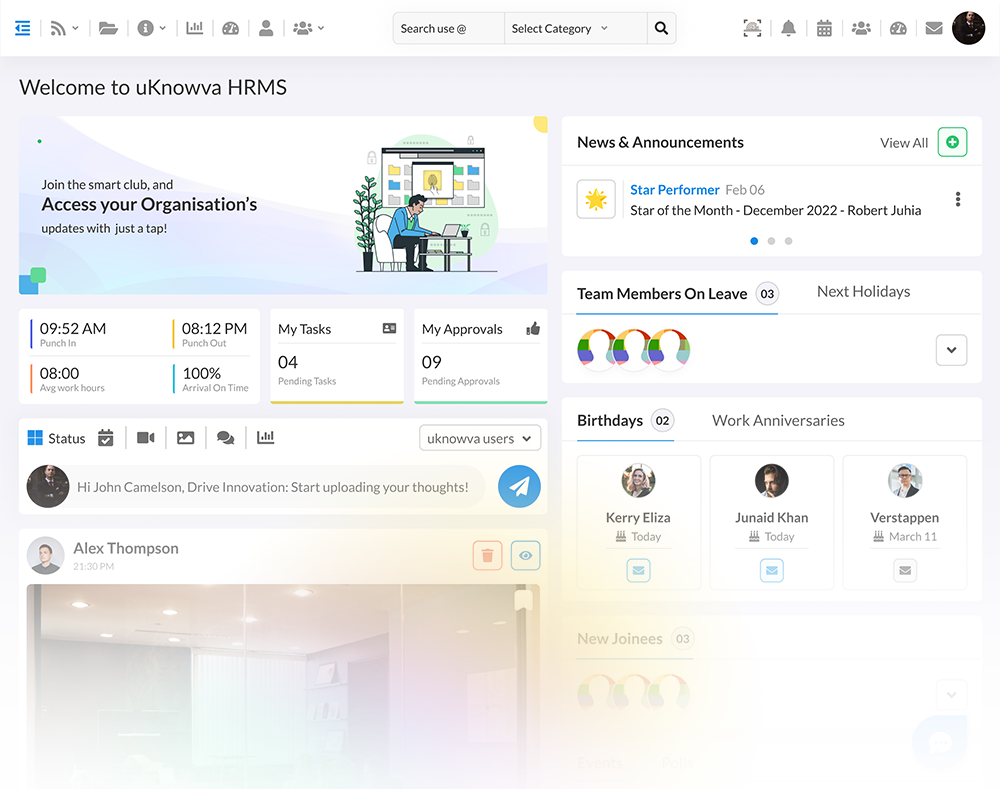
HR/L&D teams leverage eLearning opportunities in the MENA (Middle East and North Africa) region effortlessly. They need to have a unified, agile, future-proof, future-ready, and fully customisable software to manage the pre-hire to post retire HR practices and operations. Thus, today, we are to understand the importance of uKnowva HR software, as one of the top-notch software available in the MENA regions for small and medium markets and enterprises to exercise the eLearning opportunities to reskill and upskill their teams and talented people.
When teams learn on the move, they develop new skills and talents. They take on new projects and are ready to be more agile and move onto another task without interruptions to get more work done in a limited timeframe.
So, continue this blog post to know about the strategies and insights that empower HR teams in the MENA region to harness the full potential of eLearning.
Want to skip this post?

In the MENA region, eLearning is not just a trend, but a transformative force in the realm of professional development. With a diverse workforce and unique cultural nuances, HR teams must tailor eLearning solutions to suit the specific needs of the region.
Selecting the right eLearning platforms is crucial. Opt for platforms that offer a wide range of courses, multilingual options, and are compatible with various devices. This ensures accessibility and inclusivity for all employees. uKnowva provides all that support to the companies existing in the MENA region for ensuring a smoother experience provided to each user for upskilling and reskilling their talent to be better prepared for the new-age projects to conquer and bring expected results with limited prior knowledge.
Given the linguistic diversity in the MENA region, HR teams should prioritise creating eLearning content in multiple languages. This fosters inclusivity and ensures that all employees can engage with the material effectively.
uKnowva HR software in the MENA region supports Arabic and English language. It makes sure that the learning does not halt or stop for the HR/L&D teams.
Understanding and respecting cultural nuances is essential. HR teams should work closely with content creators to ensure that the material is culturally sensitive and relevant.
In some parts of the MENA region, reliable internet connectivity may be a challenge. HR teams must explore offline learning options or provide resources for employees to access eLearning materials without constant internet connectivity.
While eLearning offers numerous benefits, it's essential to strike a balance with traditional training methods. HR teams should blend eLearning with hands-on workshops or seminars for a holistic learning experience.
Establishing clear KPIs allows HR teams to gauge the effectiveness of eLearning initiatives. These may include completion rates, quiz scores, and feedback from employees.
Regular feedback loops are vital for continuous improvement. HR teams should encourage employees to share their thoughts and suggestions regarding the eLearning programs.
Empowering HR teams to leverage eLearning opportunities in the MENA region is not just a strategic move, but a necessity in today's competitive business landscape. By understanding the unique dynamics, tailoring content, and measuring success, HR teams can unlock the full potential of eLearning. Embrace this transformative tool, and watch your workforce thrive.
Can eLearning be effective in a diverse region like MENA?
Absolutely! eLearning can be tailored to suit the diverse needs and preferences of the MENA workforce, making it a powerful tool for HR teams.
How can HR teams ensure that eLearning content is culturally sensitive?
Collaborating closely with content creators who have expertise in the MENA region ensures that content is culturally sensitive and relevant.
What are some common challenges HR teams face when implementing eLearning?
Connectivity issues and balancing eLearning with traditional methods are common challenges. HR teams can address these by exploring offline options and striking a balance between different training approaches.
How can HR teams measure the success of their eLearning initiatives?
Establishing clear KPIs and gathering feedback from employees are effective ways to measure the success of eLearning programs.
Is it necessary to offer eLearning content in multiple languages?
Yes, providing eLearning content in multiple languages ensures inclusivity and accessibility for all employees, especially in a linguistically diverse region like MENA.
What are some key eLearning platforms suitable for the MENA region?
Platforms offering a wide range of courses, multilingual options, and compatibility with various devices are ideal choices for HR teams in the MENA region.