







 Nilakshi Garg
Table of Content
Internal recruitment, facilitated by Human Resource Management Systems (HRMS), offers a host of benefits that are especially relevant in 2023. This method involves filling job vacancies from within the organisation and tapping into the existing talent pool.
Want to skip the content?

Internal recruitment significantly reduces the time and costs associated with external hiring processes. It eliminates expenses related to job postings, external interviews, and onboarding for new hires. Additionally, internal candidates are already familiar with company culture and procedures, requiring less training and onboarding time.
Internal candidates are already acquainted with the organisation's policies, processes, and work environment. This familiarity allows them to hit the ground running, requiring less time to adjust and become productive in their new role.
Offering opportunities for advancement and career progression within the organisation boosts employee morale and engagement. It demonstrates that the company values and invests in its existing talent pool, leading to increased job satisfaction and loyalty.
With HRMS, internal candidates' performance history, skills, and qualifications are readily accessible for evaluation. This ensures a more accurate assessment of their suitability for the new role as compared to external candidates whose track record within the organisation is unknown.
The prospect of internal promotion encourages employees to invest in their own professional development. They are more likely to seek out opportunities for training and skill-building, knowing that it can lead to advancement within the organisation.
Internal recruitment promotes and reinforces the company's culture and values. Existing employees are already aligned with the organisation's mission and vision, ensuring continuity in upholding the company's core principles.
Promoting from within reduces turnover rates, as it demonstrates to employees that there are opportunities for growth within the organisation. This, in turn, improves retention rates and minimises the cost and disruption associated with high turnover.
When employees see that the organisation is constantly investing in their development and provides opportunities for advancement, they are more likely to feel a sense of loyalty and commitment. This fosters a positive and stable work environment, contributing to long-term organisational success.
In 2023, leveraging HRMS for internal recruitment is a strategic move that not only streamlines the hiring process but also nurtures a culture of growth, development, and employee satisfaction within the organisation. By recognising and promoting the potential within the existing talent pool, organisations can realise these significant advantages in their pursuit of continued success and excellence.
Internal recruitment involves filling job vacancies from within the organisation, utilising the existing talent pool. External recruitment, on the other hand, involves sourcing candidates from outside the organisation.
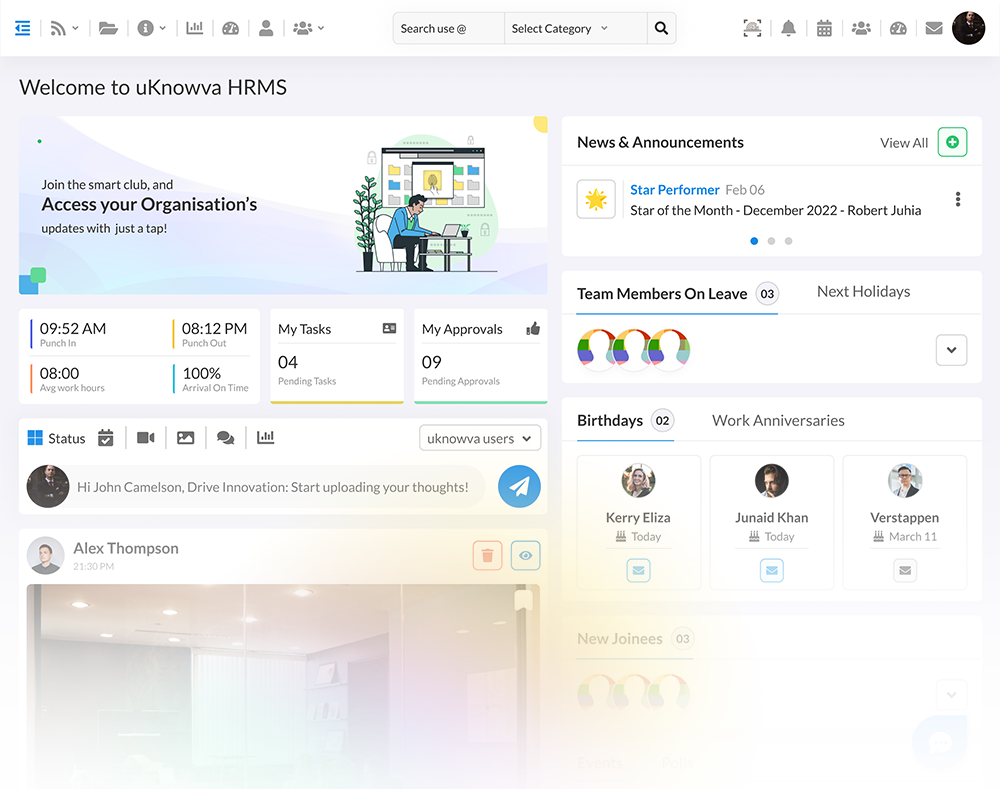
HRMS software streamlines internal recruitment by providing a centralised platform to manage job postings, track internal candidates' qualifications, and facilitate communication between hiring managers and potential candidates.
HRMS software offers benefits such as cost-efficiency, faster onboarding, enhanced employee morale, accurate assessment of candidate skills, encouragement of continuous learning, strengthened company culture, and reduced turnover rates.
Internal recruitment encourages employees to invest in their own professional development as they see opportunities for advancement within the organisation. This leads to a culture of continuous learning and skill-building.
HRMS software provides easy access to internal candidates' performance history, skills, and qualifications. This allows hiring managers to make right and appropriate hiring decisions based on a candidate's track record within the organisation.
Organisations can ensure fairness by clearly communicating job openings, providing equal access to information, and establishing transparent evaluation criteria. HRMS software can also help in tracking and documenting the entire recruitment process.
Internal recruitment demonstrates that the organisation values and invests in its existing talent pool. This fosters a culture of loyalty and commitment as employees see opportunities for growth and development within the company.