








 Aditi Sharma
Table of Content
The role of the Chief Human Resources Officer (CHRO) in redefining leadership has undergone a profound transformation in recent years.
Traditionally viewed as a support function focused on hiring and managing employees, the CHRO is now a strategic leader in the C-suite, influencing key business decisions and steering organisations through an era of rapid change.
This evolution highlights the CHRO’s critical role in shaping culture, driving innovation, and fostering sustainable growth.
Let’s explore in detail how the CHRO is redefining leadership in the C-suite.

Modern CHROs use advanced people analytics to connect workforce capabilities directly to strategic goals.
By analysing key metrics such as employee performance, attrition rates, and engagement levels, they deliver actionable insights that inform long-term strategies.
For instance, a CHRO might identify trends in skill gaps within the workforce and propose targeted training programs or strategic hires to close these gaps.
This data-driven approach ensures organisations remain agile and competitive in their industries.
Culture is the backbone of any organisation, and CHROs are at the helm of fostering an environment where innovation and collaboration thrive.
They lead initiatives to promote diversity, equity, and inclusion (DEI), ensuring that every employee feels valued and empowered.
From setting up bias-free hiring processes to creating safe spaces for open dialogue, CHROs actively shape workplaces where varied perspectives drive creativity and problem-solving.
CHROs are at the centre stage for redefining leadership and reengineering digital transformation by integrating cutting-edge HR technologies.
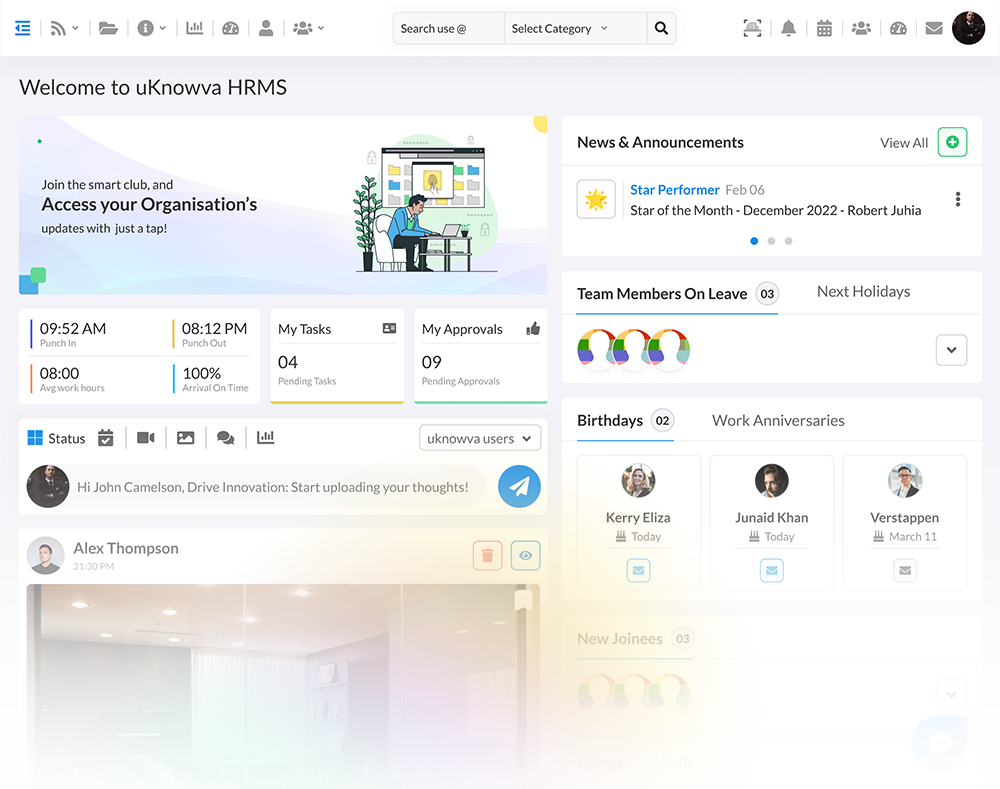
Tools like uKnowva HRMS help streamline processes such as recruitment, performance management, and employee engagement.
Our HRMS provides AI-driven insights to improve decision-making, optimise workflows, and enhance the employee experience.
By championing technology, CHROs position their organisations as modern, tech-forward enterprises capable of attracting and retaining top talent.
Today’s workforce demands more than just a paycheck—they seek organisations that prioritise their mental and physical well-being.
CHROs are leading the charge by introducing wellness programs, flexible work arrangements, and mental health support initiatives.
Post-pandemic, this focus has become even more crucial as employees navigate the challenges of hybrid work environments and work-life balance.
By addressing these needs, CHROs not only improve employee satisfaction but also boost productivity and retention.
The rise of remote and hybrid work has fundamentally changed how teams operate.
CHROs are at the forefront of managing this shift by designing policies that maintain connectivity and cohesion across distributed teams.
This includes introducing tools for virtual collaboration, ensuring equitable access to resources, and providing managers with the training to lead effectively in hybrid environments.
By creating a seamless experience for all employees, CHROs enhance business growth and become the torchbearers for redefining leadership at every stage of ELC.
Identifying and nurturing future leaders through future-ready performance management, succession planning, and agile career pathing is a top priority for CHROs.
They implement leadership development programs tailored to the unique needs of the organisation, ensuring a steady pipeline of talent ready to step into critical roles.
These programs often include mentorship opportunities, cross-functional training, and experiential learning to prepare employees for leadership challenges.
Succession planning, supported by data-driven tools, ensures business continuity by grooming high-potential employees for future leadership positions.
CHROs are increasingly instrumental in aligning workforce strategies with Environmental, Social, and Governance (ESG) objectives.
They lead efforts to embed sustainability into organisational culture, from implementing green office practices to fostering community engagement through volunteer programs.
By integrating ESG principles into talent strategies, CHROs not only contribute to societal impact but also attract purpose-driven talent and investors.
In a world marked by disruption, CHROs are redefining leadership by building organisations that are both agile and resilient.
They anticipate market changes and proactively prepare the workforce to adapt, whether through reskilling initiatives or changes to organisational structures.
Their focus on agility enables businesses to pivot quickly in response to economic shifts, technological advancements, or global events.
CHROs are no longer confined to HR-centric responsibilities; they are active collaborators and strategic partners for CEOs, CFOs, and other C-suite executives.
They bring unique perspectives on workforce trends, employee engagement, and organisational culture, making them essential contributors to strategic decision-making.
Their ability to bridge people strategies with business goals solidifies their position as indispensable members of the C-suite.
The CHRO role has transcended its traditional boundaries, emerging as a cornerstone of redefining leadership for C-suite executives.
By leveraging technology, championing culture, and focusing on employee well-being and development, CHROs are redefining how organisations navigate challenges and seize opportunities.
Their influence extends far beyond HR, shaping the future of work and ensuring that businesses thrive in an ever-changing world.
CHROs lead initiatives to create inclusive workplaces by implementing diversity-focused hiring practices, establishing bias-free policies, and promoting equity within the organisation.
CHROs prioritise employee well-being by introducing flexible work models, mental health support, and wellness programs.
Through programs like succession planning, mentorship, and leadership training, CHROs ensure a robust pipeline of talent ready to take on critical roles, ensuring the organisation’s long-term success.