







 Aditi Sharma
Table of Content
If you’re a CHRO right now, you’re sitting in one of the most quietly volatile roles in the C-suite. You’re expected to fix culture, hold the line on risk, re-architect skills, and somehow “do something with AI” without blowing up trust or governance.
Into that chaos walks Agentic HR.
Not another buzzword, unfortunately. This one has teeth.
We’re not just talking about chatbots or RPA taking repetitive work off your team’s plate. Agentic AI is what happens when systems don’t just execute tasks, but start making autonomous decisions, sequencing actions, and learning from outcomes in a way that feels… uncomfortably close to how a human operator works.
And HR is exactly where that’s going to get interesting, political, very fast.
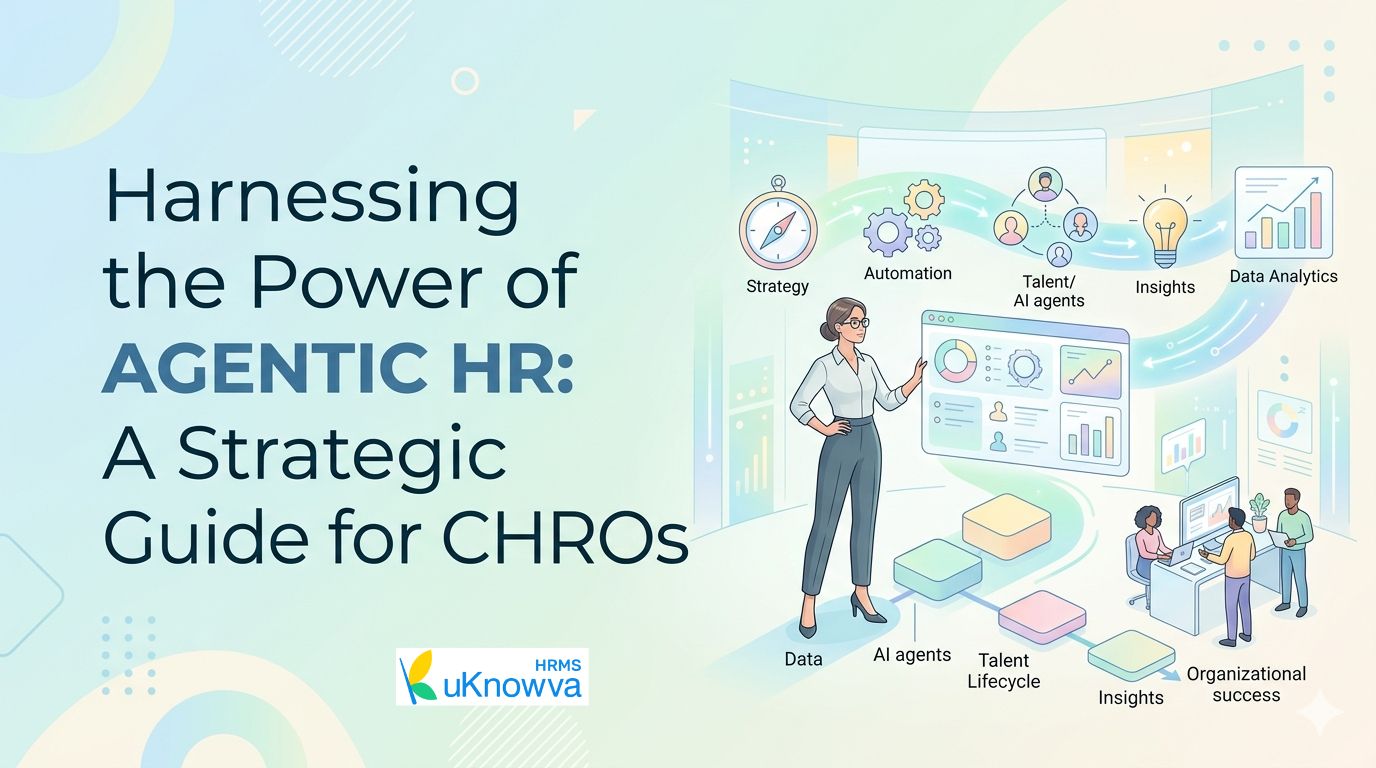
Most of what’s been called “HR tech” over the past decade has been glorified plumbing. Useful plumbing, but still. ATS workflows, ticketing systems, RPA scripts pushing data from Workday to payroll. All of that is rule-based: “If X happens, do Y.”
Agentic HR, by contrast, is where HR decisions and workflows are increasingly mediated by AI agents that can:
Think of an AI that:
The sharp insight here: Agentic AI doesn’t just automate HR work. It starts to own the micro-decisions that shape talent, culture, and power. That’s what CHROs need to understand and actively design for before someone else does it for them.
Let’s be blunt: a lot of HR work today is operational glue. Valuable, but reactive. You close reqs, resolve cases, run cycles, ship training.
Agentic systems start nibbling away at that glue. Not in a dystopian “replace HR” way, but in a way that forces a deep shift in what your team is actually for.
Here’s where the transformation is already visible:
Instead of recruiters spending hours screening, shortlisting, and chasing hiring managers, an agentic system can:
Why this works: the system is better at pattern recognition across huge datasets, but worse at context, politics, and narrative. So your people stop playing spreadsheet detective and start playing strategist and storyteller.
Today, engagement is often a quarterly (or annual) survey plus a deck everyone forgets by week three.
With Agentic HR, you get systems that:
This forces your HRBPs to grow into true advisors: “Here are three paths to stabilize this org in the next 90 days. Here’s the cost, political risk, and likely upside of each.”
In most companies, workforce planning is Excel, dread, and a once-a-year offsite.
An agentic system can:
The HR leadership conversation with the CEO suddenly changes from, “We’ll try to hire for that” to “Here are three workforce architectures that could support that strategy, and what each one will cost in cash, time, and morale.”
The comparison worth noticing: traditional “data-driven HR” made you more informed. Agentic HR makes you more decisive if you’re willing to trust, challenge, and sometimes override machine-generated recommendations in real time.
The uncomfortable truth: agentic systems embed values. Not in the abstract, but in who gets hired, who gets promoted, who gets “performance managed out,” and whose complaints are taken seriously.
If CHROs don’t own governance here, somebody else will, usually IT, Legal, or a vendor.
There are three layers you can’t safely outsource:
Yes, you need to be compliant with GDPR, CCPA, and every acronym your counsel sends your way. But the harder question is: “Even if we can use this data, should we?”
For instance, should an AI agent infer mental health risk from communication metadata? Should it flag someone as a “flight risk” without them ever knowing? Leadership teams may slip into “if the model says so, it must be true” thinking. It corrodes trust fast.
Employees don’t need the math, but they do need to understand, in plain terms, “How did this system affect what happened to me?”
“This tool narrowed the candidate pool, your manager made the final decision.”
“This system flagged your role as at-risk, but the restructure decision was made by the business.”
Without this, you get a shadow power structure where “the system” becomes the scapegoat for every unpopular decision. And once that narrative sets in, Agentic HR becomes politically toxic, no matter how well it performs.
It’s not enough to ask, “Is this tool biased against protected classes?” You also need to ask:
Regular audits that connect AI decisions to business and cultural outcomes are where CHROs can quietly become the adults in the room.
The sharp strategic point: governance is not a compliance tax. It’s your main lever to ensure these systems amplify your culture instead of rewriting it behind your back.
Most companies will buy the tech. That’s not the differentiator. The advantage shows up in how courageously and coherently you use it.
Here’s where the gap widens between leaders and laggards:
Faster, more credible talent decisions
When an AI agent can surface talent, model scenarios, and generate options in hours instead of weeks, your leadership team can move faster and with better justification.
You don’t just say, “We need to hire 200 engineers in Region X.”
You show, “If we do that, here’s the 3-year impact on cost, ramp, and internal succession — versus reskilling 120 existing people and automating 15% of this workflow.”
In markets where strategy windows are shrinking, that kind of agility is not a “nice to have.” It’s survival.
A sharper, more believable employer brand
Candidates can smell performative innovation. Posting about AI on LinkedIn while your hiring process is still a black hole? They notice.
But a company that can credibly say, “We use agentic systems to make our hiring faster, more transparent, and fairer and here’s how you’ll see that as a candidate and employee,” stands out.
Agentic HR done well becomes part of your brand narrative: “We’re serious about using technology to make work better, not just cheaper.”
Real productivity gains, not just headcount cuts
There’s an easy, lazy way to use agentic AI: as a justification for layoffs. You’ll get short-term numbers and long-term cultural damage. That doesn’t end well.
The harder, more strategic play is to:
The contrast: one path treats Agentic HR as a cost lever. The other treats it as an intelligence layer for the whole organization. Only one of those creates enduring advantage.
You don’t need a 5-year AI masterplan. In fact, that’s probably a red flag. You need a disciplined set of moves over the next 12-18 months.
Here’s a sequence that tends to work in the real world:
You don’t have to become a data scientist, but you do need to understand:
Spend time with your CIO/CTO and one or two external experts who aren’t trying to sell you a platform. Ask the awkward questions.
Pick one or two use cases where:
For example, a pilot where an AI agent proposes internal candidates for open roles before external sourcing starts. Or one where an agent suggests retention actions for a single at-risk population.
Make it explicit: “The system proposes, humans decide.” At least in phase one.
This only works if HR and IT treat this as shared infrastructure, not someone’s pet project.
You own: ethics, talent impact, change narrative, policy.
They own: architecture, integration, security, performance.
And together, you define: where autonomy is acceptable, where it’s not, and how exceptions get handled.
The sharp insight here: the CHRO who learns to speak credibly about Agentic HR at the same level of depth as the CFO talks about capital structure becomes un-ignorable in strategic conversations.
Agentic AI is going to seep into HR whether you’re ready or not. The question isn’t, “Will machines replace HR?” They won’t. The more honest question is, “Who gets to design the new division of labor between humans and machines in how we hire, grow, and let go of people?”
If CHROs don’t claim that role, someone else will — a vendor, a CFO, an overconfident CTO.
You don’t have to have all the answers yet. None of us do. But you can start by asking better questions, running smarter experiments, and insisting that any version of Agentic HR in your organization is built to serve both the strategy and the humans who have to live with it.
And if you get that right, AI stops being a threat to HR’s relevance and becomes the reason HR finally operates at the true center of the business.
Agentic HR is reshaping how organizations hire, engage, develop, and retain talent through intelligent, AI-driven decision-making. For CHROs, the focus should not only be on adopting AI but on implementing it responsibly with transparency, governance, and human oversight.
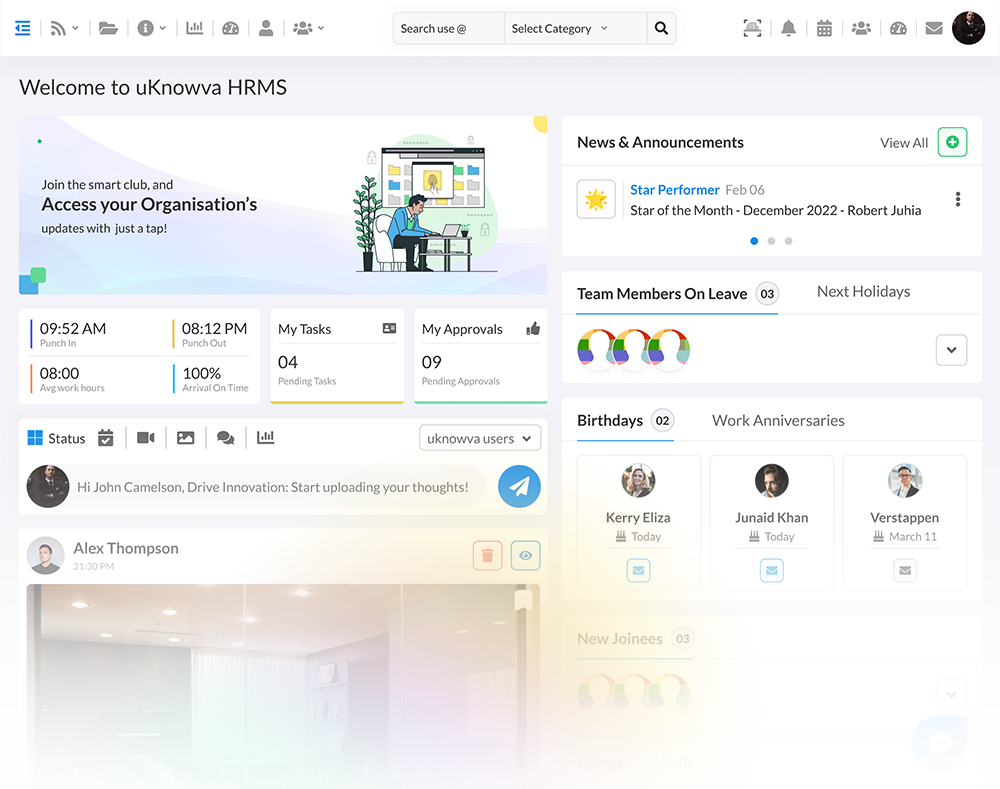
Solutions like uKnowva HRMS are helping businesses embrace this shift with AI-powered automation, workforce analytics, and employee engagement capabilities.
Organizations that successfully balance technology with human judgment will be better positioned to build agile, future-ready workplaces and gain a lasting competitive advantage.
Agentic HR refers to the use of AI-powered systems capable of making autonomous recommendations, learning from outcomes, and supporting strategic HR decisions.
2. How is Agentic HR different from traditional HR automation?
Traditional automation follows predefined rules, while Agentic HR systems can analyze data, adapt to situations, and recommend actions independently.
3. Why should CHROs pay attention to Agentic HR?
Agentic HR impacts hiring, workforce planning, employee engagement, and organizational decision-making, making it a strategic priority for modern HR leaders.
4. How can uKnowva HRMS support Agentic HR initiatives?
uKnowva HRMS offers AI-powered analytics, workflow automation, employee engagement tools, and workforce management features that support intelligent HR operations.
5. Can Agentic HR improve employee retention?
Yes, Agentic HR systems can identify attrition risks, detect burnout patterns, and recommend personalized retention strategies before issues escalate.
6. What are the biggest risks associated with Agentic HR?
Key risks include data privacy concerns, algorithmic bias, lack of transparency, employee distrust, and overdependence on automated recommendations.
7. How can organizations ensure ethical AI usage in HR?
Businesses should establish governance frameworks, conduct independent audits, ensure transparency, and maintain human oversight in critical HR decisions.
8. Which HR functions benefit the most from Agentic AI?
Recruitment, workforce planning, performance management, employee engagement, succession planning, and talent analytics benefit significantly from Agentic AI.
9. Is Agentic HR suitable for mid-sized businesses?
Yes, modern AI-powered platforms like uKnowva HRMS offer scalable solutions suitable for startups, SMBs, and enterprises alike.
10. What is the future of Agentic HR?
The future of Agentic HR lies in combining AI intelligence with human judgment to create adaptive, employee-centric, and strategically aligned workplaces.