








 Aditi Sharma
Table of Content
All the hours that your HR team need to dedicate to sorting through timesheets, verifying attendance, chasing managers for approvals, and then figuring out how much of each hour is actually worked.All the time put into timesheets, attendance, chasing manager for approvals, and trying to figure out what each hour is worth.
Now multiply that effort by departments, locations, shifts and pay periods.
Time and attendance management get more than just a job at this stage. It can be a critical productivity tool of modern organisations.
Attendance software today can do so much more than just track employee clock-in and clock-out times. It can assist organisations:
The right system transforms attendance data into actionable workforce intelligence, enabling HR teams to spend less time on attendance management, and more time on workforce productivity.
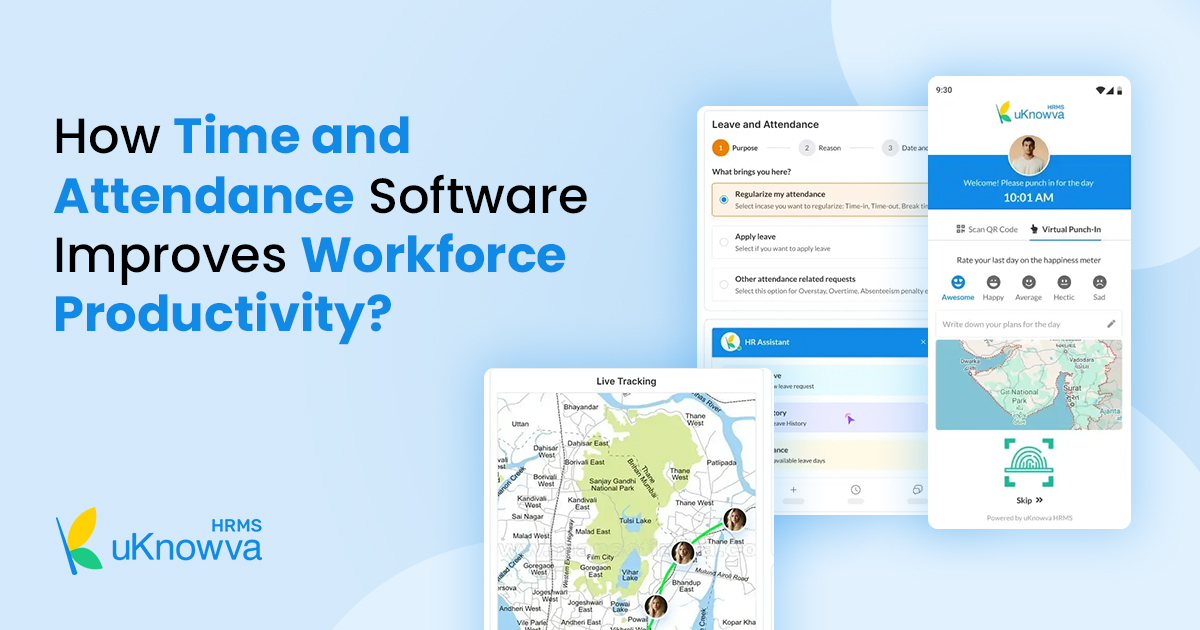
Time and attendance software is a digital solution that allows you to automatically record and manage employee working hours.
Organisations can automate employee timings with digital systems, and seamlessly link these with payroll, scheduling, HR, and more.When it comes to tracking employee hours, paper timesheets, manual registrations, and spreadsheets are no longer the standard.
The modern automatic attendance system can feature the following:
Attendance by biometric means: Fingerprint, facial recognition to ensure employee identity and minimise buddy punching.
GPS-attended mobile attendance: GPS verified employee attendance for field, remote and hybrid workers.
Real-time dashboards: Real-time visibility of attendance, lateness, absences and workforce availability. Shift scheduling, swaps and coverage, and automated scheduling.
Integration with payroll: Data on attendance can be uploaded to payroll without manual duplication.
Attendance analytics: Reports and trends of absenteeism, lateness, overtime and shift adherence.
Attendance Self-service: Employees can check attendance, request leave and resolve discrepancies.
From a construction site to a retail store, an office building to a hybrid workforce, automated attendance management can offer a unified solution for managing workforce hours.
The time of employees is a big investment by the organisation.
Each working hour is the cost of salary, benefits, infrastructure, management resources and running costs. If that time is used effectively, it will help in productivity, revenue and business growth.
This loss of working hours (or inaccurate recording or inefficient management) can have consequences well beyond the HR arena.
Hence, there is a close relationship between workforce productivity and:
Gradually, scheduling, attendance problems, payroll discrepancies and compliance issues can lead to productivity losses.
That's why workforce productivity is no longer solely an HR metric. It is becoming more and more a business concern.
By understanding who is working, when they are working and how the workforce time is being used, organisations have a better base for making workforce decisions.
Organisations must identify pain points with their existing attendance system before considering a solution based on automation.
Incomplete or disjointed attendance records can result in:
Buddy punching and time theft: Staff time can be double booked or entered incorrectly.
Manual data-entry mistakes: When information on paper registers is transferred to spreadsheets and then to payroll, there are several opportunities for data entry to be incorrect.
Delayed visibility: Managers might only realize attendance issues during payroll reconciliation, not when it happens.
Lack of consistent records: This can make it hard to track overtime, breaks, working hours and other relevant regulations.
Poor visibility for dispersed teams: Conventional punch systems might fail to work well for employees who work remotely or from various locations.
These challenges can be directly expensive. Productivity losses are estimated at $225.8 billion annually to U.S. employers from absenteeism, and around $400 billion annually from time theft to U.S. employers.
The clear take-away message is that 'Attendance inefficiencies are not just administrative inconveniences'. At scale, they may become productivity and cost issues.
Time tracking can be modernized to boost productivity by eliminating repetitive administration tasks and providing managers and employees with visibility of workforce time.
It can make a difference in several ways:
Automated attendance can save a lot of the time-consuming tasks of gathering timesheets, reviewing punches, and chasing up approvals.
Productivity impact:
Increased availability of HR resources for strategic initiatives, like workforce planning and employee experience.
Attendance data is more uniform and digitally recorded and time stamped.
Productivity impact:
Having real-time data on attendance can enable a manager to see trends rather than waiting until the end of a payroll period.
For example:
Managers can proactively tackle issues before they become a recurring workforce issue if they can see them early.
Combining attendance and shift data can help get a more complete view of workforce availability.
This can enable organisations to:
Clear attendance policies set clear expectations for work hours and timeliness.
Staff can access their own attendance data, and managers can keep track of their staff members' availability without having to rely on manual reporting.
There needs to be a distinction between absence that is planned versus unplanned. Absences that do not occur as planned can cause more disruption to operations as they may need to be dealt with immediately through staffing changes.
Not all attendance systems are created equal. The impact on productivity is mostly determined by the software solution's ability to solve the organisation's real employee issues.
Key features include:
Biometric attendance system: Fingerprint or facial verification for employee identity and to combat buddy punching.
Real-time attendance dashboard: Gives real-time visibility of employees onsite, late, or offsite by team and location.
Mobile attendance app: CAT attendance for remote, hybrid and field workers.
Shift and attendance management: Assists with shift scheduling, swapping and alerts for coverage.
Attendance analytics: Gives you information about lateness, absenteeism, overtime, and shift adherence.
Attendance to Payroll and HR integration: Pushes attendance data to payroll and HR processes, minimizing redundant data entry.
Self-service employee records: Give staff access to their attendance records, leave applications, and rectify discrepancies.
Compliance and audit trails: Keep overtime, break and regulatory records.
The actual productivity improvement is achieved when these features are used together and not one at a time.
The use of an automated attendance system is a value that can be enjoyed throughout the organisation.
For HR teams:
For employees:
For the organisation:
It is easier to gain acceptance when everyone in HR, employees, and business leaders uses the same system, and productivity gains can build up over time.
AI is transforming attendance into a smarter workforce management tool instead of being one of the fundamental aspects of record-keeping.
AI can be used to answer questions that go beyond "Who was there?," including:
Some of the key AI-driven developments include:
Predictive Absenteeism Modelling
Historical attendance data can be used to find teams or employees that are more likely to be absent, using AI.
This can assist managers in taking proactive steps to workforce planning.
Time Theft Detection
Machine learning algorithms can be used to detect irregular student schedules, including:
These patterns can then be marked as a warning of review.
Smart Scheduling
AI-powered scheduling can take into account several things such as:
This can be helpful for organisations to make scheduling more efficient.
Natural-Language Employee Self-Service
AI assistants can allow employees to interact with HR systems using natural language to:
In addition to the fingerprint systems, modern systems are pushing the envelope with technologies like facial recognition and liveness detection, offering a more robust way to verify identities and minimise spoofing threats.
Automated Compliance Monitoring
By continuously analysing attendance data based on configured rules and requirements, AI can help to minimise manual checks.
The wider shift is important, attendance software is moving from a passive record of attendance towards a more predictive workforce management solution.
The use of technology is not a guarantee of productivity gains. There are key processes, configurations, communication and adoption strategies that must be put in place for successful implementation.
1. Write a narrative about what is happening now, by drawing a picture
Firstly, document current attendance systems.
Identify:
The methods are different for the different people in the workforce.
For example:
The technology must be commensurate with the workforce and not the workforce with the technology.
The attendance information should be integrated with the existing HR and payroll systems of the organisation.
An isolated new database can lead to more administration than less.
Employees should understand:
Take a pilot study with a department or location.
Use the pilot to:
Scale the system throughout the organisation.
Operational value of a real-time dashboard is contingent on the use of the information by the managers.
Teach manager to recognize:
Set up the system following any relevant organisational policies and legal requirements, such as:
When implementing automated attendance software, it is important to also be aware of the risks of using it since it can improve efficiency.
Not knowing why the biometric and GPS data is being gathered and what it's being used for can create a privacy concern with the employees.
What organisations MUST do:
Employee and biometric data can be processed on attendance platforms and are sensitive data.
Organisations should evaluate:
Staff and managers may not be keen to use technology, particularly if they have used paper systems in the past.
Additional configuration or custom integration may be needed for legacy HR and payroll systems.
There is a need, therefore, to consider integration requirements before implementing.
Automation is not a solution that can replace human intervention.
There are a few circumstances, such as hours that are disputed, absenteeism or outages in systems which may require review by HR or management.
In multi-location or large organisations, there are costs to consider:
should also be taken into account in determining the overall business case.
With these potential issues avoided with a long-term strategy, you will save yourself on those big expenses down the road.
There are several operational improvements that can be used to calculate the ROI of time and attendance software.
Areas that could be impacted include:
According to the source material, at least 450-550 billion dollars are lost each year due to time theft in the U.S., with up to 50% of employees who track time admitting to some time theft.
Any 10-20% reduction in the amount of time lost due to preventable causes can be significant in return on investment.
A number of trends are likely to combine to create the next generation of attendance management.
The penetration of AI use is growing.There were greater signs of deeper integration of AI.
More predictive analytics, anomaly detection, automation of recommendations and conversational interfaces are expected to be more prevalent.
An increase of hybrid and remote working continues.There is an ongoing shift to hybrid and remote working.
As the workforce becomes more spread out, attendance will need to be more flexible for organisations to accommodate workers away from the office.
Technology can further enhance attendance tracking, such as with smartwatches, RFID badges or improved facial recognition.
Time and attendance software has come a long way from tracking employee clock-in and clock-out times.
Modern systems can help organisations overcome some of the hidden productivity issues with:
Biometric verification can be used to increase the accuracy of attendance. Managers can have real-time visibility with dashboards. For distributed teams, mobile attendance is a helpful feature. The patterns of the workforce can be informed through analytics. AI can take these to the next level, helping organisations anticipate, prevent, and address attendance issues.
The most significant change is strategic, though. Organisations must go beyond just the attitude of attendance as an input to payroll.
By automating clock-ins, eliminating manual errors, and giving managers real-time visibility into staffing gaps, these systems reduce administrative overhead and allow faster, data-driven decisions on scheduling and coverage.
Key metrics include absenteeism rate, overtime hours, on-time arrival percentage, payroll processing time, time theft incidents, and shift coverage accuracy — all trackable through built-in attendance analytics.
Manual methods rely on paper logs or spreadsheets prone to transcription errors, buddy punching, and delayed reporting, forcing HR to spend hours on reconciliation instead of higher-value work.
Direct integration eliminates duplicate data entry, ensures hours worked flow accurately into payroll calculations, and reduces disputes — freeing HR teams from manual cross-checking every pay cycle.
Mapping existing workflows, piloting with one team first, training managers on dashboards, ensuring payroll integration, and communicating transparently with employees all accelerate adoption and ROI.
Automated clocks remove ambiguity around start/end times, cut down disputes, and give managers instant data to address lateness or absenteeism trends before they affect operations.
These systems automatically track overtime thresholds, mandatory breaks, and working-hour limits, generating audit-ready records that reduce the risk of regulatory penalties.
By ensuring employees are paid only for hours actually worked, businesses recover payroll dollars that can be reinvested into operations, while also reinforcing a culture of accountability.
Self-service portals let employees check hours, request leave, and flag discrepancies independently, reducing routine HR queries and giving employees more ownership over their own attendance data.